












Studies on the performance stability of mixed conducting BSCFO membranes in medium temperature oxygen permeation
Literature Information
Publication Date
2002-11-22
DOI
10.1039/B207848A
Impact Factor
6.222
Authors
Andre C. van Veen, Michael Rebeilleau, David Farrusseng, Claude Mirodatos
View Original
Abstract
A permeation study using bare Ba0.5Sr0.5Co0.8Fe0.2Ox membranes shows that stable oxygen fluxes are only achieved when operating the membrane at temperatures higher than 1023 K and indicates therefore that short contact time membrane reactors will be most suitable for future upgrading of light hydrocarbons.
Related Literature
Mass spectrometric and theoretical study on the formation of uranyl hydride from uranyl carboxylate
Xiuting Chen, Yu Gong
2021-08-16
Paper
DOI: 10.1039/D1CP03092B
Perspective of structural flexibility on selective inhibition towards CYP1B1 over CYP1A1 by α-naphthoflavone analogs
Ying Wang, Yupeng Zhang, Dong Wang, Zhaohu Luo, Fengjiao Zhang
2021-09-02
Paper
DOI: 10.1039/D1CP02541D
Thermo-osmotic pressure and resistance to mass transport in a vapor-gap membrane
Michael T. Rauter, Sondre K. Schnell, Bjørn Hafskjold, Signe Kjelstrup
2021-06-04
Paper
DOI: 10.1039/D0CP06556K
Demonstration of neutron radiation-induced nucleation of supercooled water
Matthew Szydagis, Cecilia Levy, Yujia Huang, Alvine C. Kamaha, Corwin C. Knight, Gregory R. C. Rischbieter
2021-05-13
Paper
DOI: 10.1039/D1CP01083B
Simple lattice model of self-assembling metal–organic layers of pyridyl-substituted porphyrins and copper on Au(111) surface
Anastasiia I. Fadeeva, Vitaly A. Gorbunov, Alexander V. Myshlyavtsev
2021-08-20
Paper
DOI: 10.1039/D1CP03111B
Computational prediction of the supramolecular self-assembling properties of organic molecules: the role of conformational flexibility of amide moieties
Laura Le Bras, Yves L. Dory, Benoît Champagne
2021-08-31
Paper
DOI: 10.1039/D1CP02675E
Single-molecule binding characterization of primosomal protein PriA involved in replication restart
Tzu-Yu Lee, Yi-Ching Li, Min-Guan Lin, Chwan-Deng Hsiao, Hung-Wen Li
2021-05-25
Paper
DOI: 10.1039/D1CP00638J
Accounting for the instantaneous disorder in the enzyme–substrate Michaelis complex to calculate the Gibbs free energy barrier of an enzyme reaction
Alejandro Cruz
2021-05-13
Paper
DOI: 10.1039/D1CP01338F
You might also like
Compound Q&A
What is the market or research trend for N-(4-Methoxybenzyl)-2-pyridinamine (CAS: 52818-63-0)?
N-(4-Methoxybenzyl)-2-pyridinamine (CAS: 52818-63-0) is increasingly being used ...
52818-63-0N-(4-Methoxybenzyl)-...
Compound Q&A
What precautions should be taken when handling Ethyl 4-(2-chlorophenyl)-1,3-thiazole-2-carboxylate (CAS: 1050507-06-6)?
When handling Ethyl 4-(2-chlorophenyl)-1,3-thiazole-2-carboxylate, appropriate p...
1050507-06-6Ethyl 4-(2-chlorophe...
Compound Q&A
What regulatory guidelines apply to diethyldiselane (CAS: 628-39-7)?
Diethyldiselane (CAS: 628-39-7) is classified under the Globally Harmonized Syst...
628-39-7Diethyldiselane
Compound Q&A
What is the market or research trend for oxocopper (CAS: 12053-18-8)?
The market for oxocopper (CAS: 12053-18-8) is primarily driven by its use in cat...
12053-18-8oxocopper; oxo-(oxoc...
Compound Q&A
What is the market or research trend for 5-{[(2-Methyl-2-propanyl)oxy]carbonyl}-5-azaspiro[2.4]heptane-7-carboxylic acid?
The market for 5-{[(2-Methyl-2-propanyl)oxy]carbonyl}-5-azaspiro[2.4]heptane-7-c...
1268519-54-55-{[(2-Methyl-2-prop...
Compound Q&A
What is 2-(1-Pyrrolidinyl)-4-pyridinamine (CAS: 35981-63-6)?
2-(1-Pyrrolidinyl)-4-pyridinamine is a chemical compound with the CAS number 359...
35981-63-62-(1-Pyrrolidinyl)-4...
Compound Q&A
What are the physical and chemical properties of 2-(3-Pyridinyl)-1-azabicyclo[2.2.2]octane (CAS: 91556-75-1)?
2-(3-Pyridinyl)-1-azabicyclo[2.2.2]octane (CAS: 91556-75-1) is a crystalline sol...
91556-75-12-(3-Pyridinyl)-1-az...
Compound Q&A
How is (S)-Alpha-allyl-proline hydrochloride (CAS: 129704-91-2) typically synthesized?
(S)-Alpha-allyl-proline hydrochloride is usually synthesized via a Wittig reacti...
129704-91-2(S)-Alpha-allyl-prol...
Compound Q&A
What is 3-Methyl-1,2-oxazole-5-carboxylic acid (CAS: 4857-42-5)?
3-Methyl-1,2-oxazole-5-carboxylic acid (CAS: 4857-42-5) is an organic compound w...
4857-42-53-Methyl-1,2-oxazole...
Compound Q&A
How is Lys-SMCC-DM1 (CAS: 1281816-04-3) typically synthesized?
Lys-SMCC-DM1 is synthesized via a multi-step process involving the coupling of S...
1281816-04-3Lys-SMCC-DM1
Source Journal
Chemical Communications

CiteScore:
8.6
Self-citation Rate:
4.7%
Articles per Year:
2458
ChemComm publishes urgent research which is of outstanding significance and interest to experts in the field, while also appealing to the journal’s broad chemistry readership. Our communication format is ideally suited to short, urgent studies that are of such importance that they require accelerated publication. Our scope covers all topics in chemistry, and research at the interface of chemistry and other disciplines (such as materials science, nanoscience, physics, engineering and biology) where there is a significant novelty in the chemistry aspects. Major topic areas covered include: Analytical Chemistry Catalysis Chemical Biology and medicinal chemistry Computational Chemistry and Machine Learning Energy and sustainable chemistry Environmental Chemistry Green Chemistry Inorganic Chemistry Materials Chemistry Nanoscience Organic Chemistry Physical Chemistry Polymer Chemistry Supramolecular Chemistry
Recommended Compounds
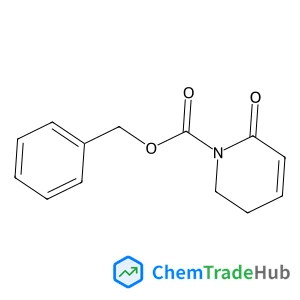
Benzyl 6-oxo-3,6-dihydro-1(2H)-pyridinecarboxylate
CAS Number:
725746-35-0
Molecular Formula:
C13H13NO3
Recommended Suppliers




Disclaimer
This page provides academic journal information for reference and research purposes only. We are not affiliated with any journal publishers and do not handle publication submissions. For publication-related inquiries, please contact the respective journal publishers directly.
If you notice any inaccuracies in the information displayed, please contact us at support@chemtradehub.com. We will promptly review and address your concerns.