












The nature of conformational preference in a number of p-alkyl phenols and p-alkyl benzenes
Literature Information
Publication Date
2002-09-13
DOI
10.1039/B203954K
Impact Factor
3.676
Authors
Patricia R. Richardson, Madelaine A. Chapman, Daniel C. Wilson, Simon P. Bates, Anita C. Jones
View Original
Abstract
The energy barriers to hydroxyl rotation and alkyl rotation in p-cresol, p-isopropylphenol, p-tert-butylphenol, isopropylbenzene and tert-butylbenzene have been calculated using the MP2/6-31g(d,p) model chemistry. The number of stable conformers predicted for isopropylbenzene, tert-butylbenzene, p-isopropylphenol and p-tert-butylphenol is consistent with experimental observations. The doubling of stable alkyl conformation, and hence spectral features, in the p-alkyl phenols is due to syn and anti orientations of the hydroxyl and alkyl substituents and can be related to an asymmetry in the electron density in the HOMO of phenol. Hyperconjugation is found to have an important influence on the torsional potential of the alkyl substituent.
Recommended Journals
Related Literature
Two-step volume phase transition mechanism of poly(N-vinylcaprolactam) hydrogel online-tracked by two-dimensional correlation spectroscopy
Gehong Su, Tao Zhou, Xifei Liu, Yulin Zhang
2017-09-21
Paper
DOI: 10.1039/C7CP04571A
Confined water dynamics in a hydrated photosynthetic pigment–protein complex
Yael Kurzweil-Segev, Ido Eisenberg, Shira Yochelis, Nir Keren, Yossi Paltiel, Yuri Feldman
2017-10-02
Paper
DOI: 10.1039/C7CP05417C
Dynamics of the crystal structure of tin-based type-I clathrates with different degrees of disorder in their cationic frameworks
V. V. Novikov, K. S. Pilipenko, A. V. Matovnikov, N. V. Mitroshenkov, B. I. Kornev
2017-09-27
Paper
DOI: 10.1039/C7CP05023B
Vacuum ultraviolet photoabsorption spectroscopy of crystalline and amorphous benzene
Anita Dawes, Søren V. Hoffmann, Nykola C. Jones, Nigel J. Mason
2017-09-28
Paper
DOI: 10.1039/C7CP05319C
The phenylselenyl radical and its reaction with molecular oxygen
Artur Mardyukov, Yetsedaw A. Tsegaw, Wolfram Sander, Peter R. Schreiner
2017-09-28
Paper
DOI: 10.1039/C7CP05546C
The duality of UiO-67-Pt MOFs: connecting treatment conditions and encapsulated Pt species by operando XAS
E. Borfecchia, A. Martini, A. V. Soldatov, S. Øien-Ødegaard, B. T. Lønstad-Bleken, U. Olsbye, K. P. Lillerud, M. Manzoli
2017-09-18
Paper
DOI: 10.1039/C7CP05185A
Surface pKa of octanoic, nonanoic, and decanoic fatty acids at the air–water interface: applications to atmospheric aerosol chemistry
Bethany A. Wellen, Evan A. Lach, Heather C. Allen
2017-08-08
Paper
DOI: 10.1039/C7CP04527A
Hybrid heterojunctions between a 2D transition metal dichalcogenide and metal phthalocyanines: their energy levels vis-à-vis current rectification
Arnab Banerjee, Biswajit Kundu, Amlan J. Pal
2017-10-06
Paper
DOI: 10.1039/C7CP05470J
Planarization of B20 clusters by Si and C atom substitution
Qi Liang Lu, Qi Quan Luo, Yi De Li, Shou Guo Huang
2017-09-29
Paper
DOI: 10.1039/C7CP05610A
You might also like
Compound Q&A
What industries use (1R,3S)-1,3-Cyclopentanediol (CAS: 16326-97-9)?
(1R,3S)-1,3-Cyclopentanediol finds applications in various industries. In the ph...
16326-97-9(1R,3S)-1,3-Cyclopen...
Compound Q&A
What precautions should be taken when handling N'-[4-(Dimethylamino)phenyl]-N,N-dimethyl-1,4-benzenediamine (CAS: 637-31-0)?
When handling N'-[4-(Dimethylamino)phenyl]-N,N-dimethyl-1,4-benzenediamine, it i...
637-31-0N'-[4-(Dimethylamino...
Compound Q&A
Are there alternatives to 5-(2,4-Difluorophenyl)-2-methoxypyrimidine (CAS: 1352318-16-1) in synthesis?
There are several alternatives to 5-(2,4-Difluorophenyl)-2-methoxypyrimidine in ...
1352318-16-15-(2,4-Difluoropheny...
Compound Q&A
What regulatory guidelines apply to 1-(3-Methoxyphenoxy)propan-2-ol (CAS: 382141-68-6)?
1-(3-Methoxyphenoxy)propan-2-ol (CAS: 382141-68-6) must comply with the Globally...
382141-68-61-(3-Methoxyphenoxy)...
Compound Q&A
Is Tetrodotoxin Citrate (CAS: 18660-81-6) safe?
Tetrodotoxin Citrate is extremely dangerous and should be handled with extreme c...
18660-81-6Tetrodotoxin Citrate
Compound Q&A
What are the main uses of 2-Methyl-2-propanyl [(1R,3S)-3-hydroxycyclopentyl]carbamate (CAS: 225641-84-9)?
2-Methyl-2-propanyl [(1R,3S)-3-hydroxycyclopentyl]carbamate (CAS: 225641-84-9) i...
225641-84-92-Methyl-2-propanyl ...
Compound Q&A
How should waste containing 4-(2-Hydroxyhexafluoroisopropyl)Benzoic Acid (CAS: 16261-80-6) be handled?
Waste containing 4-(2-Hydroxyhexafluoroisopropyl)Benzoic Acid (CAS: 16261-80-6) ...
16261-80-64-(2-Hydroxyhexafluo...
Compound Q&A
How is 2-Methyl-2-proanyl {(2S)-1-[(benzyloxy)amino]-3-hydroxy-3-methyl-1-oxo-2-butanyl}carbamate (CAS: 102507-19-7) typically synthesized?
2-Methyl-2-proanyl {(2S)-1-[(benzyloxy)amino]-3-hydroxy-3-methyl-1-oxo-2-butanyl...
102507-19-72-Methyl-2-propanyl ...
Compound Q&A
What is Benzeneethanamine, α-ethyl-, hydrochloride (1:1) (CAS: 20735-15-3)?
Benzeneethanamine, α-ethyl-, hydrochloride (1:1) is an organic compound with the...
20735-15-3Benzeneethanamine, α...
Compound Q&A
Are there alternatives to 3-{(E)-[4-(Dimethylamino)phenyl]diazenyl}benzoic acid (CAS: 20691-84-3) in synthesis?
In the synthesis of compounds similar to 3-{(E)-[4-(Dimethylamino)phenyl]diazeny...
20691-84-33-{(E)-[4-(Dimethyla...
Source Journal
Physical Chemistry Chemical Physics

CiteScore:
5.5
Self-citation Rate:
10.3%
Articles per Year:
3036
Physical Chemistry Chemical Physics (PCCP) is an international journal co-owned by 19 physical chemistry and physics societies from around the world. This journal publishes original, cutting-edge research in physical chemistry, chemical physics and biophysical chemistry. To be suitable for publication in PCCP, articles must include significant innovation and/or insight into physical chemistry; this is the most important criterion that reviewers and Editors will judge against when evaluating submissions. The journal has a broad scope and welcomes contributions spanning experiment, theory, computation and data science. Topical coverage includes spectroscopy, dynamics, kinetics, statistical mechanics, thermodynamics, electrochemistry, catalysis, surface science, quantum mechanics, quantum computing and machine learning. Interdisciplinary research areas such as polymers and soft matter, materials, nanoscience, energy, surfaces/interfaces, and biophysical chemistry are welcomed if they demonstrate significant innovation and/or insight into physical chemistry. Joined experimental/theoretical studies are particularly appreciated when complementary and based on up-to-date approaches.
Recommended Compounds
![N-[(9H-Fluoren-9-ylmethoxy)carbonyl]-beta-phenyl-L-phenylalanine structure](https://static.chemtradehub.com/structs/201/201484-50-6-c2fc.webp "N-[(9H-Fluoren-9-ylmethoxy)carbonyl]-beta-phenyl-L-phenylalanine structure")
N-[(9H-Fluoren-9-ylmethoxy)carbonyl]-beta-phenyl-L-phenylalanine
CAS Number:
201484-50-6
Molecular Formula:
C30H25NO4
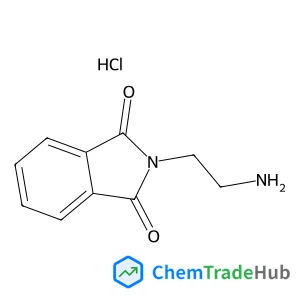
2-(2-Aminoethyl)-1H-isoindole-1,3(2H)-dione hydrochloride (1:1)
CAS Number:
30250-67-0
Molecular Formula:
C10H11ClN2O2
Recommended Suppliers






Disclaimer
This page provides academic journal information for reference and research purposes only. We are not affiliated with any journal publishers and do not handle publication submissions. For publication-related inquiries, please contact the respective journal publishers directly.
If you notice any inaccuracies in the information displayed, please contact us at support@chemtradehub.com. We will promptly review and address your concerns.