












The phenylselenyl radical and its reaction with molecular oxygen
Literature Information
Publication Date
2017-09-28
DOI
10.1039/C7CP05546C
Impact Factor
3.676
Authors
Artur Mardyukov, Yetsedaw A. Tsegaw, Wolfram Sander, Peter R. Schreiner
View Original
Abstract
The current study focuses on the generation, identification, and characterization of the phenylselenyl radical using the matrix isolation technique in combination with density functional theory (B3LYP/cc-pVTZ) computations. The hitherto unknown phenylselenyl peroxy radical was synthesized by co-condensation of the phenylselenyl radical with molecular ground state triplet oxygen from the gas phase and subsequent trapping in argon matrices at 10 K. The experimental IR spectra including 18O isotopically labelled materials compare well with the data obtained from B3LYP/cc-pVTZ computations. Upon 312 nm irradiation, the phenylselenyl peroxy radical isomerizes to the thermodynamically more stable equally novel phenylselenoyl radical.
Related Literature
Digitalization of the agro-food sector for achieving sustainable development goals: a review
Adithya Sridhar, Muthamilselvi Ponnuchamy, P. Senthil Kumar, Ashish Kapoor, Dai-Viet Nguyen Vo
2023-10-27
Review Article
DOI: 10.1039/D3FB00124E
Dye adsorption-assisted colloidal dispersion of single-walled carbon nanotubes in polar solvents
Akiho Horibe, Tomoko Murayama, Tsuyoshi Kawai, Yoshiyuki Nonoguchi
2023-09-18
Paper
DOI: 10.1039/D3LF00119A
Al(iii)-based MOF for the selective adsorption of phosphate and arsenate from aqueous solutions
Herlys Viltres, Valeria B. López-Cervantes, Camilo Serrano-Fuentes, Amin Reza Rajabzadeh, Seshasai Srinivasan, Ricardo A. Peralta, Carolina Leyva
2023-09-25
Paper
DOI: 10.1039/D3LF00061C
Insects as a sustainable source of emerging proteins and their processing to obtain bioactive compounds: an updated review
Francielle Miranda de Matos, Gabriela Boscariol Rasera, Ruann Janser Soares de Castro
2023-11-07
Review Article
DOI: 10.1039/D3FB00097D
Encapsulation of fish oil and essential fatty acids by spray drying
Afroza Sultana, Shuji Adachi, Hidefumi Yoshii
2023-08-25
Review Article
DOI: 10.1039/D3FB00099K
Mycoprotein: production and nutritional aspects: a review
Reshab Majumder, Saptadip Miatur, Akash Saha, Shamim Hossain
2023-11-17
Review Article
DOI: 10.1039/D3FB00169E
Bio-based polycarbonates: progress and prospects
Mi Feng, Ming Jiang
2023-11-14
Tutorial Review
DOI: 10.1039/D3SU00248A
Exploring metal oxides for the hydrogen evolution reaction (HER) in the field of nanotechnology
Mir Sayed Shah Danish
2023-11-10
Perspective
DOI: 10.1039/D3SU00179B
A chitosan-based biopolymer as an encapsulating nanomaterial for enhancing the antifungal and aflatoxin B1 inhibitory efficacy of Zanthoxylum alatum (Roxb) essential oil and elucidation of the mode of action
Tanya Singh Raghuvanshi, Bhanu Prakash
2023-09-19
Paper
DOI: 10.1039/D3FB00098B
You might also like
Compound Q&A
What industries use (1R,3S)-1,3-Cyclopentanediol (CAS: 16326-97-9)?
(1R,3S)-1,3-Cyclopentanediol finds applications in various industries. In the ph...
16326-97-9(1R,3S)-1,3-Cyclopen...
Compound Q&A
What precautions should be taken when handling N'-[4-(Dimethylamino)phenyl]-N,N-dimethyl-1,4-benzenediamine (CAS: 637-31-0)?
When handling N'-[4-(Dimethylamino)phenyl]-N,N-dimethyl-1,4-benzenediamine, it i...
637-31-0N'-[4-(Dimethylamino...
Compound Q&A
Are there alternatives to 5-(2,4-Difluorophenyl)-2-methoxypyrimidine (CAS: 1352318-16-1) in synthesis?
There are several alternatives to 5-(2,4-Difluorophenyl)-2-methoxypyrimidine in ...
1352318-16-15-(2,4-Difluoropheny...
Compound Q&A
What regulatory guidelines apply to 1-(3-Methoxyphenoxy)propan-2-ol (CAS: 382141-68-6)?
1-(3-Methoxyphenoxy)propan-2-ol (CAS: 382141-68-6) must comply with the Globally...
382141-68-61-(3-Methoxyphenoxy)...
Compound Q&A
Is Tetrodotoxin Citrate (CAS: 18660-81-6) safe?
Tetrodotoxin Citrate is extremely dangerous and should be handled with extreme c...
18660-81-6Tetrodotoxin Citrate
Compound Q&A
What are the main uses of 2-Methyl-2-propanyl [(1R,3S)-3-hydroxycyclopentyl]carbamate (CAS: 225641-84-9)?
2-Methyl-2-propanyl [(1R,3S)-3-hydroxycyclopentyl]carbamate (CAS: 225641-84-9) i...
225641-84-92-Methyl-2-propanyl ...
Compound Q&A
How should waste containing 4-(2-Hydroxyhexafluoroisopropyl)Benzoic Acid (CAS: 16261-80-6) be handled?
Waste containing 4-(2-Hydroxyhexafluoroisopropyl)Benzoic Acid (CAS: 16261-80-6) ...
16261-80-64-(2-Hydroxyhexafluo...
Compound Q&A
How is 2-Methyl-2-proanyl {(2S)-1-[(benzyloxy)amino]-3-hydroxy-3-methyl-1-oxo-2-butanyl}carbamate (CAS: 102507-19-7) typically synthesized?
2-Methyl-2-proanyl {(2S)-1-[(benzyloxy)amino]-3-hydroxy-3-methyl-1-oxo-2-butanyl...
102507-19-72-Methyl-2-propanyl ...
Compound Q&A
What is Benzeneethanamine, α-ethyl-, hydrochloride (1:1) (CAS: 20735-15-3)?
Benzeneethanamine, α-ethyl-, hydrochloride (1:1) is an organic compound with the...
20735-15-3Benzeneethanamine, α...
Compound Q&A
Are there alternatives to 3-{(E)-[4-(Dimethylamino)phenyl]diazenyl}benzoic acid (CAS: 20691-84-3) in synthesis?
In the synthesis of compounds similar to 3-{(E)-[4-(Dimethylamino)phenyl]diazeny...
20691-84-33-{(E)-[4-(Dimethyla...
Source Journal
Physical Chemistry Chemical Physics

CiteScore:
5.5
Self-citation Rate:
10.3%
Articles per Year:
3036
Physical Chemistry Chemical Physics (PCCP) is an international journal co-owned by 19 physical chemistry and physics societies from around the world. This journal publishes original, cutting-edge research in physical chemistry, chemical physics and biophysical chemistry. To be suitable for publication in PCCP, articles must include significant innovation and/or insight into physical chemistry; this is the most important criterion that reviewers and Editors will judge against when evaluating submissions. The journal has a broad scope and welcomes contributions spanning experiment, theory, computation and data science. Topical coverage includes spectroscopy, dynamics, kinetics, statistical mechanics, thermodynamics, electrochemistry, catalysis, surface science, quantum mechanics, quantum computing and machine learning. Interdisciplinary research areas such as polymers and soft matter, materials, nanoscience, energy, surfaces/interfaces, and biophysical chemistry are welcomed if they demonstrate significant innovation and/or insight into physical chemistry. Joined experimental/theoretical studies are particularly appreciated when complementary and based on up-to-date approaches.
Recommended Compounds
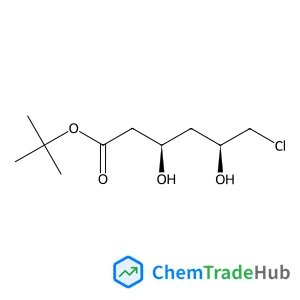
2-Methyl-2-propanyl (3R,5S)-6-chloro-3,5-dihydroxyhexanoate
CAS Number:
154026-93-4
Molecular Formula:
C10H19ClO4
Recommended Suppliers





Disclaimer
This page provides academic journal information for reference and research purposes only. We are not affiliated with any journal publishers and do not handle publication submissions. For publication-related inquiries, please contact the respective journal publishers directly.
If you notice any inaccuracies in the information displayed, please contact us at support@chemtradehub.com. We will promptly review and address your concerns.