













Matrixinfrared spectra and ab initio calculations of the acetylene complexes with nitric and nitrous acids
Literature Information
Publication Date
2002-08-08
DOI
10.1039/B203678A
Impact Factor
3.676
Authors
Magdalena Krajewska, Adriana Olbert-Majkut, Zofia Mielke
View Original
Abstract
The hydrogen bonded complexes formed by an acetylene molecule with nitric and nitrous acids have been observed and characterized in argon matrices. Eight perturbed HNO3 vibrations and three perturbed C2H2 modes were identified for the C2H2⋯HNO3 complex. Five perturbed trans-HONO and four cis-HONO vibrations, and three perturbed C2H2 vibrations were found for the C2H2 complexes with the trans- and cis-isomers of nitrous acid. The perturbation of the OH group vibrations proves that the complexes involve an O–H⋯π type of hydrogen bond with the OH group acting as a proton donor to the π electron density of the acetylene molecule. Theoretical studies of the structure and spectral characteristics of the studied systems were carried out at the electron correlation level with the 6-311++G(2d,2p) basis set. The calculated spectral parameters for the O–H⋯π type complexes are in good agreement with experimental data. The calculations also show the stability of the much more weakly bound C2H2⋯HNO3 structure that involves a C–H⋯O type of bond with the acetylene molecule acting as a proton donor and the nitric acid as a proton acceptor. Two observed bands are tentatively assigned to this type of complex.
Related Literature
Self-indicating amine scavenger resins
Jin Ku Cho, Peter D. White, Wolfgang Klute, Tony W. Dean, Mark Bradley
2004-01-27
Communication
DOI: 10.1039/B315426B
Terminally functionalized polyisobutylene oligomers as soluble supports in catalysis
David E. Bergbreiter, Jun Li
2003-11-27
Communication
DOI: 10.1039/B312368E
The kinetics of propene and hexenepolymerisation with [(SBI)ZrR]+X−: evidence for monomer-dependent early or late transition states
Fuquan Song, Roderick D. Cannon, Manfred Bochmann
2004-02-05
Communication
DOI: 10.1039/B314845A
Living cationic ring-opening polymerization by water-stable initiator: synthesis of a well-defined optically active polythiourethane
Atsushi Nagai, Bungo Ochiai, Takeshi Endo
2003-11-07
Communication
DOI: 10.1039/B310735C
Dichloro(dodeca-2,6,10-triene-1,12-diyl)ruthenium(iv): a highly efficient catalyst for the isomerization of allylic alcohols into carbonyl compounds in organic and aqueous media
Victorio Cadierno, Sergio E. García-Garrido, José Gimeno
2003-12-05
Communication
DOI: 10.1039/B313069J
Structural codons: linearity/helicity interconversion by pyridine/pyrimidine exchange in molecular strands
Ibon Odriozola, Nathalie Kyritsakas, Jean-Marie Lehn
2003-11-12
Communication
DOI: 10.1039/B311045A
Dehydropolymerization of arylsilanes catalyzed by a novel silylmolybdenum complex
Makoto Minato, Takaomi Matsumoto, Miyuki Ichikawa, Takashi Ito
2003-11-03
Communication
DOI: 10.1039/B310663M
Pore size effects in the pyrolysis of 1,3-diphenylpropane confined in mesoporous silicas
Michelle K. Kidder, Phillip F. Britt, Zongtao Zhang, Sheng Dai, A. C. Buchanan, III
2003-10-15
Communication
DOI: 10.1039/B310405B
Recycling of the homogeneous Co-Jacobsen catalyst through solvent-resistent nanofiltration (SRNF)
H. Weyten, A. Buekenhoudt, L. E. M. Gevers, I. F. J. Vankelecom, P. A. Jacobs
2004-02-16
Communication
DOI: 10.1039/B312580G
Preparation of chiral triarylphosphines by Pd-catalysed asymmetric P–C cross-coupling
Christian Korff, Günter Helmchen
2004-02-03
Communication
DOI: 10.1039/B315009G
You might also like
Compound Q&A
How should waste containing 2-Ethyl-4-Methyl-1H-Imidazole-5-Carbaldehyde (CAS: 88634-80-4) be handled?
Waste containing 2-Ethyl-4-Methyl-1H-Imidazole-5-Carbaldehyde (CAS: 88634-80-4) ...
88634-80-42-Ethyl-4-Methyl-1H-...
Compound Q&A
What industries use Triethoxy(octyl)silane (CAS: 1385031-14-0)?
Triethoxy(octyl)silane (CAS: 1385031-14-0) is widely used in the pharmaceuticals...
1385031-14-0Triethoxy(octyl)sila...
Compound Q&A
Are there alternatives to 3-iodo-7-nitro-1H-indazole (CAS: 864724-64-1) in synthesis?
Several alternatives to 3-iodo-7-nitro-1H-indazole (CAS: 864724-64-1) exist in t...
864724-64-13-iodo-7-nitro-1H-in...
Compound Q&A
Are there alternatives to Benzene, bis[(trimethoxysilyl)ethyl] (CAS: 266317-71-9) in synthesis?
Yes, there are alternatives to Benzene, bis[(trimethoxysilyl)ethyl] (CAS: 266317...
266317-71-9Benzene, bis[(trimet...
Compound Q&A
Is Isothiazole-3-carbonitrile (CAS: 1452-17-1) safe?
Isothiazole-3-carbonitrile (CAS: 1452-17-1) is generally considered safe when us...
1452-17-1Isothiazole-3-carbon...
Compound Q&A
Is (3-Chlorophenyl)methanol (CAS: 873-63-2) safe?
(3-Chlorophenyl)methanol (CAS: 873-63-2) is considered low to moderately toxic. ...
873-63-2(3-Chlorophenyl)meth...
Compound Q&A
How is (2S,3S)-2-Hydroxy-3-({[(2-methyl-2-propanyl)oxy]carbonyl}amino)-3-(2-naphthyl)propanoic acid (CAS: 959583-98-3) typically synthesized?
(2S,3S)-2-Hydroxy-3-({[(2-methyl-2-propanyl)oxy]carbonyl}amino)-3-(2-naphthyl)pr...
959583-98-3(2S,3S)-2-Hydroxy-3-...
Compound Q&A
What precautions should be taken when handling Methyl 2-(bromomethyl)-5-methoxybenzoate (CAS: 788081-99-2)?
Proper handling of methyl 2-(bromomethyl)-5-methoxybenzoate requires the use of ...
788081-99-2Methyl 2-(bromomethy...
Compound Q&A
What is 6,8-Dibromoimidazo[1,2-a]pyridine-2-carboxylic acid (CAS: 904805-36-3)?
6,8-Dibromoimidazo[1,2-a]pyridine-2-carboxylic acid (CAS: 904805-36-3) is an aro...
904805-36-36,8-Dibromoimidazo[1...
Compound Q&A
Is 3-Amino-5-bromo-2-pyridinecarbonitrile (CAS: 573675-27-1) safe?
3-Amino-5-bromo-2-pyridinecarbonitrile is considered safe when handled under pro...
573675-27-13-Amino-5-bromo-2-py...
Source Journal
Physical Chemistry Chemical Physics

CiteScore:
5.5
Self-citation Rate:
10.3%
Articles per Year:
3036
Physical Chemistry Chemical Physics (PCCP) is an international journal co-owned by 19 physical chemistry and physics societies from around the world. This journal publishes original, cutting-edge research in physical chemistry, chemical physics and biophysical chemistry. To be suitable for publication in PCCP, articles must include significant innovation and/or insight into physical chemistry; this is the most important criterion that reviewers and Editors will judge against when evaluating submissions. The journal has a broad scope and welcomes contributions spanning experiment, theory, computation and data science. Topical coverage includes spectroscopy, dynamics, kinetics, statistical mechanics, thermodynamics, electrochemistry, catalysis, surface science, quantum mechanics, quantum computing and machine learning. Interdisciplinary research areas such as polymers and soft matter, materials, nanoscience, energy, surfaces/interfaces, and biophysical chemistry are welcomed if they demonstrate significant innovation and/or insight into physical chemistry. Joined experimental/theoretical studies are particularly appreciated when complementary and based on up-to-date approaches.
Recommended Compounds

![2,2'-[(Abieta-8,11,13-trien-18-ylimino)bis(2,1-ethanediyloxy)]diethanol structure](https://static.chemtradehub.com/structs/513/51344-62-8-8518.webp "2,2'-[(Abieta-8,11,13-trien-18-ylimino)bis(2,1-ethanediyloxy)]diethanol structure")
2,2'-[(Abieta-8,11,13-trien-18-ylimino)bis(2,1-ethanediyloxy)]diethanol
CAS Number:
51344-62-8
Molecular Formula:
C28H47NO4
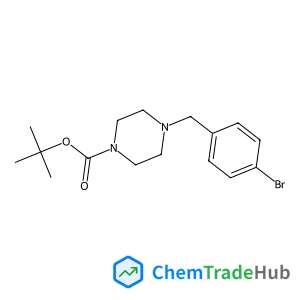
2-Methyl-2-propanyl 4-(4-bromobenzyl)-1-piperazinecarboxylate
CAS Number:
844891-10-7
Molecular Formula:
C16H23BrN2O2
Recommended Suppliers





Disclaimer
This page provides academic journal information for reference and research purposes only. We are not affiliated with any journal publishers and do not handle publication submissions. For publication-related inquiries, please contact the respective journal publishers directly.
If you notice any inaccuracies in the information displayed, please contact us at support@chemtradehub.com. We will promptly review and address your concerns.