












Molecular mechanics modelling of porphyrins. Using artificial neural networks to develop metal parameters for four-coordinate metalloporphyrins
Literature Information
Publication Date
2002-10-21
DOI
10.1039/B203360G
Impact Factor
3.676
Authors
Helder M. Marques, Ignacy Cukrowski
View Original
Abstract
The development of parameters for the modelling of four coordinate Cu(II), Co(II), Ni(II), Pd(II) and Zn(II) porphyrins is described. The approach used was to reproduce as closely as possible the solid state structures of representative compounds. The previously-reported parameters for the modelling of iron porphyrins were revised so as to reproduce as closely as possible the average structure of the porphyrin core. Attention was then focussed on developing the appropriate M–L parameters (the strain free bond length, l0, and the bond stretching force constant, ks). The mean difference between the modelled and experimentally observed M–L bond lengths (the “error”) was plotted simultaneously against l0 and ks, which were varied in a grid-like pattern using experimental design principles, to generate results in the form of an error response surface. The minimum on the surface represents the optimum values of the two parameters l0 and ks. Artificial neural networks were used to generate the error response surface from relatively few input data points in search for the minimum error. This principle was successful in modelling both planar and distorted structures of Cu(II), Co(II), Ni(II), and Pd(II). However, the minimum on the error response surface for Zn(II) resulted in three of nine structures minimising into structures with conformations different from those found crystallographically. Alternative parameters, which gave a marginally greater error, were used and resulted in the correct modelling of the crystal structures used in this study.
Recommended Journals
Related Literature
A pH-sensitive and biodegradable supramolecular hydrogel constructed from a PEGylated polyphosphoester-doxorubicin prodrug and α-cyclodextrin
Fei Li, Jinlin He, Mingzu Zhang, Peihong Ni
2015-06-03
Communication
DOI: 10.1039/C5PY00620A
Preparation of complex multiblock copolymers via aqueous RAFT polymerization at room temperature
Liam Martin, Guillaume Gody
2015-04-30
Paper
DOI: 10.1039/C5PY00478K
Addition of water to an alcoholic RAFT PISA formulation leads to faster kinetics but limits the evolution of copolymer morphology
E. R. Jones, M. Semsarilar, P. Wyman, M. Boerakker, S. P. Armes
2015-11-26
Paper
DOI: 10.1039/C5PY01795E
Antimicrobial polymethacrylates based on quaternized 1,3-thiazole and 1,2,3-triazole side-chain groups
Rubén Tejero, Daniel López, Fátima López-Fabal, José L. Gómez-Garcés, Marta Fernández-García
2015-03-23
Paper
DOI: 10.1039/C5PY00288E
Vinyl ferrocenyl glycidyl ether: an unprotected orthogonal ferrocene monomer for anionic and radical polymerization
Laura Thomi, Tassilo Gleede, Frederik R. Wurm
2015-04-01
Paper
DOI: 10.1039/C5PY00404G
Facile synthesis of stereoregular helical poly(phenyl isocyanide)s and poly(phenyl isocyanide)-block-poly(l-lactic acid) copolymers using alkylethynylpalladium(ii) complexes as initiators
Jia-Li Chen, Ming Su, Zhi-Qiang Jiang, Na Liu, Jun Yin, Yuan-Yuan Zhu, Zong-Quan Wu
2015-05-26
Paper
DOI: 10.1039/C5PY00657K
Construction of redox/pH dual stimuli-responsive PEGylated polymeric micelles for intracellular doxorubicin delivery in liver cancer
Hong Yu Yang, Moon-Sun Jang, Guang Hui Gao, Jung Hee Lee, Doo Sung Lee
2016-01-27
Paper
DOI: 10.1039/C5PY01808K
Development of a transition metal-free polymerization route to functional conjugated polydiynes from a haloalkyne-based organic reaction
2016-03-02
Paper
DOI: 10.1039/C6PY00050A
Bio-based difuranic polyol monomers and their derived linear and cross-linked polyurethanes
Zehuai Mou, Shuo (Kelvin) Feng, Eugene Y. X. Chen
2016-01-18
Paper
DOI: 10.1039/C5PY02032H
You might also like
Compound Q&A
What are the main uses of (5-Sulfamoyl-3-pyridinyl)boronic acid (CAS: 951233-61-7)?
(5-Sulfamoyl-3-pyridinyl)boronic acid is primarily used in chemical synthesis, p...
951233-61-7(5-Sulfamoyl-3-pyrid...
Compound Q&A
How is Benzyl 2-methyl-2-(methylsulfonyl)-4-pentenoate (CAS: 1942858-50-5) typically synthesized?
Benzyl 2-methyl-2-(methylsulfonyl)-4-pentenoate is typically synthesized via est...
1942858-50-5Benzyl 2-methyl-2-(m...
Compound Q&A
What precautions should be taken when handling 8-Fluoroquinolin-6-ol (CAS: 209353-22-0)?
When handling 8-Fluoroquinolin-6-ol (CAS: 209353-22-0), it is important to use p...
209353-22-08-Fluoroquinolin-6-o...
Compound Q&A
What are the physical and chemical properties of 1,3-Dibromo-5-(2-methyl-2-propanyl)benzene (CAS: 129316-09-2)?
1,3-Dibromo-5-(2-methyl-2-propanyl)benzene (CAS: 129316-09-2) is a crystalline c...
129316-09-21,3-Dibromo-5-(2-met...
Compound Q&A
What industries use Ethyl 7-chloro-4-oxo-1-(1,3-thiazol-2-yl)-1,4-dihydro-1,8-naphthyridine-3-carboxylate (CAS: 174726-87-5)?
Ethyl 7-chloro-4-oxo-1-(1,3-thiazol-2-yl)-1,4-dihydro-1,8-naphthyridine-3-carbox...
174726-87-5Ethyl 7-chloro-4-oxo...
Compound Q&A
What precautions should be taken when handling Delta-7-Avenasterol (CAS: 23290-26-8)?
When handling Delta-7-Avenasterol (CAS: 23290-26-8), it is important to wear app...
23290-26-8Delta-7-Avenasterol
Compound Q&A
What precautions should be taken when handling N-({(5R)-3-[3-Fluoro-4-(4-morpholinyl)phenyl]-2-oxo-1,3-oxazolidin-5-yl}methyl)acetamide (CAS: 872992-20-6)?
Proper handling involves the use of personal protective equipment such as gloves...
872992-20-6N-({(5R)-3-[3-Fluoro...
Compound Q&A
What precautions should be taken when handling 2-Methyl-2-proanyl 4-[(2-aminophenyl)amino]-1-piperidinecarboxylate (CAS: 79099-00-6)?
When handling 2-Methyl-2-proanyl 4-[(2-aminophenyl)amino]-1-piperidinecarboxylat...
79099-00-62-Methyl-2-propanyl ...
Compound Q&A
What is N-Methyl-4-chlorobenzylamine hydrochloride (CAS: 65542-24-7)?
N-Methyl-4-chlorobenzylamine hydrochloride (CAS: 65542-24-7) is a organic compou...
65542-24-7N-Methyl-4-chloroben...
Compound Q&A
Is [2-(Dodecyloxy)ethoxy]acetic acid (CAS: 27306-90-7) safe?
[2-(Dodecyloxy)ethoxy]acetic acid (CAS: 27306-90-7) is generally considered safe...
27306-90-7[2-(Dodecyloxy)ethox...
Source Journal
Physical Chemistry Chemical Physics

CiteScore:
5.5
Self-citation Rate:
10.3%
Articles per Year:
3036
Physical Chemistry Chemical Physics (PCCP) is an international journal co-owned by 19 physical chemistry and physics societies from around the world. This journal publishes original, cutting-edge research in physical chemistry, chemical physics and biophysical chemistry. To be suitable for publication in PCCP, articles must include significant innovation and/or insight into physical chemistry; this is the most important criterion that reviewers and Editors will judge against when evaluating submissions. The journal has a broad scope and welcomes contributions spanning experiment, theory, computation and data science. Topical coverage includes spectroscopy, dynamics, kinetics, statistical mechanics, thermodynamics, electrochemistry, catalysis, surface science, quantum mechanics, quantum computing and machine learning. Interdisciplinary research areas such as polymers and soft matter, materials, nanoscience, energy, surfaces/interfaces, and biophysical chemistry are welcomed if they demonstrate significant innovation and/or insight into physical chemistry. Joined experimental/theoretical studies are particularly appreciated when complementary and based on up-to-date approaches.
Recommended Compounds
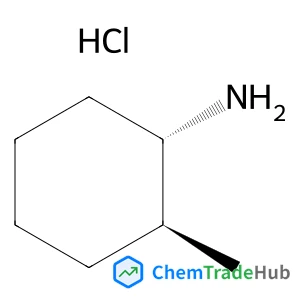
(1R,2R)-2-Methylcyclohexanamine hydrochloride (1:1)
CAS Number:
39558-31-1
Molecular Formula:
C7H16ClN
Recommended Suppliers





Disclaimer
This page provides academic journal information for reference and research purposes only. We are not affiliated with any journal publishers and do not handle publication submissions. For publication-related inquiries, please contact the respective journal publishers directly.
If you notice any inaccuracies in the information displayed, please contact us at support@chemtradehub.com. We will promptly review and address your concerns.