













The thermotropic phase behaviour of phyto-ceramide 1 as investigated by ATR-FTIR and DSC
Literature Information
Publication Date
2002-05-08
DOI
10.1039/B200618A
Impact Factor
3.676
Authors
View Original
Abstract
Phyto-ceramide 1 {N-(27-stearoyloxy-heptacosanoyl)-phytosphingosine} consists of a C18 phytosphingosine base coupled via an amide link to a very long chain omega-hydroxy fatty acid, which is linked to a further fatty acid. This unusual ceramide found in the lipid barrier of stratum corneum is thought to have important functions for the integrity of the permeability barrier in the stratum corneum. Phyto-ceramide 1 functions as a molecular rivet holding together different bilayers of the lipid barrier. In addition, it is assumed that phyto-ceramide 1 interacts with the corneocyte cell membranes of the stratum corneum and thus fixes these cells to the stratum corneum lipid matrix. The thermotropic phase behaviour of phyto-ceramide 1 was investigated by means of attenuated total reflection Fourier-transform infrared spectroscopy (ATR-FTIR) and differential scanning calorimetry (DSC). The aim of this study was the understanding of the organisation of phyto-ceramide 1 bilayers and their thermotropic phase behaviour. Special attention was focused on the intermolecular hydrogen bonding interactions in the polar interface and with water molecules during lipid film hydration. From the calorimetric data the phase transition temperature was determined to 105 °C with a very large phase transition enthalpy ΔH of +146 kJ mol−1. FTIR provided information on the hydrophobic core of the lipids as well as information concerning head group interactions. Analysing the methylene stretching, scissoring and rocking mode indicated a highly ordered gel phase. Hydration of the lipid films had some impact on the reorganisation of the acyl chains as is derived from the band shape and frequencies of the amide I and II bands. Water penetration into the polar lipid region was monitored by the temperature dependence of the amide II and O–H/N–H stretching intensities as a function of H → D exchange. Hydration could only be realized at the onset of the phase transition, which indicated that strong intermolecular interactions between the ceramide head groups exist. Hydration of the lipid film induced the formation of a tighter hydrogen bonding network between the ceramide head groups, as concluded from the position of both amide bands. The analysis of the band of the ester carbonyl group located in the “middle” of the ceramide structure revealed that it is involved in hydrogen bonding. This was concluded from the changes of the ester carbonyl band upon heating and hydration.
Related Literature
A unified understanding of magnetorheological elastomers for rapid and extreme stiffness tuning
Ella T. Williams, Nathan Lazarus
2023-10-02
Paper
DOI: 10.1039/D3LP00109A
A review on polyhydroxyalkanoate (PHA) production through the use of lignocellulosic biomass
Deepak Kumar, B. V. Ramarao
2023-09-20
Critical Review
DOI: 10.1039/D3SU00126A
Multidisciplinary approaches for enzyme biocatalysis in pharmaceuticals: protein engineering, computational biology, and nanoarchitectonics
Ronald Sluyter, Konstantin Konstantinov, Jung Ho Kim
2023-10-28
Review Article
DOI: 10.1039/D3EY00239J
Management strategies for single-use plastics: lessons to learn from Indian approach of minimizing microplastic waste
Surya Singh, Mrinal Kanti Biswas
2023-10-13
Paper
DOI: 10.1039/D3VA00222E
Recent advances in tunable metal–support interactions for enhancing the photocatalytic nitrogen reduction reaction
Bing-Hao Wang, Guang-Hui Chen, Biao Hu, Xiong Wang, Sheng Tian, Xing-Sheng Hu, Yang Li, Chao Peng
2023-09-15
Review Article
DOI: 10.1039/D3EY00191A
Fluorine pollution in a sheep fluorosis area of the northern Helan Mountains, Ningxia, China
Xiuping Hong, Handong Liang
2023-11-14
Paper
DOI: 10.1039/D3VA00262D
Cyclic ketal bridged bisepoxides: enabling the design of degradable epoxy-amine thermosets for carbon fiber composite applications
Benjamin M. Alameda, Margaret S. Kumler, J. Scott Murphy, Jeffrey S. Aguinaga, Derek L. Patton
2023-08-17
Paper
DOI: 10.1039/D3LP00095H
Activating iodine redox by enabling single-atom coordination to dormant nitrogen sites to realize durable zinc–iodine batteries
Jisung Lee, Wooseok Lee, Seungho Back, Seung Yeop Yi, Seongseop Kim, Joonhee Moon, Dong-Yeun Koh, Kyeounghak Kim, Seoin Back, Jinwoo Lee
2023-11-07
Paper
DOI: 10.1039/D3EY00228D
Correction: Towards sustainable synthesis: a life cycle assessment of polymer of intrinsic microporosity (PIM-1) by green mechanosynthesis
Ching Yoong Loh, Rui Huang, Rory Bell, Ming Xie
2023-11-27
Correction
DOI: 10.1039/D3SU90054A
You might also like
Compound Q&A
How should waste containing (6-Bromo-2-naphthyl)oxy](dimethyl)(2-methyl-2-propanyl)silane be handled?
Waste containing (6-Bromo-2-naphthyl)oxy](dimethyl)(2-methyl-2-propanyl)silane (...
100751-65-3[(6-Bromo-2-naphthyl...
Compound Q&A
How is 7-Fluoro-4-isoquinolinecarboxylic acid (CAS: 1841081-40-0) typically synthesized?
7-Fluoro-4-isoquinolinecarboxylic acid can be synthesized via a multi-step proce...
1841081-40-07-Fluoro-4-isoquinol...
Compound Q&A
What are the physical and chemical properties of 2,3,5,6-Tetrabromothieno[3,2-b]thiophene (CAS: 124638-53-5)?
2,3,5,6-Tetrabromothieno[3,2-b]thiophene is a crystalline compound with a high m...
124638-53-52,3,5,6-Tetrabromoth...
Compound Q&A
Is 1-[4-(Benzylamino)-7,8-dihydro-5H-pyrano[4,3-d]pyrimidin-2-yl]-2-methyl-1H-indole-4-carboxamide (CAS: 1542705-92-9) safe?
1-[4-(Benzylamino)-7,8-dihydro-5H-pyrano[4,3-d]pyrimidin-2-yl]-2-methyl-1H-indol...
1542705-92-91-[4-(Benzylamino)-7...
Compound Q&A
What is the market or research trend for imidazo[5,1-d]-1,2,3,5-tetrazine-8-carboxylic acid, 3,4-dihydro-3-methyl-4-oxo- (CAS: 113942-30-6)?
The market for imidazo[5,1-d]-1,2,3,5-tetrazine-8-carboxylic acid, 3,4-dihydro-3...
113942-30-6Imidazo[5,1-d]-1,2,3...
Compound Q&A
What is 3-(Triisopropylsilyl)propiolaldehyde (CAS: 163271-80-5)?
3-(Triisopropylsilyl)propiolaldehyde is a synthetic organic compound with the CA...
163271-80-53-(Triisopropylsilyl...
Compound Q&A
What regulatory guidelines apply to 6-Nitro-2H-1,4-benzoxazin-3(4H)-one (CAS: 81721-87-1)?
6-Nitro-2H-1,4-benzoxazin-3(4H)-one (CAS: 81721-87-1) is subject to various regu...
81721-87-16-Nitro-2H-1,4-benzo...
Compound Q&A
How should waste containing (3-Fluorophenyl)(4-{[(2-methyl-2-propanyl)oxy]carbonyl}-1-piperazinyl)acetic acid (CAS: 885272-91-3) be handled?
Waste containing (3-Fluorophenyl)(4-{[(2-methyl-2-propanyl)oxy]carbonyl}-1-piper...
885272-91-3(3-Fluorophenyl)(4-{...
Compound Q&A
What are the physical and chemical properties of N,N'-4,4'-Biphenyldiyldiisonicotinamide (CAS: 55119-40-9)?
N,N'-4,4'-Biphenyldiyldiisonicotinamide is a white crystalline solid with a mole...
55119-40-9N,N'-4,4'-Biphenyldi...
Compound Q&A
What industries use 6-Bromo-8-fluoro-2-quinazolinol (CAS: 1036756-15-6)?
6-Bromo-8-fluoro-2-quinazolinol is primarily used in the pharmaceutical industry...
1036756-15-66-Bromo-8-fluoro-2-q...
Source Journal
Physical Chemistry Chemical Physics

CiteScore:
5.5
Self-citation Rate:
10.3%
Articles per Year:
3036
Physical Chemistry Chemical Physics (PCCP) is an international journal co-owned by 19 physical chemistry and physics societies from around the world. This journal publishes original, cutting-edge research in physical chemistry, chemical physics and biophysical chemistry. To be suitable for publication in PCCP, articles must include significant innovation and/or insight into physical chemistry; this is the most important criterion that reviewers and Editors will judge against when evaluating submissions. The journal has a broad scope and welcomes contributions spanning experiment, theory, computation and data science. Topical coverage includes spectroscopy, dynamics, kinetics, statistical mechanics, thermodynamics, electrochemistry, catalysis, surface science, quantum mechanics, quantum computing and machine learning. Interdisciplinary research areas such as polymers and soft matter, materials, nanoscience, energy, surfaces/interfaces, and biophysical chemistry are welcomed if they demonstrate significant innovation and/or insight into physical chemistry. Joined experimental/theoretical studies are particularly appreciated when complementary and based on up-to-date approaches.
Recommended Compounds

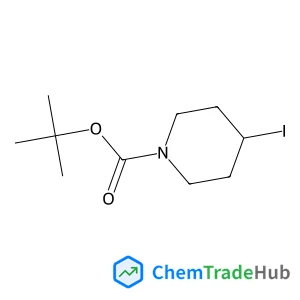
2-Methyl-2-propanyl 4-iodo-1-piperidinecarboxylate
CAS Number:
301673-14-3
Molecular Formula:
C10H18INO2


Recommended Suppliers



Disclaimer
This page provides academic journal information for reference and research purposes only. We are not affiliated with any journal publishers and do not handle publication submissions. For publication-related inquiries, please contact the respective journal publishers directly.
If you notice any inaccuracies in the information displayed, please contact us at support@chemtradehub.com. We will promptly review and address your concerns.