












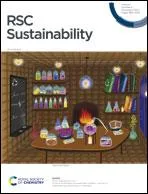

A review on polyhydroxyalkanoate (PHA) production through the use of lignocellulosic biomass
Literature Information
Publication Date
2023-09-20
DOI
10.1039/D3SU00126A
Impact Factor
0
Authors
Deepak Kumar, B. V. Ramarao
View Original
Abstract
Polyhydroxyalkanoates (PHAs) are aliphatic polyesters produced via bacterial fermentation of sugars and fatty acids and are considered to be a promising material to aid in mitigating plastic pollution due to their universal biodegradability. With an expected 12 billion metric tons of plastic to accumulate within landfills and ecosystems by 2050, this mitigation is desperately needed. The major bottleneck in the commercial feasibility of PHAs is the high cost compared to their non-biodegradable synthetic counterparts currently predominant throughout the packaging and single-use goods industry, with PHAs costing 3–12× more than traditional plastics. With approximately 50% of the production costs attributed to the fermentation substrate, a significant opportunity exists to dramatically cut the cost of PHA production through the use of a low or no-cost substrate. These biodegradable polymers can be sustainably produced from a variety of waste materials. Lignocellulosic biomass is the most abundant natural material on earth and can potentially be used for this purpose. This review includes an overview of the PHA production process such as metabolic pathways, reactor configurations, and pre-treatments for lignocellulosic biomass. The results from various studies using lignocellulosic biomass for PHA production were compared. Finally, potential drawbacks and opportunities are discussed for the viability of integrating the sustainable production of PHAs into the global circular economy. This work satisfies the UN's sustainability goal of responsible consumption and production (Sustainable Development Goal 12).
Related Literature
Direct ab initio MD study on the interaction of hydroperoxy radical (HOO) with water molecules
Hiroto Tachikawa, Shigeaki Abe
2010-02-24
Paper
DOI: 10.1039/B923310E
A novel stabilisation model for rutheniumnanoparticles in imidazolium ionic liquids: in situ spectroscopic and labelling evidence
Paul S. Campbell, Catherine C. Santini, Denis Bouchu, Bernard Fenet, Karine Philippot, Bruno Chaudret, Agílio A. H. Pádua, Yves Chauvin
2010-03-10
Paper
DOI: 10.1039/B925329G
Laser spectroscopic study on (dibenzo-24-crown-8-ether)–water and –methanol complexes in supersonic jets
Satoshi Kokubu, Ryoji Kusaka, Yoshiya Inokuchi, Takeharu Haino, Takayuki Ebata
2010-02-25
Paper
DOI: 10.1039/B924822F
Construction and photophysics study of supramolecular complexes composed of three-point binding fullerene-trispyridylporphyrin dyads and zinc porphyrin
Lai Feng, Yishi Wu, Junfeng Xiang, Li Jiang, Chunying Shu, Chunru Wang
2010-11-19
Communication
DOI: 10.1039/C0CP01076F
Effect of hydrophobic nanopatches within an ionic surface on the structure of liquids
Christopher Hardacre
2010-11-01
Paper
DOI: 10.1039/C0CP01838D
Drainage of the air–water–quartz film: experiments and theory
Rogerio Manica
2010-12-09
Paper
DOI: 10.1039/C0CP00677G
Towards understanding a mechanism for reversible hydrogenstorage: theoretical study of transition metal catalysed dehydrogenation of sodium alanate
Ivan Ljubić, David C. Clary
2010-03-04
Paper
DOI: 10.1039/B922617F
Photoionization of 2-pyridone and 2-hydroxypyridine
J. C. Poully, J. P. Schermann, N. Nieuwjaer, F. Lecomte, G. Grégoire, C. Desfrançois, G. A. Garcia, L. Nahon, D. Nandi, L. Poisson, M. Hochlaf
2010-03-02
Paper
DOI: 10.1039/B923630A
You might also like
Compound Q&A
How should waste containing (6-Bromo-2-naphthyl)oxy](dimethyl)(2-methyl-2-propanyl)silane be handled?
Waste containing (6-Bromo-2-naphthyl)oxy](dimethyl)(2-methyl-2-propanyl)silane (...
100751-65-3[(6-Bromo-2-naphthyl...
Compound Q&A
How is 7-Fluoro-4-isoquinolinecarboxylic acid (CAS: 1841081-40-0) typically synthesized?
7-Fluoro-4-isoquinolinecarboxylic acid can be synthesized via a multi-step proce...
1841081-40-07-Fluoro-4-isoquinol...
Compound Q&A
What are the physical and chemical properties of 2,3,5,6-Tetrabromothieno[3,2-b]thiophene (CAS: 124638-53-5)?
2,3,5,6-Tetrabromothieno[3,2-b]thiophene is a crystalline compound with a high m...
124638-53-52,3,5,6-Tetrabromoth...
Compound Q&A
Is 1-[4-(Benzylamino)-7,8-dihydro-5H-pyrano[4,3-d]pyrimidin-2-yl]-2-methyl-1H-indole-4-carboxamide (CAS: 1542705-92-9) safe?
1-[4-(Benzylamino)-7,8-dihydro-5H-pyrano[4,3-d]pyrimidin-2-yl]-2-methyl-1H-indol...
1542705-92-91-[4-(Benzylamino)-7...
Compound Q&A
What is the market or research trend for imidazo[5,1-d]-1,2,3,5-tetrazine-8-carboxylic acid, 3,4-dihydro-3-methyl-4-oxo- (CAS: 113942-30-6)?
The market for imidazo[5,1-d]-1,2,3,5-tetrazine-8-carboxylic acid, 3,4-dihydro-3...
113942-30-6Imidazo[5,1-d]-1,2,3...
Compound Q&A
What is 3-(Triisopropylsilyl)propiolaldehyde (CAS: 163271-80-5)?
3-(Triisopropylsilyl)propiolaldehyde is a synthetic organic compound with the CA...
163271-80-53-(Triisopropylsilyl...
Compound Q&A
What regulatory guidelines apply to 6-Nitro-2H-1,4-benzoxazin-3(4H)-one (CAS: 81721-87-1)?
6-Nitro-2H-1,4-benzoxazin-3(4H)-one (CAS: 81721-87-1) is subject to various regu...
81721-87-16-Nitro-2H-1,4-benzo...
Compound Q&A
How should waste containing (3-Fluorophenyl)(4-{[(2-methyl-2-propanyl)oxy]carbonyl}-1-piperazinyl)acetic acid (CAS: 885272-91-3) be handled?
Waste containing (3-Fluorophenyl)(4-{[(2-methyl-2-propanyl)oxy]carbonyl}-1-piper...
885272-91-3(3-Fluorophenyl)(4-{...
Compound Q&A
What are the physical and chemical properties of N,N'-4,4'-Biphenyldiyldiisonicotinamide (CAS: 55119-40-9)?
N,N'-4,4'-Biphenyldiyldiisonicotinamide is a white crystalline solid with a mole...
55119-40-9N,N'-4,4'-Biphenyldi...
Compound Q&A
What industries use 6-Bromo-8-fluoro-2-quinazolinol (CAS: 1036756-15-6)?
6-Bromo-8-fluoro-2-quinazolinol is primarily used in the pharmaceutical industry...
1036756-15-66-Bromo-8-fluoro-2-q...
Source Journal
Recommended Compounds
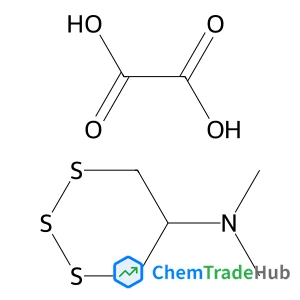
Oxalic acid compound with cyclohexylsulfamothioic O-acid (11)
CAS Number:
31895-22-4
Molecular Formula:
C7H13NO4S3
Recommended Suppliers








Disclaimer
This page provides academic journal information for reference and research purposes only. We are not affiliated with any journal publishers and do not handle publication submissions. For publication-related inquiries, please contact the respective journal publishers directly.
If you notice any inaccuracies in the information displayed, please contact us at support@chemtradehub.com. We will promptly review and address your concerns.