












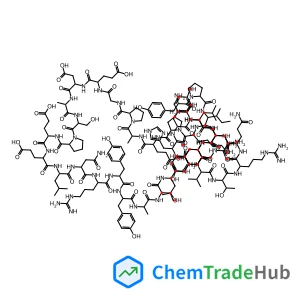
The quasi-irreversible inactivation of cytochrome P450 enzymes by paroxetine: a computational approach
Literature Information
Publication Date
2020-04-06
DOI
10.1039/D0OB00529K
Impact Factor
3.876
Authors
View Original
Abstract
The mechanism-based inactivation (MBI) of P450 by paroxetine was investigated by computational analysis. The drug–enzyme interactions were figured out through studying energy profiles of three competing mechanisms. The potency of paroxetine as P450's inhibitor was estimated based on the availability of two active sites for the MBI in the paroxetine structure. The inactivation by the amino site of paroxetine mainly proceeds via the hydrogen atom transfer pathway because of the lower energy demand of its rate determining step. In addition, the low-spin state is the predominant route in the MBI at the methylenedioxo active site as a result of being rebound barrier-free mechanism. Our comparative investigation showed that inactivation at the secondary amine is thermodynamically more favorable because of the lower energy barrier of the dehydration mechanism of the hydroxylated paroxetine complex than its methylenedioxo counterpart. The results of docking analysis coincided with the outputs of DFT calculations since the docking pose with the lowest binding affinity is that for conformation with polar interaction between the amino group of paroxetine and the oxo moiety of P450's active site. Assessment of the molecular dynamics simulations trajectories revealed the favorable interaction of paroxetine with P450.
Recommended Journals
Related Literature
A solely biobased strain sensor with an ultra-precision response via a surface graphitization strategy
Zhihao Yang, Ying Yuan, Bin Wang, Xiaojun Shen, Xiluan Wang, Tong-Qi Yuan
2023-11-02
Paper
DOI: 10.1039/D3TA04872A
Contact engineering for 2D Janus MoSSe/metal junctions
Yu Shu, Ting Li, Naihua Miao, Jian Gou, Xiaochun Huang, Zhou Cui, Rui Xiong, Cuilian Wen, Jian Zhou, Baisheng Sa, Zhimei Sun
2023-11-16
Communication
DOI: 10.1039/D3NH00450C
siRNA-loaded DNA nanostructures restore endothelial leakiness
Arun Richard Chandrasekaran
2023-10-04
Editorial
DOI: 10.1039/D3NH90040A
Post-synthetic modification of zeolitic imidazolate framework-90 via Schiff base reaction for ultrahigh iodine capture
Zilong Zhang, Yanchun Chen, Yiheng Sun, Zilu Chen, Zhan-Yun Zhang, Dongcheng Liu, Huan-Cheng Hu
2023-10-31
Paper
DOI: 10.1039/D3TA04686A
van der Waals 2D transition metal dichalcogenide/organic hybridized heterostructures: recent breakthroughs and emerging prospects of the device
Sherif Kamal, Yahya Khan, Marko Kralj
2023-10-30
Review Article
DOI: 10.1039/D3NH00310H
A bio-inspired multifunctional interface layer for high performance zinc-ion batteries via novel in situ electropolymerization
Jun Wang, Xiuyang Zou, Lina Song, Jianguo Lu, Xiang Gao, Qinggang He
2023-10-04
Paper
DOI: 10.1039/D3TA04886A
Rapidly tuning the electrocatalytic activity of perovskite oxides by plasma treatment
2023-11-01
Paper
DOI: 10.1039/D3TA05214A
Phonon vortices at heavy impurities in two-dimensional materials
De-Liang Bao, Mingquan Xu, Ao-Wen Li, Wu Zhou
2023-12-07
Communication
DOI: 10.1039/D3NH00433C
Correction: Hydrothermal synthesis of α-MnO2 and β-MnO2 nanorods as high capacity cathode materials for sodium ion batteries
Dawei Su, Hyo-Jun Ahn
2023-11-13
Correction
DOI: 10.1039/D3TA90111D
You might also like
Compound Q&A
What regulatory guidelines apply to 6-Bromo-2-methylimidazo[1,2-a]pyrimidine (CAS: 1111638-05-1)?
6-Bromo-2-methylimidazo[1,2-a]pyrimidine (CAS: 1111638-05-1) falls under various...
1111638-05-16-Bromo-2-methylimid...
Compound Q&A
Are there alternatives to 1-Pyrrolidineethanol, β-methyl-α-phenyl-, (αS,βR) (CAS: 123620-80-4) in synthesis?
While there are no direct alternatives, similar compounds like 1-Pyrrolidineetha...
123620-80-41-Pyrrolidineethanol...
Compound Q&A
Is 4-Methyl-2,6-bis(2-methyl-2-propanyl)phenyl methylcarbamate (CAS: 1918-11-2) safe?
4-Methyl-2,6-bis(2-methyl-2-propanyl)phenyl methylcarbamate (CAS: 1918-11-2) is ...
1918-11-24-Methyl-2,6-bis(2-m...
Compound Q&A
How should 2-(3-Bromo-4-fluorophenyl)-1,3-dioxolane (CAS: 77771-04-1) be stored?
2-(3-Bromo-4-fluorophenyl)-1,3-dioxolane (CAS: 77771-04-1) should be stored in a...
77771-04-12-(3-Bromo-4-fluorop...
Compound Q&A
What are the physical and chemical properties of 4,5,6,7-Tetrahydro-1H-indazole hydrochloride (CAS: 18161-11-0)?
4,5,6,7-Tetrahydro-1H-indazole hydrochloride is a white crystalline solid with a...
18161-11-04,5,6,7-Tetrahydro-1...
Compound Q&A
What is (2R)-1-Methoxy-3-phenyl-2-propanamine (CAS: 59919-07-2)?
(2R)-1-Methoxy-3-phenyl-2-propanamine is a chiral organic compound with the CAS ...
59919-07-2(2R)-1-Methoxy-3-phe...
Compound Q&A
What industries use Ethyl 1-(1-phenylethyl)-1H-imidazole-5-carboxylate (CAS: 56649-47-9)?
Ethyl 1-(1-phenylethyl)-1H-imidazole-5-carboxylate is used in various industries...
56649-47-9Ethyl 1-(1-phenyleth...
Compound Q&A
What regulatory guidelines apply to 4-[(1E,3S)-1-(4-Hydroxyphenyl)-1,4-pentadien-3-yl]phenol (CAS: 17676-24-3)?
4-[(1E,3S)-1-(4-Hydroxyphenyl)-1,4-pentadien-3-yl]phenol (CAS: 17676-24-3) falls...
17676-24-34-[(1E,3S)-1-(4-Hydr...
Compound Q&A
What industries use (S)-3-Amino-5-phenylpentanoic acid hydrochloride (CAS: 331846-97-0)?
(S)-3-Amino-5-phenylpentanoic acid hydrochloride is primarily used in the pharma...
331846-97-0(S)-3-Amino-5-phenyl...
Compound Q&A
How is 7-methoxy-1-benzothiophene-2-carboxylic acid (CAS: 88791-07-5) typically synthesized?
7-Methoxy-1-benzothiophene-2-carboxylic acid is typically synthesized by reactin...
88791-07-57-methoxy-1-benzothi...
Source Journal
Organic & Biomolecular Chemistry

CiteScore:
3.4
Self-citation Rate:
10.3%
Articles per Year:
1041
Organic & Biomolecular Chemistry (OBC) publishes original and high impact research and reviews in organic chemistry. We welcome research that shows new or significantly improved protocols or methodologies in total synthesis, synthetic methodology or physical and theoretical organic chemistry as well as research that shows a significant advance in the organic chemistry or molecular design aspects of chemical biology, catalysis, supramolecular and macromolecular chemistry, theoretical chemistry, mechanism-oriented physical organic chemistry, medicinal chemistry or natural products. Articles published in the journal should report new work which makes a highly-significant impact in the field. Routine and incremental work is generally not suitable for publication in the journal. More details about key areas of our scope are below. In all cases authors should include in their article clear rationale for why their research has been carried out.
Recommended Compounds
Recommended Suppliers





Disclaimer
This page provides academic journal information for reference and research purposes only. We are not affiliated with any journal publishers and do not handle publication submissions. For publication-related inquiries, please contact the respective journal publishers directly.
If you notice any inaccuracies in the information displayed, please contact us at support@chemtradehub.com. We will promptly review and address your concerns.