













Electrochemistry of Co–Ru hetero-dinuclear porphyrin complex in a Nafion matrix
Literature Information
Publication Date
2001-09-17
DOI
10.1039/B105789H
Impact Factor
3.676
Authors
Takane Imaoka, Kimihisa Yamamoto
View Original
Abstract
The metallo porphyrins possessing four ionic substituents of (meso-tetrakis(N-methyl-4-pyridiniumyl)porphyrinato)ruthenium(II) (RuTMPyP) and (meso-tetrakis(4-sulfonatophenyl)porphyrinato)cobalt(II) (CoTPPS) spontaneously associate. The equilibrium constant of dissociation (Kd) of the Co–Ru porphyrin was estimated to be 5 × 10⁻⁷ mol dm−3 by Job's titration. A single redox wave based on a 2-electron transfer was observed at 0.19 V s. SCE using cyclic voltammetry in a Nafion matrix. Potential-step chronocoulometry (PSCC) and potential-step chronoamperometry (PSCA) determined the kinetics of the electron transfer (k0 = 1.47 cm s−1) from the electrode to the complex in the Nafion film, and the apparent diffusion coefficient of electrons (Dapp = 8 × 10⁻⁸ cm2 s−1) in the Nafion film. Dimerization of the Co and Ru porphyrins results in an accelerated 2-electron transfer because the electrons are transferred ia overlapping π orbitals on the porphyrin ring. The film containing the dinuclear porphyrins shows sufficient catalytic activity toward dioxygen with a 4-electron reduction, based on successive electron transfer from the electrode to dioxygen.
Related Literature
Constructing hybrid films of conjugated oligomers and gold nanoparticles for efficient photoelectronic properties
Xiaofeng Liu, Ji'en Yang, Chunjie Zhou, Xiaodong Yin, Huibiao Liu, Yongjun Li, Yuliang Li
2010-10-26
Paper
DOI: 10.1039/C0CP01116A
The impact of protonation and deprotonation of 3-methyl-2′-deoxyadenosine on N-glycosidic bond cleavage
Ali Ebrahimi, Mostafa Habibi-Khorassani, Sophia Bazzi
2011-01-26
Paper
DOI: 10.1039/C0CP01279C
Effect of nucleobase sequence on the proton-transfer reaction and stability of the guanine–cytosine base pair radical anion
Hsing-Yin Chen, Shu-Wen Yeh, Sodio C. N. Hsu, Chai-Lin Kao, Teng-Yuan Dong
2010-12-09
Paper
DOI: 10.1039/C0CP01419B
Unfolding and refolding details of lysozyme in the presence of β-casein micelles
Fu-Gen Wu, Jun-Jie Luo, Zhi-Wu Yu
2011-01-24
Paper
DOI: 10.1039/C0CP01184C
Stepwise vs. concerted pathways in scandium ion-coupled electron transfer from superoxide ion to p-benzoquinone derivatives
Tomonori Kawashima, Kei Ohkubo
2011-01-06
Paper
DOI: 10.1039/C0CP00916D
Ion conducting particle networks in liquids: modeling of network percolation and stability
Anna Jarosik, Uwe Traub, Joachim Maier, Armin Bunde
2010-12-23
Communication
DOI: 10.1039/C0CP01870H
Charging of ionic liquid surfaces under X-ray irradiation: the measurement of absolute binding energies by XPS
Ignacio J. Villar-Garcia, Emily F. Smith, Alasdair W. Taylor, Fulian Qiu, Kevin R. J. Lovelock, Robert G. Jones, Peter Licence
2010-12-13
Paper
DOI: 10.1039/C0CP01587C
Hydrogen bond strength and network structure effects on hydration of non-polar molecules
R. M. Lynden-Bell, N. Giovambattista, P. G. Debenedetti, T. Head-Gordon, P. J. Rossky
2010-12-10
Paper
DOI: 10.1039/C0CP01701A
Structure and binding of the H4 histone tail and the effects of lysine 16 acetylation
Darren Yang, Gaurav Arya
2010-12-15
Paper
DOI: 10.1039/C0CP01487G
Synthesis of silica supported AuCu nanoparticlecatalysts and the effects of pretreatment conditions for the CO oxidation reaction
J. Chris Bauer, David Mullins, Meijun Li, E. Andrew Payzant
2011-01-18
Paper
DOI: 10.1039/C0CP01859G
You might also like
Compound Q&A
What are the main uses of 1H-Indazole-6-carbonitrile (CAS: 141290-59-7)?
1H-Indazole-6-carbonitrile finds applications in pharmaceuticals, where it serve...
141290-59-71H-Indazole-6-carbon...
Compound Q&A
How should waste containing Dioctyl (2E)-2-butenedioate (CAS: 2997-85-5) be handled?
Waste containing Dioctyl (2E)-2-butenedioate (CAS: 2997-85-5) should be collecte...
2997-85-5Dioctyl (2E)-2-buten...
Compound Q&A
What industries use Sodium [(1,2-benzoxazol-3-ylmethyl)sulfonyl]azanide (CAS: 68291-98-5)?
Sodium [(1,2-benzoxazol-3-ylmethyl)sulfonyl]azanide is primarily used in pharmac...
68291-98-5Sodium [(1,2-benzoxa...
Compound Q&A
Are there alternatives to Dimethyl 4-(4,4,5,5-tetramethyl-1,3,2-dioxaborolan-2-yl)-2,6-pyridinedicarboxylate (CAS: 741709-66-0) in synthesis?
Dimethyl 4-(4,4,5,5-tetramethyl-1,3,2-dioxaborolan-2-yl)-2,6-pyridinedicarboxyla...
741709-66-0Dimethyl 4-(4,4,5,5-...
Compound Q&A
How should waste containing 2-Fluoro-6-hydrazinopyridine (CAS: 80714-39-2) be handled?
Waste containing 2-Fluoro-6-hydrazinopyridine (CAS: 80714-39-2) should be manage...
80714-39-22-Fluoro-6-hydrazino...
Compound Q&A
What is 6-Formyl-2-pyridinecarboxylic acid (CAS: 499214-11-8)?
6-Formyl-2-pyridinecarboxylic acid is an organic compound with the molecular for...
499214-11-86-Formyl-2-pyridinec...
Compound Q&A
What is the market or research trend for 3-(3,4-dimethoxyphenyl)-2,5-dimethyl-N-(2-morpholin-4-ylethyl)pyrazolo[1,5-a]pyrimidin-7-amine (CAS: 900874-91-1)?
Research trends for this compound indicate a focus on its potential applications...
900874-91-13-(3,4-dimethoxyphen...
Compound Q&A
How is 9H-Tribenzo[b,d,f]azepine (CAS: 29875-73-8) typically synthesized?
9H-Tribenzo[b,d,f]azepine is typically synthesized via a multi-step process invo...
29875-73-89H-Tribenzo[b,d,f]az...
Compound Q&A
How is 1-Cyclopropyl-7-ethoxy-6-fluoro-8-methoxy-4-oxo-1,4-dihydro-3-quinolinecarboxylic acid (CAS: 1797982-51-4) typically synthesized?
1-Cyclopropyl-7-ethoxy-6-fluoro-8-methoxy-4-oxo-1,4-dihydro-3-quinolinecarboxyli...
1797982-51-41-Cyclopropyl-7-etho...
Compound Q&A
How should waste containing Methyl 3-oxo-1,2,3,4-tetrahydro-6-quinoxalinecarboxylate (CAS: 671820-52-3) be handled?
Waste containing Methyl 3-oxo-1,2,3,4-tetrahydro-6-quinoxalinecarboxylate (CAS: ...
671820-52-3Methyl 3-oxo-1,2,3,4...
Source Journal
Physical Chemistry Chemical Physics

CiteScore:
5.5
Self-citation Rate:
10.3%
Articles per Year:
3036
Physical Chemistry Chemical Physics (PCCP) is an international journal co-owned by 19 physical chemistry and physics societies from around the world. This journal publishes original, cutting-edge research in physical chemistry, chemical physics and biophysical chemistry. To be suitable for publication in PCCP, articles must include significant innovation and/or insight into physical chemistry; this is the most important criterion that reviewers and Editors will judge against when evaluating submissions. The journal has a broad scope and welcomes contributions spanning experiment, theory, computation and data science. Topical coverage includes spectroscopy, dynamics, kinetics, statistical mechanics, thermodynamics, electrochemistry, catalysis, surface science, quantum mechanics, quantum computing and machine learning. Interdisciplinary research areas such as polymers and soft matter, materials, nanoscience, energy, surfaces/interfaces, and biophysical chemistry are welcomed if they demonstrate significant innovation and/or insight into physical chemistry. Joined experimental/theoretical studies are particularly appreciated when complementary and based on up-to-date approaches.
Recommended Compounds


![Sodium (2Z)-7-{[(2R)-2-amino-2-carboxyethyl]sulfanyl}-2-({[(1S)-2,2-dimethylcyclopropyl]carbonyl}amino)-2-heptenoate structure](https://static.chemtradehub.com/structs/811/81129-83-1-441c.webp "Sodium (2Z)-7-{[(2R)-2-amino-2-carboxyethyl]sulfanyl}-2-({[(1S)-2,2-dimethylcyclopropyl]carbonyl}amino)-2-heptenoate structure")
Sodium (2Z)-7-{[(2R)-2-amino-2-carboxyethyl]sulfanyl}-2-({[(1S)-2,2-dimethylcyclopropyl]carbonyl}amino)-2-heptenoate
CAS Number:
81129-83-1
Molecular Formula:
C16H25N2NaO5S
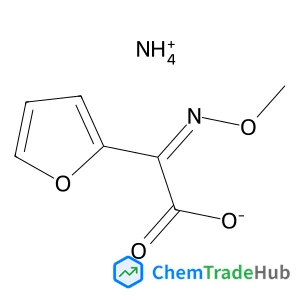
Ammonium (Z)-2-(furan-2-yl)-2-(methoxyimino)acetate
CAS Number:
97148-39-5
Molecular Formula:
C7H10N2O4
Recommended Suppliers






Disclaimer
This page provides academic journal information for reference and research purposes only. We are not affiliated with any journal publishers and do not handle publication submissions. For publication-related inquiries, please contact the respective journal publishers directly.
If you notice any inaccuracies in the information displayed, please contact us at support@chemtradehub.com. We will promptly review and address your concerns.