












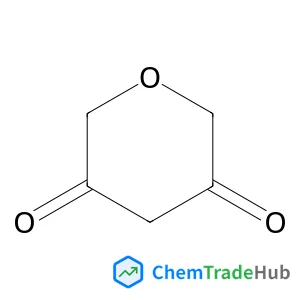
Rate coefficients and Arrhenius parameters for the reaction of the NO3 radical with acetaldehyde and acetaldehyde-1d
Literature Information
Publication Date
2001-04-05
DOI
10.1039/B100855M
Impact Factor
3.676
Authors
Barbara D'Anna, Sarka Langer, Evert Ljungström, Claus J. Nielsen, Maria Ullerstam
View Original
Abstract
Rate coefficients for the reaction between NO3 and acetaldehyde have been determined by the absolute rate fast-flow-discharge technique and by the relative rate method. The flow-tube experiments were carried out under pseudo-first-order conditions in NO3 over the temperature range 263–363 K using He as a carrier gas. The data suggests an activation energy of Ea/R = 1950 ± 290 K and k296 = (9.1 ± 0.8) × 10−15 cm3 molecule−1 s−1 (3 σ errors) as an upper limit. Mixing ca. 20% of oxygen in the He carrier gas resulted in Ea/R = 2020 ± 260 K and k296 = (2.5 ± 0.5) × 10−15 cm3 molecule−1 s−1. The relative rate experiments, performed in a static reactor employing long path FTIR detection, gave k298 = (2.62 ± 0.29) × 10−15 cm3 molecule−1 s−1, and showed a moderate kinetic isotope effect, kCH3CHO+NO3/kCH3CDO+NO2 = 2.37 ± 0.08 at 298 K. The differences in the reaction rate coefficients obtained by the two methods are analysed and discussed in terms of secondary reactions involving NO3 in the flow-tube. Model studies indicate that acetyl and peroxyacetyl radicals react with NO3 with rate coefficients of 2.5 × 10⁻¹¹ and 1.5 × 10⁻¹³ molecule cm−3 s−1 at 296 K and 5 mbar, respectively. The reaction was also studied by quantum mechanical methods and the transition states for the abstraction of aldehydic and methylic hydrogen atoms were located. Their relative energies, calculated on the MP2/cc-pVDZ//CCSDT/cc-pVDZ level, conform to the reaction proceeding entirely through Hald-abstraction at room temperature.
Related Literature
Fabrication of two-dimensionally ordered macroporous silica materials with controllable dimensions
Mandakini Kanungo, Maryanne M. Collinson
2004-02-04
Communication
DOI: 10.1039/B311936J
Cubane-like structure of a silanethiol – primary amineassembly – a novel, unusual hydrogen bond pattern
Barbara Becker, Katarzyna Baranowska, Jarosław Chojnacki, Wiesław Wojnowski
2004-01-28
Communication
DOI: 10.1039/B313576D
Pore size effects in the pyrolysis of 1,3-diphenylpropane confined in mesoporous silicas
Michelle K. Kidder, Phillip F. Britt, Zongtao Zhang, Sheng Dai, A. C. Buchanan, III
2003-10-15
Communication
DOI: 10.1039/B310405B
Structure and magnetism of a new pyrazolate bridged iron(II) spin crossover complex displaying a single HS–HS to LS–LS transition
Ben A. Leita, Boujemaa Moubaraki, Keith S. Murray, Jonathan P. Smith, John D. Cashion
2003-11-20
Communication
DOI: 10.1039/B311818E
Synthesis and characterization of novel chiral sulfonato–salen–manganese(iii) complex in a zinc–aluminium LDH host
Samiran Bhattacharjee, James A. Anderson
2004-02-04
Communication
DOI: 10.1039/B315325H
Fluorescence detection of guanine–adenine transition by a hydrogen bond forming small compound
Keitaro Yoshimoto, Chun-Yan Xu, Seiichi Nishizawa, Takanobu Haga, Hiroyuki Satake, Norio Teramae
2003-10-31
Communication
DOI: 10.1039/B309229A
Dichloro(dodeca-2,6,10-triene-1,12-diyl)ruthenium(iv): a highly efficient catalyst for the isomerization of allylic alcohols into carbonyl compounds in organic and aqueous media
Victorio Cadierno, Sergio E. García-Garrido, José Gimeno
2003-12-05
Communication
DOI: 10.1039/B313069J
Interactions between a surfactant and cavitand in water blur distinctions between host and guest
Laurent Trembleau, Julius Rebek Jr
2003-11-28
Communication
DOI: 10.1039/B311424D
Preparation and electrochemical behaviour of hydrophobic vitamin B12 covalently immobilized onto platinum electrode
Hisashi Shimakoshi, Mami Tokunaga, Keita Kuroiwa, Nobuo Kimizuka, Yoshio Hisaeda
2003-12-02
Communication
DOI: 10.1039/B309457J
Electrospray mass spectrometry of undiluted ionic liquids
Glen P. Jackson, Douglas C. Duckworth
2004-01-27
Communication
DOI: 10.1039/B314754A
You might also like
Compound Q&A
What are the main uses of 1H-Indazole-6-carbonitrile (CAS: 141290-59-7)?
1H-Indazole-6-carbonitrile finds applications in pharmaceuticals, where it serve...
141290-59-71H-Indazole-6-carbon...
Compound Q&A
How should waste containing Dioctyl (2E)-2-butenedioate (CAS: 2997-85-5) be handled?
Waste containing Dioctyl (2E)-2-butenedioate (CAS: 2997-85-5) should be collecte...
2997-85-5Dioctyl (2E)-2-buten...
Compound Q&A
What industries use Sodium [(1,2-benzoxazol-3-ylmethyl)sulfonyl]azanide (CAS: 68291-98-5)?
Sodium [(1,2-benzoxazol-3-ylmethyl)sulfonyl]azanide is primarily used in pharmac...
68291-98-5Sodium [(1,2-benzoxa...
Compound Q&A
Are there alternatives to Dimethyl 4-(4,4,5,5-tetramethyl-1,3,2-dioxaborolan-2-yl)-2,6-pyridinedicarboxylate (CAS: 741709-66-0) in synthesis?
Dimethyl 4-(4,4,5,5-tetramethyl-1,3,2-dioxaborolan-2-yl)-2,6-pyridinedicarboxyla...
741709-66-0Dimethyl 4-(4,4,5,5-...
Compound Q&A
How should waste containing 2-Fluoro-6-hydrazinopyridine (CAS: 80714-39-2) be handled?
Waste containing 2-Fluoro-6-hydrazinopyridine (CAS: 80714-39-2) should be manage...
80714-39-22-Fluoro-6-hydrazino...
Compound Q&A
What is 6-Formyl-2-pyridinecarboxylic acid (CAS: 499214-11-8)?
6-Formyl-2-pyridinecarboxylic acid is an organic compound with the molecular for...
499214-11-86-Formyl-2-pyridinec...
Compound Q&A
What is the market or research trend for 3-(3,4-dimethoxyphenyl)-2,5-dimethyl-N-(2-morpholin-4-ylethyl)pyrazolo[1,5-a]pyrimidin-7-amine (CAS: 900874-91-1)?
Research trends for this compound indicate a focus on its potential applications...
900874-91-13-(3,4-dimethoxyphen...
Compound Q&A
How is 9H-Tribenzo[b,d,f]azepine (CAS: 29875-73-8) typically synthesized?
9H-Tribenzo[b,d,f]azepine is typically synthesized via a multi-step process invo...
29875-73-89H-Tribenzo[b,d,f]az...
Compound Q&A
How is 1-Cyclopropyl-7-ethoxy-6-fluoro-8-methoxy-4-oxo-1,4-dihydro-3-quinolinecarboxylic acid (CAS: 1797982-51-4) typically synthesized?
1-Cyclopropyl-7-ethoxy-6-fluoro-8-methoxy-4-oxo-1,4-dihydro-3-quinolinecarboxyli...
1797982-51-41-Cyclopropyl-7-etho...
Compound Q&A
How should waste containing Methyl 3-oxo-1,2,3,4-tetrahydro-6-quinoxalinecarboxylate (CAS: 671820-52-3) be handled?
Waste containing Methyl 3-oxo-1,2,3,4-tetrahydro-6-quinoxalinecarboxylate (CAS: ...
671820-52-3Methyl 3-oxo-1,2,3,4...
Source Journal
Physical Chemistry Chemical Physics

CiteScore:
5.5
Self-citation Rate:
10.3%
Articles per Year:
3036
Physical Chemistry Chemical Physics (PCCP) is an international journal co-owned by 19 physical chemistry and physics societies from around the world. This journal publishes original, cutting-edge research in physical chemistry, chemical physics and biophysical chemistry. To be suitable for publication in PCCP, articles must include significant innovation and/or insight into physical chemistry; this is the most important criterion that reviewers and Editors will judge against when evaluating submissions. The journal has a broad scope and welcomes contributions spanning experiment, theory, computation and data science. Topical coverage includes spectroscopy, dynamics, kinetics, statistical mechanics, thermodynamics, electrochemistry, catalysis, surface science, quantum mechanics, quantum computing and machine learning. Interdisciplinary research areas such as polymers and soft matter, materials, nanoscience, energy, surfaces/interfaces, and biophysical chemistry are welcomed if they demonstrate significant innovation and/or insight into physical chemistry. Joined experimental/theoretical studies are particularly appreciated when complementary and based on up-to-date approaches.
Recommended Compounds
![4-Penten-1-yl 2-[(2-furylmethyl)(1H-imidazol-1-ylcarbonyl)amino]butanoate structure](https://static.chemtradehub.com/structs/101/101903-30-4-ac34.webp "4-Penten-1-yl 2-[(2-furylmethyl)(1H-imidazol-1-ylcarbonyl)amino]butanoate structure")
4-Penten-1-yl 2-[(2-furylmethyl)(1H-imidazol-1-ylcarbonyl)amino]butanoate
CAS Number:
101903-30-4
Molecular Formula:
C18H23N3O4
Recommended Suppliers



Disclaimer
This page provides academic journal information for reference and research purposes only. We are not affiliated with any journal publishers and do not handle publication submissions. For publication-related inquiries, please contact the respective journal publishers directly.
If you notice any inaccuracies in the information displayed, please contact us at support@chemtradehub.com. We will promptly review and address your concerns.