



Nitromethane decomposition over Cu-ZSM-5 and Co-ZSM-5
Literature Information
Publication Date
2001-07-04
DOI
10.1039/B008117P
Impact Factor
3.676
Authors
Seung-Kyu Park, Hosun Choo, Larry Kevan
View Original
Abstract
To better understand the nitromethane decomposition mechanism over Cu-ZSM-5 and Co-ZSM-5, CH3NO2 and CO adsorption on Cu-ZSM-5 and Co-ZSM-5 was studied by IR and EPR spectroscopies. After adsorption of nitromethane on H-ZSM-5, Al(III)–NCO forms at 200°C. Nitromethane adsorption on Cu-ZSM-5 forms Si–NCO and Cu(I)–NCO which are observed from room temperature to 300°C. Nitromethane adsorption on Co-ZSM-5 forms Si–NCO from room temperature to 200°C, and Co(II)–NCO above 200°C. We suggest that Co(II)–NCO forms by the substitution of NCO for water in dehydrated Co-ZSM-5 from 200 to 450°C. CO is adsorbed on Cu-ZSM-5 to form Cu(I)–CO (2157 cm−1) at room temperature. It is newly found that CO binds to Cu(II)–O− sites in dehydrated Cu-ZSM-5 at room temperature to form Cu(II)–O−(H2O)(CO) (2138 cm−1). But only Cu(I)–CO (2157 cm−1) remains at 200°C and above. CO adsorption on Co-ZSM-5 does not bind to Co(II) and only shows a gas phase CO IR spectrum. CO adsorbed on dehydrated Co-ZSM-5 at − 196°C forms weakly bound Co(II)–CO by EPR, in which the unpaired electron is mainly located on Co(II). Desorption of CO from Co(II)–CO occurs by about − 73°C so Co(II)–CO is not observed at room temperature.
Recommended Journals

Russian Journal of General Chemistry

New Journal of Chemistry

Crystallography Reports

Acta Materialia

Current Opinion in Solid State & Materials Science

Organic Process Research & Development

Chemistry Education Research and Practice

Saudi Pharmaceutical Journal

Journal of Natural Medicines

Drug Discovery Today
Related Literature
Investigation of the mechanical effects of targeted drugs on cancerous cells based on atomic force microscopy
Jiajing Zhu, Yanling Tian, Xianping Liu
2021-05-28
Paper
DOI: 10.1039/D1AY00649E
A dual-mode biosensor combining transition metal carbonyl-based SERS and a colorimetric readout for thiol detection
Duo Lin, Jiahui Zhou, Yun Yu, Weiwei Chen, Pei-Hsuan Liao, Hao Huang, Kien Voon Kong
2019-10-03
Communication
DOI: 10.1039/C9AY01466G
Applications of 1,3,5-trimethoxybenzene as a derivatizing agent for quantifying free chlorine, free bromine, bromamines, and bromide in aqueous systems
Ryan P. Dias, Marella H. Schammel, Keith P. Reber
2019-10-01
Paper
DOI: 10.1039/C9AY01443H
Study of oxygen effects on electrochemiluminescence using dye-doped oxygen-resisting nanobeads
Lan Luan, Zhi-jie Lin, Xi-wei Liu, Xu-dong Wang
2012-03-12
Paper
DOI: 10.1039/C2AN00026A
Development of a novel UHPLC-UV combined with UHPLC-QTOF/MS fingerprint method for the comprehensive evaluation of Nao-Luo-Xin-Tong: multi-wavelength setting based on traditional Chinese medicinal prescription composition
Lina Wang, Yanling Wang, Guangyun Tong, Yu Li, Mengnan Lei, Huan Wu
2019-11-05
Paper
DOI: 10.1039/C9AY01975H
A simple and sensitive fluorescence assay for biothiol and acetylcholinesterase activity detection based on a HSA–AuNCs@Cu2+ complex
Jia Ge, Zhangyu Qi, Liangliang Zhang
2019-09-17
Paper
DOI: 10.1039/C9AY01815H
Micromachined multigroove silicon ATR FT-IR internal reflection elements for chemical imaging of microfluidic devices
Stuart T. Read, Garth Wells, Michael Jacobs, Scott M. Rosendahl, Sven Achenbach, Ian J. Burgess
2019-10-24
Paper
DOI: 10.1039/C9AY02248A
FTIR microspectroscopy for rapid screening and monitoring of polyunsaturated fatty acid production in commercially valuable marine yeasts and protists
Jitraporn Vongsvivut, Philip Heraud, Adarsha Gupta, Munish Puri, Don McNaughton, Colin J. Barrow
2013-07-31
Paper
DOI: 10.1039/C3AN00485F
Cadmium binding in mixtures of phytochelatins and their fragments: A voltammetric study assisted by multivariate curve resolution and mass spectrometry
Rui Gusmão, Cristina Ariño, José Manuel Díaz-Cruz, Miquel Esteban
2009-11-13
Paper
DOI: 10.1039/B918293D
You might also like
Compound Q&A
How is Ethyl 4-chlorothieno[2,3-b]pyridine-5-carboxylate (CAS: 59713-58-5) typically synthesized?
Ethyl 4-chlorothieno[2,3-b]pyridine-5-carboxylate (CAS: 59713-58-5) can be synth...
59713-58-5Ethyl 4-chlorothieno...
Compound Q&A
What regulatory guidelines apply to 5-Methyl-1H-indole-3-carbaldehyde (CAS: 52562-50-2)?
5-Methyl-1H-indole-3-carbaldehyde (CAS: 52562-50-2) is subject to various regula...
52562-50-25-Methyl-1H-indole-3...
Compound Q&A
What are the physical and chemical properties of (1,3-Dimethyl-2,4-dioxo-1,2,3,4-tetrahydro-5-pyrimidinyl)boronic acid (CAS: 223418-73-3)?
(1,3-Dimethyl-2,4-dioxo-1,2,3,4-tetrahydro-5-pyrimidinyl)boronic acid is a white...
223418-73-3(1,3-Dimethyl-2,4-di...
Compound Q&A
How should waste containing Sulfocostunolide A (CAS: 1016983-51-9) be handled?
Waste containing Sulfocostunolide A (CAS: 1016983-51-9) should be handled with c...
1016983-51-9Sulfocostunolide A
Compound Q&A
What precautions should be taken when handling Murraxocin (CAS: 88478-44-8)?
When handling Murraxocin (CAS: 88478-44-8), ensure proper personal protective eq...
88478-44-8Murraxocin
Compound Q&A
What are the physical and chemical properties of Formvar (CAS: 63148-64-1)?
Formvar (CAS: 63148-64-1) is an alkyd resin characterized by a high molecular we...
63148-64-1Formvar(R)
Compound Q&A
Is (S)-4-benzyl-2-((benzyloxy)methyl)morpholine (CAS: 205242-66-6) safe?
(S)-4-benzyl-2-((benzyloxy)methyl)morpholine is generally safe when handled with...
205242-66-6(S)-4-benzyl-2-((ben...
Compound Q&A
What industries use Methyl 1-(5-bromo-2-pyrimidinyl)cyclopropanecarboxylate (CAS: 1447607-69-3)?
Methyl 1-(5-bromo-2-pyrimidinyl)cyclopropanecarboxylate (CAS: 1447607-69-3) is p...
1447607-69-3Methyl 1-(5-bromo-2-...
Compound Q&A
Is 2-Methyl-1-phenyl-1-propanamine hydrochloride (CAS: 24290-47-9) safe?
2-Methyl-1-phenyl-1-propanamine hydrochloride (CAS: 24290-47-9) is generally con...
24290-47-92-Methyl-1-phenyl-1-...
Compound Q&A
How is 3-(4-Bromophenyl)-2-methylpropanoic acid (CAS: 66735-01-1) typically synthesized?
3-(4-Bromophenyl)-2-methylpropanoic acid is synthesized through a multi-step pro...
66735-01-13-(4-Bromophenyl)-2-...
Source Journal
Physical Chemistry Chemical Physics

CiteScore:
5.5
Self-citation Rate:
10.3%
Articles per Year:
3036
Physical Chemistry Chemical Physics (PCCP) is an international journal co-owned by 19 physical chemistry and physics societies from around the world. This journal publishes original, cutting-edge research in physical chemistry, chemical physics and biophysical chemistry. To be suitable for publication in PCCP, articles must include significant innovation and/or insight into physical chemistry; this is the most important criterion that reviewers and Editors will judge against when evaluating submissions. The journal has a broad scope and welcomes contributions spanning experiment, theory, computation and data science. Topical coverage includes spectroscopy, dynamics, kinetics, statistical mechanics, thermodynamics, electrochemistry, catalysis, surface science, quantum mechanics, quantum computing and machine learning. Interdisciplinary research areas such as polymers and soft matter, materials, nanoscience, energy, surfaces/interfaces, and biophysical chemistry are welcomed if they demonstrate significant innovation and/or insight into physical chemistry. Joined experimental/theoretical studies are particularly appreciated when complementary and based on up-to-date approaches.
Recommended Compounds
![Imidazo[1,5-a]pyrazine structure](https://static.chemtradehub.com/structs/274/274-49-7-d749.webp "Imidazo[1,5-a]pyrazine structure")
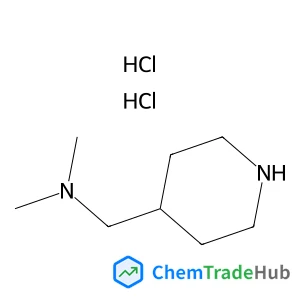
N,N-dimethyl(piperidin-4-yl)methanamine hydrochloride
CAS Number:
172281-72-0
Molecular Formula:
C8H20Cl2N2
Recommended Suppliers






Disclaimer
This page provides academic journal information for reference and research purposes only. We are not affiliated with any journal publishers and do not handle publication submissions. For publication-related inquiries, please contact the respective journal publishers directly.
If you notice any inaccuracies in the information displayed, please contact us at support@chemtradehub.com. We will promptly review and address your concerns.