












![4-{1-[4-(4,4,5,5-Tetramethyl-1,3,2-dioxaborolan-2-yl)phenyl]cyclopropyl}morpholine structure](https://static.chemtradehub.com/structs/120/1206594-08-2-7afb.webp "4-{1-[4-(4,4,5,5-Tetramethyl-1,3,2-dioxaborolan-2-yl)phenyl]cyclopropyl}morpholine structure")
4-{1-[4-(4,4,5,5-Tetramethyl-1,3,2-dioxaborolan-2-yl)phenyl]cyclopropyl}morpholine
CAS Number:
1206594-08-2
Molecular Formula:
C19H28BNO3
Ryan P. Dias, Marella H. Schammel, Keith P. Reber
Free chlorine and free bromine (e.g., HOCl and HOBr) are employed as disinfectants in a variety of aqueous systems, including drinking water, wastewater, ballast water, recreational waters, and cleaning products. Yet, the most widely used methods for quantifying free halogens, including those employing N,N-diethyl-p-phenylenediamine (DPD), cannot distinguish between HOCl and HOBr. Herein, we report methods for selectively quantifying free halogens in a variety of aqueous systems using 1,3,5-trimethoxybenzene (TMB). At near-neutral pH, TMB reacted on the order of seconds with HOCl, HOBr, and inorganic bromamines to yield halogenated products that were readily quantified by liquid chromatography or, following liquid–liquid extraction, gas chromatography-mass spectrometry (GC-MS). The chlorinated and brominated products of TMB were stable, and their molar concentrations were used to calculate the original concentrations of HOCl (method quantitation limit (MQL) by GC-MS = 15 nmol L−1 = 1.1 μg L−1 as Cl2) and HOBr (MQL by GC-MS = 30 nmol L−1 = 2 μg L−1 as Cl2), respectively. Moreover, TMB derivatization was efficacious for quantifying active halogenating agents in drinking water, pool water, chlorinated surface waters, and simulated spa waters treated with 1-bromo-3-chloro-5,5-dimethylhydantoin. TMB was also used to quantify bromide as a trace impurity in 20 nominally bromide-free reagents (following oxidation of bromide by HOCl to HOBr). Several possible interferents were tested, and iodide was identified as impeding accurate quantitation of HOCl and HOBr. Overall, compared to the DPD method, TMB can provide lower MQLs, larger linear ranges, and selectivity between HOCl and HOBr.
Jeffery A. Greathouse, Nathan W. Ockwig, Louise J. Criscenti, T. R. Guilinger, Phil Pohl, Mark D. Allendorf
DOI: 10.1039/C0CP00092B
Cristina Díaz, Paula Rivière, Mark F. Somers, Fernando Martín
DOI: 10.1039/C0CP00431F
Zhong-hua Cui, Chang-bin Shao, Si-meng Gao, Yi-hong Ding
DOI: 10.1039/C0CP00296H
Mladen Petravic, Robert Peter, Ivna Kavre, Lu Hua Li, Ying Chen, Liang-Jen Fan, Yaw-Wen Yang
DOI: 10.1039/C0CP00984A
A. M. Czoska, S. Livraghi, M. C. Paganini, E. Giamello, C. Di Valentin, G. Pacchioni
DOI: 10.1039/C0CP00143K
Wanbiao Hu, Liping Li, Wenming Tong, Guangshe Li
DOI: 10.1039/C0CP00280A
Jan Philipp Hofmann, Stefan Zweidinger, Attila Farkas, Marcus Knapp, Olivier Balmes, Edvin Lundgren, Jesper N. Andersen, Herbert Over
DOI: 10.1039/C0CP01126F
Nina Sapoletova, Tatyana Makarevich, Kirill Napolskii, Elena Mishina, Andrey Eliseev, Albert van Etteger, Theo Rasing, Galina Tsirlina
DOI: 10.1039/C0CP00812E
Wenbo Yang, Jennifer M. Reed, Haining Wang, Shengli Zou
DOI: 10.1039/C0CP00221F
Ethyl 4-chlorothieno[2,3-b]pyridine-5-carboxylate (CAS: 59713-58-5) can be synth...
5-Methyl-1H-indole-3-carbaldehyde (CAS: 52562-50-2) is subject to various regula...
(1,3-Dimethyl-2,4-dioxo-1,2,3,4-tetrahydro-5-pyrimidinyl)boronic acid is a white...
Waste containing Sulfocostunolide A (CAS: 1016983-51-9) should be handled with c...
When handling Murraxocin (CAS: 88478-44-8), ensure proper personal protective eq...
Formvar (CAS: 63148-64-1) is an alkyd resin characterized by a high molecular we...
(S)-4-benzyl-2-((benzyloxy)methyl)morpholine is generally safe when handled with...
Methyl 1-(5-bromo-2-pyrimidinyl)cyclopropanecarboxylate (CAS: 1447607-69-3) is p...
2-Methyl-1-phenyl-1-propanamine hydrochloride (CAS: 24290-47-9) is generally con...
3-(4-Bromophenyl)-2-methylpropanoic acid is synthesized through a multi-step pro...
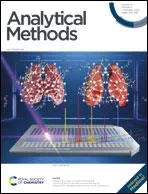
Analytical Methods welcomes early applications of new analytical and bioanalytical methods and technology demonstrating the potential for societal impact. We require that methods and technology reported in the journal are sufficiently innovative, robust, accurate, and compared to other available methods for the intended application. Developments with interdisciplinary approaches are particularly welcome. Systems should be proven with suitably complex and analytically challenging samples. We encourage developments within, but not limited to, the following technologies and applications: global health, point-of-care and molecular diagnostics biosensors and bioengineering drug development and pharmaceutical analysis applied microfluidics and nanotechnology omics studies, such as proteomics, metabolomics or glycomics environmental, agricultural and food science neuroscience biochemical and clinical analysis forensic analysis industrial process and method development
![[2-(Benzyloxy)-3-bromo-5-methylphenyl]boronic acid structure](https://static.chemtradehub.com/structs/870/870777-20-1-24ac.webp "[2-(Benzyloxy)-3-bromo-5-methylphenyl]boronic acid structure")



