













Ab initio calculation of experimental structure factors for Ni(NH3)4(NO2)2
Literature Information
Publication Date
2000-08-02
DOI
10.1039/B003222K
Impact Factor
3.676
Authors
View Original
Abstract
Comparison has been made between theoretically obtained structure factors and those obtained from very low temperature X-ray and polarised neutron diffraction experiments on single crystals of Ni(NH3)4(NO2)2. This work has emphasised an approach in which interactions between neighbour molecules have been ignored and the unit cell charge density has been determined from single molecule calculations by summing the densities of the molecules in the unit cell. Agreement between experiment and theory has been assessed using the χ2 and goodness of fit (Rw) statistics. For this molecule the agreement with experiment is little altered by change of basis up to the level of a valence triple-zeta set with polarisation functions (VTZP). The importance of the crystalline environment was examined using the CRYSTAL95 package. At the level of theory available in this program the effect of intermolecular interactions on structure factors has been shown to be negligible. Including electron correlation also made little change to the structure factors. The best of the single molecule calculated structure factors, using five parameters, fitted the X-ray experiment almost as well as 83 or 126 parameter multipole expansions. A similar result was obtained for the polarised neutron diffraction structure factors.
Related Literature
Electrochemical control of adsorption dynamics of surface layer proteins on gold
Christian Zafiu, Günter Trettenhahn, Dietmar Pum, Uwe Bernd Sleytr, Wolfgang Kautek
2010-12-22
Paper
DOI: 10.1039/C0CP01099E
CO bond cleavage on supported nano-gold during low temperature oxidation
Albert F. Carley, David J. Morgan, Nianxue Song, M. Wyn Roberts, Stuart H. Taylor, Jonathan K. Bartley, David J. Willock, Kara L. Howard, Graham J. Hutchings
2010-12-10
Paper
DOI: 10.1039/C0CP01852J
New nanostructured heterogeneous catalysts with increased selectivity and stability
Ilkeun Lee, Manuel A. Albiter, Qiao Zhang, Jianping Ge, Yadong Yin, Francisco Zaera
2010-11-22
Perspective
DOI: 10.1039/C0CP01688H
Temperature dependence of the surfactant film bending elasticity in a bicontinuous sugar surfactant based microemulsion: a quasielastic scattering study
Stefan Wellert, Matthias Karg, Olaf Holderer, André Richardt, Thomas Hellweg
2010-12-10
Paper
DOI: 10.1039/C0CP02044C
Synthesis and characterization of nanogels of poly(N-isopropylacrylamide) by a combination of light and small-angle X-ray scattering
Thomas Alsted, Walter Richtering, Jan Skov Pedersen
2010-10-07
Paper
DOI: 10.1039/C0CP01359E
Ion conducting particle networks in liquids: modeling of network percolation and stability
Anna Jarosik, Uwe Traub, Joachim Maier, Armin Bunde
2010-12-23
Communication
DOI: 10.1039/C0CP01870H
Photoionization-induced large-amplitude pendular motion in phenol+–Kr
Mitsuhiko Miyazaki, Akihiro Takeda, Shun-ichi Ishiuchi, Makoto Sakai, Otto Dopfer, Masaaki Fujii
2010-12-10
Paper
DOI: 10.1039/C0CP01961E
Stepwise vs. concerted pathways in scandium ion-coupled electron transfer from superoxide ion to p-benzoquinone derivatives
Tomonori Kawashima, Kei Ohkubo
2011-01-06
Paper
DOI: 10.1039/C0CP00916D
Photodegradation of organic pollutants catalyzed by iron species under visible light irradiation
Chunyan Sun, Chuncheng Chen, Wanhong Ma, Jincai Zhao
2010-11-17
Perspective
DOI: 10.1039/C0CP01203C
MRCI investigation of different isomers of Ni2O2H2+‡
Olaf Hübner, Hans-Jörg Himmel
2010-12-08
Paper
DOI: 10.1039/C0CP01170C
You might also like
Compound Q&A
What are the main uses of 1H-Indazole-6-carbonitrile (CAS: 141290-59-7)?
1H-Indazole-6-carbonitrile finds applications in pharmaceuticals, where it serve...
141290-59-71H-Indazole-6-carbon...
Compound Q&A
How should waste containing Dioctyl (2E)-2-butenedioate (CAS: 2997-85-5) be handled?
Waste containing Dioctyl (2E)-2-butenedioate (CAS: 2997-85-5) should be collecte...
2997-85-5Dioctyl (2E)-2-buten...
Compound Q&A
What industries use Sodium [(1,2-benzoxazol-3-ylmethyl)sulfonyl]azanide (CAS: 68291-98-5)?
Sodium [(1,2-benzoxazol-3-ylmethyl)sulfonyl]azanide is primarily used in pharmac...
68291-98-5Sodium [(1,2-benzoxa...
Compound Q&A
Are there alternatives to Dimethyl 4-(4,4,5,5-tetramethyl-1,3,2-dioxaborolan-2-yl)-2,6-pyridinedicarboxylate (CAS: 741709-66-0) in synthesis?
Dimethyl 4-(4,4,5,5-tetramethyl-1,3,2-dioxaborolan-2-yl)-2,6-pyridinedicarboxyla...
741709-66-0Dimethyl 4-(4,4,5,5-...
Compound Q&A
How should waste containing 2-Fluoro-6-hydrazinopyridine (CAS: 80714-39-2) be handled?
Waste containing 2-Fluoro-6-hydrazinopyridine (CAS: 80714-39-2) should be manage...
80714-39-22-Fluoro-6-hydrazino...
Compound Q&A
What is 6-Formyl-2-pyridinecarboxylic acid (CAS: 499214-11-8)?
6-Formyl-2-pyridinecarboxylic acid is an organic compound with the molecular for...
499214-11-86-Formyl-2-pyridinec...
Compound Q&A
What is the market or research trend for 3-(3,4-dimethoxyphenyl)-2,5-dimethyl-N-(2-morpholin-4-ylethyl)pyrazolo[1,5-a]pyrimidin-7-amine (CAS: 900874-91-1)?
Research trends for this compound indicate a focus on its potential applications...
900874-91-13-(3,4-dimethoxyphen...
Compound Q&A
How is 9H-Tribenzo[b,d,f]azepine (CAS: 29875-73-8) typically synthesized?
9H-Tribenzo[b,d,f]azepine is typically synthesized via a multi-step process invo...
29875-73-89H-Tribenzo[b,d,f]az...
Compound Q&A
How is 1-Cyclopropyl-7-ethoxy-6-fluoro-8-methoxy-4-oxo-1,4-dihydro-3-quinolinecarboxylic acid (CAS: 1797982-51-4) typically synthesized?
1-Cyclopropyl-7-ethoxy-6-fluoro-8-methoxy-4-oxo-1,4-dihydro-3-quinolinecarboxyli...
1797982-51-41-Cyclopropyl-7-etho...
Compound Q&A
How should waste containing Methyl 3-oxo-1,2,3,4-tetrahydro-6-quinoxalinecarboxylate (CAS: 671820-52-3) be handled?
Waste containing Methyl 3-oxo-1,2,3,4-tetrahydro-6-quinoxalinecarboxylate (CAS: ...
671820-52-3Methyl 3-oxo-1,2,3,4...
Source Journal
Physical Chemistry Chemical Physics

CiteScore:
5.5
Self-citation Rate:
10.3%
Articles per Year:
3036
Physical Chemistry Chemical Physics (PCCP) is an international journal co-owned by 19 physical chemistry and physics societies from around the world. This journal publishes original, cutting-edge research in physical chemistry, chemical physics and biophysical chemistry. To be suitable for publication in PCCP, articles must include significant innovation and/or insight into physical chemistry; this is the most important criterion that reviewers and Editors will judge against when evaluating submissions. The journal has a broad scope and welcomes contributions spanning experiment, theory, computation and data science. Topical coverage includes spectroscopy, dynamics, kinetics, statistical mechanics, thermodynamics, electrochemistry, catalysis, surface science, quantum mechanics, quantum computing and machine learning. Interdisciplinary research areas such as polymers and soft matter, materials, nanoscience, energy, surfaces/interfaces, and biophysical chemistry are welcomed if they demonstrate significant innovation and/or insight into physical chemistry. Joined experimental/theoretical studies are particularly appreciated when complementary and based on up-to-date approaches.
Recommended Compounds
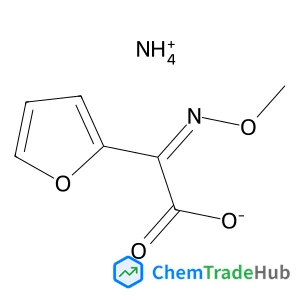
Ammonium (Z)-2-(furan-2-yl)-2-(methoxyimino)acetate
CAS Number:
97148-39-5
Molecular Formula:
C7H10N2O4


Recommended Suppliers




Disclaimer
This page provides academic journal information for reference and research purposes only. We are not affiliated with any journal publishers and do not handle publication submissions. For publication-related inquiries, please contact the respective journal publishers directly.
If you notice any inaccuracies in the information displayed, please contact us at support@chemtradehub.com. We will promptly review and address your concerns.