












Editorial
Literature Information
Publication Date
DOI
10.1039/B000153H
Impact Factor
10.182
Authors
View Original
Abstract
The first page of this article is displayed as the abstract.
Recommended Journals
Related Literature
A DFT-based comparative equilibrium study of thermal dehydration and hydrolysis of CaCl2 hydrates and MgCl2 hydrates for seasonal heat storage
Amar Deep Pathak, Silvia Nedea, Herbert Zondag, Camilo Rindt, David Smeulders
2016-03-10
Paper
DOI: 10.1039/C6CP00926C
Ether cleavage-triggered degradation of benzyl alkylammonium cations for polyethersulfone anion exchange membranes
2016-03-24
Paper
DOI: 10.1039/C6CP00579A
Nonlinear optical chromophores based on Dewar's rules: enhancement of electro-optic activity by introducing heteroatoms into the donor or bridge
Shuhui Bo, Xinhou Liu
2015-10-07
Paper
DOI: 10.1039/C5CP04959H
Theoretical prediction of silicene as a new candidate for the anode of lithium-ion batteries
Seyedeh Mozhgan Seyed-Talebi, Iraj Kazeminezhad, Javad Beheshtian
2015-10-07
Paper
DOI: 10.1039/C5CP04666A
Saturn-like charge-transfer complexes Li4&B36, Li5&B36+, and Li6&B362+: exohedral metalloborospherenes with a perfect cage-like B364− core
Wen-Juan Tian, Qiang Chen, Hai-Ru Li, Miao Yan, Yue-Wen Mu, Hai-Gang Lu, Hua-Jin Zhai, Si-Dian Li
2016-03-21
Communication
DOI: 10.1039/C6CP01279E
Bifunctional Ce1−xEuxO2 (0 ≤ x ≤ 0.3) nanoparticles for photoluminescence and photocatalyst applications: an X-ray absorption spectroscopy study
Aditya Sharma, Mayora Varshney, Jaehun Park, Tae Kyun Ha, Keun Hwa Chae, Hyun Joon Shin
2015-10-19
Paper
DOI: 10.1039/C5CP05251C
Theoretical demonstration of the potentiality of boron nitride nanotubes to encapsulate anticancer molecule
Mohammed El Khalifi, Eric Duverger, Tijani Gharbi, Hatem Boulahdour, Fabien Picaud
2015-10-19
Paper
DOI: 10.1039/C5CP05148G
A magnetooptical study of (4-(2-dibutylaminoethanolato-N,O,O,O) chlorido copper(ii)): a cubane complex with dominant ferromagnetic interactions
Serghei M. Ostrovsky, Zbigniew Tomkowicz, Wolfgang Haase
2015-10-20
Paper
DOI: 10.1039/C5CP05836H
Thermoresponsive gold nanoshell@mesoporous silica nano-assemblies: an XPS/NMR survey
S. Soulé, J. Allouche, J.-C. Dupin, C. Courrèges, F. Plantier, W.-S. Ojo, Y. Coppel, C. Nayral, F. Delpech, H. Martinez
2015-09-28
Paper
DOI: 10.1039/C5CP04491J
A new insight into the nanostructure of alkylammonium alkanoates based ionic liquids in water
Umme Salma, Paolo Ballirano, Marianna Usula, Ruggero Caminiti, Natalia V. Plechkova, Kenneth R. Seddon, Lorenzo Gontrani
2016-03-21
Paper
DOI: 10.1039/C5CP07953E
You might also like
Compound Q&A
What are the main uses of (3.beta.)-3-Hydroxy-N,N-dimethyl-chol-5-en-24-amide (CAS: 79066-03-8)?
(3.beta.)-3-Hydroxy-N,N-dimethyl-chol-5-en-24-amide (CAS: 79066-03-8) is primari...
79066-03-8(3.beta.)-3-Hydroxy-...
Compound Q&A
What regulatory guidelines apply to 5-(aminomethyl)-2-methoxyphenol (CAS: 89702-89-6)?
5-(Aminomethyl)-2-methoxyphenol (CAS: 89702-89-6) is classified under GHS as a s...
89702-89-65-(aminomethyl)-2-me...
Compound Q&A
What is Thieno[2,3-c]pyridin-7(6H)-one (CAS: 28981-13-7)?
Thieno[2,3-c]pyridin-7(6H)-one (CAS: 28981-13-7) is a heterocyclic organic compo...
28981-13-7Thieno[2,3-c]pyridin...
Compound Q&A
Is 1-[(6-Methoxy-3-pyridinyl)methyl]-4-piperidinamine dihydrochloride (CAS: 1185311-28-7) safe?
1-[(6-Methoxy-3-pyridinyl)methyl]-4-piperidinamine dihydrochloride is generally ...
1185311-28-71-[(6-Methoxy-3-pyri...
Compound Q&A
What regulatory guidelines apply to [(2E)-3-Phenyl-2-propen-1-yl]phosphonic acid (CAS: 146404-58-2)?
[(2E)-3-Phenyl-2-propen-1-yl]phosphonic acid (CAS: 146404-58-2) is regulated und...
146404-58-2[(2E)-3-Phenyl-2-pro...
Compound Q&A
What regulatory guidelines apply to 6-Bromo-7-methoxyquinoline (CAS: 1620515-86-7)?
6-Bromo-7-methoxyquinoline (CAS: 1620515-86-7) falls under the scope of the Glob...
1620515-86-76-Bromo-7-methoxyqui...
Compound Q&A
What industries use (2R)-1-(1-Benzofuran-2-yl)-N-propyl-2-pentanamine (CAS: 260550-89-8)?
This compound is primarily used in the pharmaceutical industry for the developme...
260550-89-8(2R)-1-(1-Benzofuran...
Compound Q&A
What are the main uses of 1-Ethyl-7-[2-methyl-6-(4H-1,2,4-triazol-3-yl)-3-pyridinyl]-3,5-dihydropyrazino[2,3-b]pyrazin-2(1H)-one (CAS: 1228013-15-7)?
1-Ethyl-7-[2-methyl-6-(4H-1,2,4-triazol-3-yl)-3-pyridinyl]-3,5-dihydropyrazino[2...
1228013-15-71-Ethyl-7-[2-methyl-...
Compound Q&A
Are there alternatives to {5-(Acryloylamino)-2-[(dimethylamino)methyl]phenyl}boronic acid (CAS: 1217500-78-1) in synthesis?
Alternative reagents such as 2-[(dimethylamino)methyl]phenylboronic acid or rela...
1217500-78-1{5-(Acryloylamino)-2...
Compound Q&A
What is 3-(Piperidin-4-yloxy)pyridine (CAS: 310881-48-2)?
3-(Piperidin-4-yloxy)pyridine (CAS: 310881-48-2) is an organic compound with the...
310881-48-23-(Piperidin-4-yloxy...
Source Journal
Green Chemistry

CiteScore:
16.1
Self-citation Rate:
7.5%
Articles per Year:
944
Green Chemistry provides a unique forum for the publication of innovative research on the development of alternative green and sustainable technologies. The scope of Green Chemistry is based on, but not limited to, the definition proposed by Anastas and Warner (Green Chemistry: Theory and Practice, P T Anastas and J C Warner, Oxford University Press, Oxford, 1998). Green chemistry is the utilisation of a set of principles that reduces or eliminates the use or generation of hazardous substances in the design, manufacture and application of chemical products. Green Chemistry is at the frontiers of this continuously-evolving interdisciplinary science and publishes research that attempts to reduce the environmental impact of the chemical enterprise by developing a technology base that is inherently non-toxic to living things and the environment. Submissions on all aspects of research relating to the endeavour are welcome. The journal publishes original and significant cutting-edge research that is likely to be of wide general appeal. To be published, work must present a significant advance in green chemistry. Papers must contain a comparison with existing methods and demonstrate advantages over those methods before publication can be considered. For more information please see this Editorial. Coverage includes the following, but is not limited to: Design (e.g. biomimicry, design for degradation/recycling/reduced toxicity…) Reagents & Feedstocks (e.g. renewables, CO2, solvents, auxiliary agents, waste utilization…) Synthesis (e.g. organic, inorganic, synthetic biology…) Catalysis (e.g. homogeneous, heterogeneous, enzyme, whole cell…) Process (e.g. process design, intensification, separations, recycling, efficiency…) Energy (e.g. renewable energy, fuels, photovoltaics, fuel cells, energy storage, energy carriers…) Applications (e.g. electronics, dyes, consumer products, coatings, pharmaceuticals, preservatives, building materials, chemicals for industry/agriculture/mining…) Impact (e.g. safety, metrics, LCA, sustainability, (eco)toxicology…) Green chemistry is, by definition, a continuously-evolving frontier. Therefore, the inclusion of a particular material or technology does not, of itself, guarantee that a paper is suitable for the journal. To be suitable, the novel advance should have the potential for reduced environmental impact relative to the state of the art. Green Chemistry does not normally deal with research associated with 'end-of-pipe' or remediation issues.
Recommended Compounds
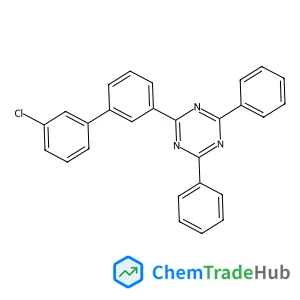
2-(3'-Chlorobiphenyl-3-yl)-4,6-diphenyl-1,3,5-triazine
CAS Number:
1443049-83-9
Molecular Formula:
C27H18ClN3
Recommended Suppliers





Disclaimer
This page provides academic journal information for reference and research purposes only. We are not affiliated with any journal publishers and do not handle publication submissions. For publication-related inquiries, please contact the respective journal publishers directly.
If you notice any inaccuracies in the information displayed, please contact us at support@chemtradehub.com. We will promptly review and address your concerns.