












Structural evidence of anomeric effects in the anesthetic isoflurane
Literature Information
Publication Date
2011-03-07
DOI
10.1039/C0CP02465A
Impact Factor
3.676
Authors
Alberto Lesarri, Alicia Vega-Toribio, Richard D. Suenram, Dale J. Brugh, Davood Nori-Shargh, James E. Boggs, Jens-Uwe Grabow
View Original
Abstract
The conformational and structural properties of the inhalational anesthetic isoflurane (1-chloro-2,2,2-trifluoroethyl difluoromethyl ether) have been probed in a supersonic jet expansion using Fourier-transform microwave (FT-MW) spectroscopy. Two conformers of the isolated molecule were identified from the rotational spectrum of the parent and several 37Cl and 13C isotopologues detected in natural abundance. The two most stable structures of isoflurane are characterized by an anticarbon skeleton (τ(C1–C2–O–C3) = 137.8(11)° or 167.4(19)°), differing in the trans (AT) or gauche (AG) orientation of the difluoromethyl group. The conformational abundances in the jet were estimated from relative intensity measurements as (AT)/(AG) ≈ 3 ∶ 1. The structural preferences of the molecule have been rationalized with supporting ab initio calculations and natural-bond-orbital (NBO) analysis, which suggest that the molecule is stabilized by hyperconjugative effects. The NBO analysis of donor–acceptor (LP → σ*) interactions showed that these stereoelectronic effects decrease from the AT to AG conformations, so the conformational preferences can be accounted for in terms of the generalized anomeric effect.
Related Literature
Stretching single atom contacts at multiple subatomic step-length
Yi-Min Wei, Jing-Hong Liang, Zhao-Bin Chen, Xiao-Shun Zhou, Bing-Wei Mao, Oscar A. Oviedo, Ezequiel P. M. Leiva
2013-03-27
Paper
DOI: 10.1039/C3CP50473E
Effects of the morphology of nanostructured ZnO and interface modification on the device configuration and charge transport of ZnO/polymer hybrid solar cells
Pipat Ruankham, Susumu Yoshikawa, Takashi Sagawa
2013-01-29
Paper
DOI: 10.1039/C3CP50266J
Vibrational self-consistent field calculations for spectroscopy of biological molecules: new algorithmic developments and applications
Tapta Kanchan Roy
2013-04-10
Perspective
DOI: 10.1039/C3CP50739D
In situ surface-enhanced Raman spectroscopic study of formic acid electrooxidation on spontaneously deposited platinum on gold
Ranjani Muralidharan, Michael McIntosh, Xiao Li
2013-04-18
Paper
DOI: 10.1039/C3CP51128F
(Sub-)femtosecond control of molecular reactions via tailoring the electric field of light
Philipp von den Hoff, Irina Znakovskaya, Regina de Vivie-Riedle
2013-04-09
Perspective
DOI: 10.1039/C3CP50591J
Binderless thin films of zeolite-templated carbon electrodes useful for electrochemical microcapacitors with ultrahigh rate performance
Ángel Berenguer-Murcia, Ramiro R. Ruiz-Rosas, Jaime García-Aguilar, Khanin Nueangnoraj, Hirotomo Nishihara, Emilia Morallón, Takashi Kyotani, Diego Cazorla-Amorós
2013-05-13
Communication
DOI: 10.1039/C3CP51945G
Stepping stones in the electron transport from cells to electrodes in Geobacter sulfurreducens biofilms
Pablo Sebastián Bonanni, Diego Massazza, Juan Pablo Busalmen
2013-05-01
Perspective
DOI: 10.1039/C3CP50411E
The effect of secondary structures on the NLO properties of single chain oligopeptides: a comparison between β-strand and α-helix polyglycines
Andrea Alparone
2013-06-07
Paper
DOI: 10.1039/C3CP51496J
Monolayer patterning using ketone dipoles
Min Kyoung Kim, Yi Xue, Tereza Pašková, Matthew B. Zimmt
2013-04-09
Paper
DOI: 10.1039/C3CP50808K
C72: gaudiene, a hollow and aromatic all-carbon molecule
Dage Sundholm
2013-04-18
Communication
DOI: 10.1039/C3CP51042E
You might also like
Compound Q&A
How is Ethyl 4-chlorothieno[2,3-b]pyridine-5-carboxylate (CAS: 59713-58-5) typically synthesized?
Ethyl 4-chlorothieno[2,3-b]pyridine-5-carboxylate (CAS: 59713-58-5) can be synth...
59713-58-5Ethyl 4-chlorothieno...
Compound Q&A
What regulatory guidelines apply to 5-Methyl-1H-indole-3-carbaldehyde (CAS: 52562-50-2)?
5-Methyl-1H-indole-3-carbaldehyde (CAS: 52562-50-2) is subject to various regula...
52562-50-25-Methyl-1H-indole-3...
Compound Q&A
What are the physical and chemical properties of (1,3-Dimethyl-2,4-dioxo-1,2,3,4-tetrahydro-5-pyrimidinyl)boronic acid (CAS: 223418-73-3)?
(1,3-Dimethyl-2,4-dioxo-1,2,3,4-tetrahydro-5-pyrimidinyl)boronic acid is a white...
223418-73-3(1,3-Dimethyl-2,4-di...
Compound Q&A
How should waste containing Sulfocostunolide A (CAS: 1016983-51-9) be handled?
Waste containing Sulfocostunolide A (CAS: 1016983-51-9) should be handled with c...
1016983-51-9Sulfocostunolide A
Compound Q&A
What precautions should be taken when handling Murraxocin (CAS: 88478-44-8)?
When handling Murraxocin (CAS: 88478-44-8), ensure proper personal protective eq...
88478-44-8Murraxocin
Compound Q&A
What are the physical and chemical properties of Formvar (CAS: 63148-64-1)?
Formvar (CAS: 63148-64-1) is an alkyd resin characterized by a high molecular we...
63148-64-1Formvar(R)
Compound Q&A
Is (S)-4-benzyl-2-((benzyloxy)methyl)morpholine (CAS: 205242-66-6) safe?
(S)-4-benzyl-2-((benzyloxy)methyl)morpholine is generally safe when handled with...
205242-66-6(S)-4-benzyl-2-((ben...
Compound Q&A
What industries use Methyl 1-(5-bromo-2-pyrimidinyl)cyclopropanecarboxylate (CAS: 1447607-69-3)?
Methyl 1-(5-bromo-2-pyrimidinyl)cyclopropanecarboxylate (CAS: 1447607-69-3) is p...
1447607-69-3Methyl 1-(5-bromo-2-...
Compound Q&A
Is 2-Methyl-1-phenyl-1-propanamine hydrochloride (CAS: 24290-47-9) safe?
2-Methyl-1-phenyl-1-propanamine hydrochloride (CAS: 24290-47-9) is generally con...
24290-47-92-Methyl-1-phenyl-1-...
Compound Q&A
How is 3-(4-Bromophenyl)-2-methylpropanoic acid (CAS: 66735-01-1) typically synthesized?
3-(4-Bromophenyl)-2-methylpropanoic acid is synthesized through a multi-step pro...
66735-01-13-(4-Bromophenyl)-2-...
Source Journal
Physical Chemistry Chemical Physics

CiteScore:
5.5
Self-citation Rate:
10.3%
Articles per Year:
3036
Physical Chemistry Chemical Physics (PCCP) is an international journal co-owned by 19 physical chemistry and physics societies from around the world. This journal publishes original, cutting-edge research in physical chemistry, chemical physics and biophysical chemistry. To be suitable for publication in PCCP, articles must include significant innovation and/or insight into physical chemistry; this is the most important criterion that reviewers and Editors will judge against when evaluating submissions. The journal has a broad scope and welcomes contributions spanning experiment, theory, computation and data science. Topical coverage includes spectroscopy, dynamics, kinetics, statistical mechanics, thermodynamics, electrochemistry, catalysis, surface science, quantum mechanics, quantum computing and machine learning. Interdisciplinary research areas such as polymers and soft matter, materials, nanoscience, energy, surfaces/interfaces, and biophysical chemistry are welcomed if they demonstrate significant innovation and/or insight into physical chemistry. Joined experimental/theoretical studies are particularly appreciated when complementary and based on up-to-date approaches.
Recommended Compounds
![9H-Fluoren-9-ylmethyl [(2S)-1-hydroxy-3-(1H-indol-3-yl)-2-propanyl]carbamate structure](https://static.chemtradehub.com/structs/153/153815-60-2-a67d.webp "9H-Fluoren-9-ylmethyl [(2S)-1-hydroxy-3-(1H-indol-3-yl)-2-propanyl]carbamate structure")
9H-Fluoren-9-ylmethyl [(2S)-1-hydroxy-3-(1H-indol-3-yl)-2-propanyl]carbamate
CAS Number:
153815-60-2
Molecular Formula:
C26H24N2O3
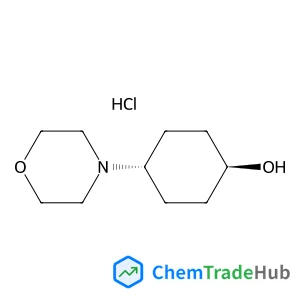
trans-4-(4-Morpholinyl)cyclohexanol hydrochloride (1:1)
CAS Number:
1588441-09-1
Molecular Formula:
C10H20ClNO2

5-Amino-1-(2,4-difluorophenyl)-3-methyl-1H-pyrazole-4-carbonitrile
CAS Number:
1020057-92-4
Molecular Formula:
C11H8F2N4
Recommended Suppliers





Disclaimer
This page provides academic journal information for reference and research purposes only. We are not affiliated with any journal publishers and do not handle publication submissions. For publication-related inquiries, please contact the respective journal publishers directly.
If you notice any inaccuracies in the information displayed, please contact us at support@chemtradehub.com. We will promptly review and address your concerns.