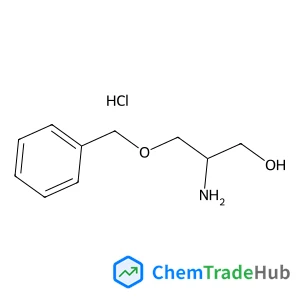
(R)-2-amino-3-(benzyloxy)propan-1-ol hydrochloride
CAS Number:
58577-95-0
Molecular Formula:
C10H16ClNO2
Have you ever hoped to observe transition states? Chemists have long desired to monitor the deformation of molecular structures via transition states to understand the mechanisms of complicated reactions. Detailed knowledge of transition states helps find strategies to develop novel reaction schemes for introducing new functionalities to chemicals. Molecular structural changes via transition states can be observed by real-time vibrational spectroscopy using sub-5 fs laser pulses. In this paper, I report the direct observation of time-dependent frequency shifts of relevant molecular vibrational modes, which allowed for the clear visualization of ultrafast structural changes in molecules during bond breaking and bond reformation steps. Various mechanisms for photochemical reactions were clarified using sub-5 fs laser pulses. Moreover, a non-thermal vibrational excitation method for efficiently driving chemical reactions in the electronic ground state in solution with the use of broadband visible sub-5 fs laser pulses has been developed. The respective chemical reaction processes were directly observed, including transition states during not only “photochemical” but also “thermal” reactions. Time-resolved spectroscopy with a time resolution of a few femtoseconds enables observation of real-time vibrational amplitudes of complicated molecules and opens up new ways for clarifying reaction mechanisms and developing new chemical transformations.

European Journal of Wood and Wood Products

Molecular Pharmacology

Science

Organic Preparations and Procedures International

Journal of Heterocyclic Chemistry

Journal of Medicinal Chemistry

Kinetics and Catalysis

Pure and Applied Chemistry

Proceedings of the National Academy of Sciences of the United States of America

Journal of Organometallic Chemistry
Arnaud Spangenberg, Rémi Métivier, Kunihiro Shibata, Arnaud Brosseau, Johan Grand, Jean Aubard, Pei Yu, Tsuyoshi Asahi, Keitaro Nakatani
DOI: 10.1039/C3CP50770J
Ju-Won Jeon, Yuguang Ma, Jared F. Mike, Lin Shao, Perla B. Balbuena, Jodie L. Lutkenhaus
DOI: 10.1039/C3CP51620B
Aliaksandr S. Bandarenka
DOI: 10.1039/C3CP51998H
Zuofeng Chen, Christopher R. K. Glasson, Patrick L. Holland, Thomas J. Meyer
DOI: 10.1039/C3CP51946E
Parvesh Wadhwani, Johannes Reichert, Erik Strandberg, Jochen Bürck, Julia Misiewicz, Sergii Afonin, Nico Heidenreich, Susanne Fanghänel, Igor V. Komarov
DOI: 10.1039/C3CP50896J
Yoshihiro Ogi, Hiroshi Kohguchi
DOI: 10.1039/C3CP51680F
Hiroshi Segawa, Koichi Yamashita
DOI: 10.1039/C3CP50879J
Aruna Ravi, Marvin A. Malone, Antriksh Luthra, David Lioi, James V. Coe
DOI: 10.1039/C3CP51422F
Lauro Oliver Paz-Borbón, Anders Hellman, John Meurig Thomas, Henrik Grönbeck
DOI: 10.1039/C3CP51384J
Ethyl 4-chlorothieno[2,3-b]pyridine-5-carboxylate (CAS: 59713-58-5) can be synth...
5-Methyl-1H-indole-3-carbaldehyde (CAS: 52562-50-2) is subject to various regula...
(1,3-Dimethyl-2,4-dioxo-1,2,3,4-tetrahydro-5-pyrimidinyl)boronic acid is a white...
Waste containing Sulfocostunolide A (CAS: 1016983-51-9) should be handled with c...
When handling Murraxocin (CAS: 88478-44-8), ensure proper personal protective eq...
Formvar (CAS: 63148-64-1) is an alkyd resin characterized by a high molecular we...
(S)-4-benzyl-2-((benzyloxy)methyl)morpholine is generally safe when handled with...
Methyl 1-(5-bromo-2-pyrimidinyl)cyclopropanecarboxylate (CAS: 1447607-69-3) is p...
2-Methyl-1-phenyl-1-propanamine hydrochloride (CAS: 24290-47-9) is generally con...
3-(4-Bromophenyl)-2-methylpropanoic acid is synthesized through a multi-step pro...

Physical Chemistry Chemical Physics (PCCP) is an international journal co-owned by 19 physical chemistry and physics societies from around the world. This journal publishes original, cutting-edge research in physical chemistry, chemical physics and biophysical chemistry. To be suitable for publication in PCCP, articles must include significant innovation and/or insight into physical chemistry; this is the most important criterion that reviewers and Editors will judge against when evaluating submissions. The journal has a broad scope and welcomes contributions spanning experiment, theory, computation and data science. Topical coverage includes spectroscopy, dynamics, kinetics, statistical mechanics, thermodynamics, electrochemistry, catalysis, surface science, quantum mechanics, quantum computing and machine learning. Interdisciplinary research areas such as polymers and soft matter, materials, nanoscience, energy, surfaces/interfaces, and biophysical chemistry are welcomed if they demonstrate significant innovation and/or insight into physical chemistry. Joined experimental/theoretical studies are particularly appreciated when complementary and based on up-to-date approaches.