












![9,9'-Spirobi[fluoren]-2-amine structure](https://static.chemtradehub.com/structs/118/118951-68-1-0d14.webp "9,9'-Spirobi[fluoren]-2-amine structure")
Electric-double-layer field-effect transistors with ionic liquids
Literature Information
Publication Date
2013-04-05
DOI
10.1039/C3CP50755F
Impact Factor
3.676
Authors
Takuya Fujimoto
View Original
Abstract
Charge carrier control is a key issue in the development of electronic functions of semiconductive materials. Beyond the simple enhancement of conductivity, high charge carrier accumulation can realize various phenomena, such as chemical reaction, phase transition, magnetic ordering, and superconductivity. Electric double layers (EDLs), formed at solid–electrolyte interfaces, induce extremely large electric fields. This results in a high charge carrier accumulation in the solid, much more effectively than solid dielectric materials. In the present review, we describe recent developments in the field-effect transistors (FETs) with gate dielectrics of ionic liquids, which have attracted much attention due to their wide electrochemical windows, low vapor pressures, and high chemical and physical stability. We explain the capacitance effects of ionic liquids, and describe the various combinations of ionic liquids and organic and inorganic semiconductors that are used to achieve such effects as high transistor performance, insulator–metal transitions, superconductivity, and ferromagnetism, in addition to the applications of the ionic-liquid EDL-FETs in logic devices. We discuss the factors controlling the mobility and threshold voltage in these types of FETs, and show the ionic liquid dependence of the transistor performance.
Related Literature
Water flow in carbon nanotubes: the role of tube chirality
Alan Sam, Vishnu Prasad K., Sarith P. Sathian
2019-02-26
Paper
DOI: 10.1039/C9CP00429G
Delayed vibrational modulation of the solvated GFP chromophore into a conical intersection
Miles A. Taylor, Cheng Chen
2019-04-22
Paper
DOI: 10.1039/C9CP01077G
Revisiting the reaction energetics of the CH3O˙ + O2 (3Σ−) reaction: the crucial role of post-CCSD(T) corrections
Subhasish Mallick, Amit Kumar, Pradeep Kumar
2019-02-27
Paper
DOI: 10.1039/C8CP07536K
Self-assembly and stimuli-responsive behaviours of side-chain liquid crystalline copolymers: a dissipative particle dynamics simulation approach
Yisheng Lv, Liquan Wang, Fangsheng Wu, Shuting Gong, Jie Wei, Shaoliang Lin
2019-03-13
Paper
DOI: 10.1039/C9CP00400A
Thermodynamic and dynamical properties of the hard sphere system revisited by molecular dynamics simulation
Sławomir Pieprzyk, Marcus N. Bannerman, Arkadiusz C. Brańka, Maciej Chudak, David M. Heyes
2019-03-19
Paper
DOI: 10.1039/C9CP00903E
Insight into the halogen-bond nature of noble gas-chlorine systems by molecular beam scattering experiments, ab initio calculations and charge displacement analysis
Leonardo Belpassi, Luiz F. Roncaratti, Stefano Falcinelli, David Cappelletti, Fernando Pirani
2019-03-11
Paper
DOI: 10.1039/C9CP00300B
Self-ordering of chemisorbed PTCDA molecules on Ge(001) driven by repulsive forces
Pavel Kocán, Barbara Pieczyrak, Leszek Jurczyszyn, Yoshihide Yoshimoto, Kazuma Yagyu, Hiroshi Tochihara, Takayuki Suzuki
2019-04-15
Paper
DOI: 10.1039/C9CP01335K
Structural analysis of helicene molecules adsorbed on symmetric surfaces
Emilian Tuca, Irina Paci
2019-03-27
Paper
DOI: 10.1039/C9CP00284G
Comparison of ultrafast intense-field photodynamics in aniline and nitrobenzene: stability under amino and nitro substitution
Timothy D. Scarborough, Collin J. McAcy, Joshua Beck, Cornelis J. G. J. Uiterwaal
2019-02-26
Paper
DOI: 10.1039/C8CP07866A
You might also like
Compound Q&A
How is Ethyl 4-chlorothieno[2,3-b]pyridine-5-carboxylate (CAS: 59713-58-5) typically synthesized?
Ethyl 4-chlorothieno[2,3-b]pyridine-5-carboxylate (CAS: 59713-58-5) can be synth...
59713-58-5Ethyl 4-chlorothieno...
Compound Q&A
What regulatory guidelines apply to 5-Methyl-1H-indole-3-carbaldehyde (CAS: 52562-50-2)?
5-Methyl-1H-indole-3-carbaldehyde (CAS: 52562-50-2) is subject to various regula...
52562-50-25-Methyl-1H-indole-3...
Compound Q&A
What are the physical and chemical properties of (1,3-Dimethyl-2,4-dioxo-1,2,3,4-tetrahydro-5-pyrimidinyl)boronic acid (CAS: 223418-73-3)?
(1,3-Dimethyl-2,4-dioxo-1,2,3,4-tetrahydro-5-pyrimidinyl)boronic acid is a white...
223418-73-3(1,3-Dimethyl-2,4-di...
Compound Q&A
How should waste containing Sulfocostunolide A (CAS: 1016983-51-9) be handled?
Waste containing Sulfocostunolide A (CAS: 1016983-51-9) should be handled with c...
1016983-51-9Sulfocostunolide A
Compound Q&A
What precautions should be taken when handling Murraxocin (CAS: 88478-44-8)?
When handling Murraxocin (CAS: 88478-44-8), ensure proper personal protective eq...
88478-44-8Murraxocin
Compound Q&A
What are the physical and chemical properties of Formvar (CAS: 63148-64-1)?
Formvar (CAS: 63148-64-1) is an alkyd resin characterized by a high molecular we...
63148-64-1Formvar(R)
Compound Q&A
Is (S)-4-benzyl-2-((benzyloxy)methyl)morpholine (CAS: 205242-66-6) safe?
(S)-4-benzyl-2-((benzyloxy)methyl)morpholine is generally safe when handled with...
205242-66-6(S)-4-benzyl-2-((ben...
Compound Q&A
What industries use Methyl 1-(5-bromo-2-pyrimidinyl)cyclopropanecarboxylate (CAS: 1447607-69-3)?
Methyl 1-(5-bromo-2-pyrimidinyl)cyclopropanecarboxylate (CAS: 1447607-69-3) is p...
1447607-69-3Methyl 1-(5-bromo-2-...
Compound Q&A
Is 2-Methyl-1-phenyl-1-propanamine hydrochloride (CAS: 24290-47-9) safe?
2-Methyl-1-phenyl-1-propanamine hydrochloride (CAS: 24290-47-9) is generally con...
24290-47-92-Methyl-1-phenyl-1-...
Compound Q&A
How is 3-(4-Bromophenyl)-2-methylpropanoic acid (CAS: 66735-01-1) typically synthesized?
3-(4-Bromophenyl)-2-methylpropanoic acid is synthesized through a multi-step pro...
66735-01-13-(4-Bromophenyl)-2-...
Source Journal
Physical Chemistry Chemical Physics

CiteScore:
5.5
Self-citation Rate:
10.3%
Articles per Year:
3036
Physical Chemistry Chemical Physics (PCCP) is an international journal co-owned by 19 physical chemistry and physics societies from around the world. This journal publishes original, cutting-edge research in physical chemistry, chemical physics and biophysical chemistry. To be suitable for publication in PCCP, articles must include significant innovation and/or insight into physical chemistry; this is the most important criterion that reviewers and Editors will judge against when evaluating submissions. The journal has a broad scope and welcomes contributions spanning experiment, theory, computation and data science. Topical coverage includes spectroscopy, dynamics, kinetics, statistical mechanics, thermodynamics, electrochemistry, catalysis, surface science, quantum mechanics, quantum computing and machine learning. Interdisciplinary research areas such as polymers and soft matter, materials, nanoscience, energy, surfaces/interfaces, and biophysical chemistry are welcomed if they demonstrate significant innovation and/or insight into physical chemistry. Joined experimental/theoretical studies are particularly appreciated when complementary and based on up-to-date approaches.
Recommended Compounds

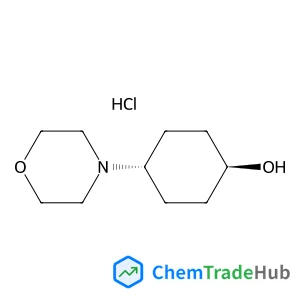
trans-4-(4-Morpholinyl)cyclohexanol hydrochloride (1:1)
CAS Number:
1588441-09-1
Molecular Formula:
C10H20ClNO2

Recommended Suppliers




Disclaimer
This page provides academic journal information for reference and research purposes only. We are not affiliated with any journal publishers and do not handle publication submissions. For publication-related inquiries, please contact the respective journal publishers directly.
If you notice any inaccuracies in the information displayed, please contact us at support@chemtradehub.com. We will promptly review and address your concerns.