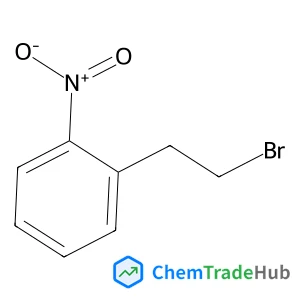
2-Bromo-1-(bromomethyl)-3-(trifluoromethyl)benzene
CAS Number:
1214372-35-6
Molecular Formula:
C8H5Br2F3
Paula Iannitti-Tito, Allan Weimann, Geoffrey Wickham, Margaret M. Sheil
The utility of electrospray ionisation (ESI) tandem mass spectrometry (MS/MS) for the characterisation of ligand–oligonucleotide adducts is demonstrated with adducts formed between the oligonucleotide 5′-CACGTG-3′ and both a platinating agent, cis-diamminedichloroplatinum(II) (cisplatin), and an alkylating ligand, n-bromohexylphenanthridinium bromide (phenC6Br). We have demonstrated previously that negative ion MS/MS spectra of alkylated oligonucleotides show a highly specific fragmentation pathway that enables the site of binding of the ligand to be readily identified. In comparison, the positive ion ESI-MS/MS spectra reported here also show a single major fragmentation pathway, but the dominant ion is the protonated ligand–base adduct. MS/MS of this ion confirms the site on binding of the ligand to the guanine base. MS/MS spectra of cisplatin adducts show much less specific fragmentation than alkylated adducts, particularly in the negative ion mode. This suggests that the ESI-MS/MS spectra of ligand–DNA adducts are strongly influenced by the extent to which the ligand weakens the glycosidic bond in the residue to which it is bound. For platinating agents, which do not labilise the glycosidic bond, additional experiments involving MS/MS of source-generated product ions were required to enable isomeric adducts to be distinguished.
Amalia Rapakousiou, Alejandro López-Moreno, Belén Nieto-Ortega, M. Mar Bernal, Miguel A. Monclús, Santiago Casado, Cristina Navío, Luisa R. González, Juan P. Fernández-Blázquez, Juan J. Vilatela, Emilio M. Pérez
DOI: 10.1039/C9PY01599J
Kai Zheng, Chang He, Zhao Zhang, Hassan Traboulsi, Javed Mazher, Ali Trabolsi, Lei Fang, Mark A. Olson
DOI: 10.1039/C9PY01476D
DOI: 10.1039/C9PY01860C
Chien-Ho Huang, Ying-Ling Liu
DOI: 10.1039/C9PY01709G
Fang Guo, Lei Jiang, Kaiying Diao
DOI: 10.1039/C9PY01789E
Masato Suzuki, Takumi Kaneko, Yuna Ishikawa, Shin-ichi Matsuoka
DOI: 10.1039/C9PY01621J
Kai-Chieh Yang, Po-Ting Chiu, Rong-Ming Ho
DOI: 10.1039/C9PY01797F
Ravindra S. Phatake, Alexandra Masarwa, Ofer Reany
DOI: 10.1039/C9PY01178A
Rintaro Takahashi, Shotaro Miwa, Ji Ha Lee, Shota Fujii, Noboru Ohta, Kazuo Sakurai
DOI: 10.1039/C9PY01810G
Menisha S. Karunarathna, Moira K. Lauer, Rhett C. Smith
DOI: 10.1039/C9PY01706B
4-Benzyl-2,2-dimethylmorpholine is generally considered safe when handled under ...
(5,6-Dimethoxy-3-pyridinyl)boronic acid is a chemical compound with the molecula...
1,1,3,3-Tetramethyl-1,3-bis(2-methyl-2-propanyl)disiloxane is synthesized throug...
(2R,4S)-1-Boc-4-methylpyrrolidine-2-carboxylic acid is primarily used as a build...
When handling 2,3-Dichloroacrylonitrile, it is crucial to wear appropriate perso...
(S)-1-(o-Tolyl)ethanamine hydrochloride should be stored in a cool, dry place to...
Benzyl [1-(hydroxyamino)-1-imino-2-methyl-2-propanyl]carbamate (CAS: 518047-98-8...
2-Methyloxazole-5-carbaldehyde is used in the pharmaceutical industry for the sy...
The market for 2-Methyl-2-propanyl 4-[(1S)-1-hydroxyethyl]-1-piperidinecarboxyla...
1-Butyl-3-methylpyridinium bromide is generally considered safe for laboratory u...

Analyst publishes analytical and bioanalytical research that reports premier fundamental discoveries and inventions, and the applications of those discoveries, unconfined by traditional discipline barriers.
![1,4-Piperazinediylbis{[6-(1H-benzimidazol-2-yl)-2-pyridinyl]methanone} structure](https://static.chemtradehub.com/structs/191/1912399-75-7-b9f0.webp "1,4-Piperazinediylbis{[6-(1H-benzimidazol-2-yl)-2-pyridinyl]methanone} structure")