


Characterization of ginseng saponins using electrospray mass spectrometry and collision-induced dissociation experiments of metal-attachment ions
Literature Information
Publication Date
2000-02-11
DOI
10.1039/A908419C
Impact Factor
4.616
Authors
Suzanne Z. Ackloo, Richard W. Smith, Johan K. Terlouw, Brian E. McCarry
View Original
Abstract
Electrospray mass spectrometry (ESMS) and collision-induced dissociation (CID) methodologies have been developed for the structural characterization of ginseng saponins (ginsenosides). Ginsenosides are terpene glycosides containing a triterpene core to which one to four sugars may be attached. They are neutral molecules which readily form molecular metal-attachment ions in positive ion ESMS experiments. In the presence of ammonium hydroxide intense deprotonated ions are generated. Both positive and negative ion ESMS experiments were found to be useful for molecular mass and structure determination of ten ginsenoside standards. Negative ion experiments made possible the determination of the molecular mass of each ginsenoside standard, the mass of the triterpene core and the masses and sequences of the sugar residues. Positive ion ESMS experiments with the alkali metal cations Li+ or Na+ and the transition metal cations Co2+, Ni2+ and Zn2+ were also useful in determining molecular masses. These alkali and transition metal cations form strongly bonded attachment ions with the ginsenosides. As a result, the CID mass spectra of the metal attachment ions show a variety of (structure characteristic) fragmentations. These experiments can be used to determine the identity of the triterpene core, the types and attachment points of sugars to the core and the nature of the O-glycosidic linkages in the appended disaccharides. Combining the results from the negative and positive ion experiments provides a promising approach to the structure analysis of this class of natural products.
Recommended Journals

Journal of Enzyme inhibition and Medicinal Chemistry

Current Pharmaceutical Biotechnology

Journal of Medical Biochemistry

Photochemical & Photobiological Sciences

CrystEngComm

Physical Chemistry Chemical Physics

Advanced Engineering Materials

Nature Reviews Drug Discovery

Angewandte Chemie International Edition

Faraday Discussions
Related Literature
An ultra-narrow bandgap derived from thienoisoindigo polymers: structural influence on reducing the bandgap and self-organization
Tsukasa Hasegawa, Junya Hiyoshi, Susumu Kawauchi, Zhenan Bao, Hidetoshi Matsumoto
2015-12-23
Paper
DOI: 10.1039/C5PY01870F
Correction: Chemistry of aromatic polythioesters and polydithioesters
Daisuke Abe, Yuichiro Fukuda, Yuji Sasanuma
2016-02-02
Correction
DOI: 10.1039/C6PY90024K
Tumor-targeting delivery of hyaluronic acid–platinum(iv) nanoconjugate to reduce toxicity and improve survival
Xiang Ling, Yan Shen, Runing Sun, Mengze Zhang, Chang Li, Jinyin Mao, Jing Xing, Chunmeng Sun, Jiasheng Tu
2014-12-02
Paper
DOI: 10.1039/C4PY01592D
Dye immobilization in halochromic nanofibers through blend electrospinning of a dye-containing copolymer and polyamide-6
Gertjan Vancoillie, Richard Hoogenboom, Karen De Clerck
2015-02-11
Paper
DOI: 10.1039/C5PY00060B
Aqueous SET-LRP catalyzed with “in situ” generated Cu(0) demonstrates surface mediated activation and bimolecular termination
Shampa R. Samanta, Vasiliki Nikolaou, Shauni Keller, Michael J. Monteiro, Daniela A. Wilson, David M. Haddleton, Virgil Percec
2015-01-14
Paper
DOI: 10.1039/C4PY01748J
A well-defined nitro-functionalized aromatic framework (NO2-PAF-1) with high CO2 adsorption: synthesis via the copper-mediated Ullmann homo-coupling polymerization of a nitro-containing monomer
Ze-Huan Hei, Mu-Hua Huang, Yunjun Luo, Yingxiong Wang
2015-11-24
Communication
DOI: 10.1039/C5PY01682G
You might also like
Compound Q&A
Is 2-(2-chloroacetamido)-3-phenylpropanoic acid (CAS: 7765-11-9) safe?
2-(2-Chloroacetamido)-3-phenylpropanoic acid (CAS: 7765-11-9) is generally consi...
7765-11-92-(2-chloroacetamido...
Compound Q&A
Is 2-(Benzyloxy)-5-bromobenzoic acid (CAS: 62176-31-2) safe?
2-(Benzyloxy)-5-bromobenzoic acid can be handled safely if appropriate precautio...
62176-31-22-(Benzyloxy)-5-brom...
Compound Q&A
What is (4-Methyl-1,2,5-oxadiazol-3-yl)methanamine hydrochloride (CAS: 1159825-48-5)?
(4-Methyl-1,2,5-oxadiazol-3-yl)methanamine hydrochloride is a chemical compound ...
1159825-48-5(4-Methyl-1,2,5-oxad...
Compound Q&A
What is 2-(5-Hexylthiophen-2-yl)-4,4,5,5-tetramethyl-1,3,2-dioxaborolane (CAS: 917985-54-7)?
2-(5-Hexylthiophen-2-yl)-4,4,5,5-tetramethyl-1,3,2-dioxaborolane (CAS: 917985-54...
917985-54-72-(5-Hexylthiophen-2...
Compound Q&A
Are there alternatives to 4-(8-Methyl-9H-1,3-dioxolo[4,5-h][2,3]benzodiazepin-5-yl)benzenamine (CAS: 102771-26-6) in synthesis?
While 4-(8-Methyl-9H-1,3-dioxolo[4,5-h][2,3]benzodiazepin-5-yl)benzenamine (CAS:...
102771-26-64-(8-Methyl-9H-1,3-d...
Compound Q&A
What is the market or research trend for tert-butyl 3-hydroxy-4,5,7,8-tetrahydro-2H-pyrazolo[3,4-d]azepine-6-carboxylate (CAS: 851376-80-2)?
The market for tert-butyl 3-hydroxy-4,5,7,8-tetrahydro-2H-pyrazolo[3,4-d]azepine...
851376-80-2tert-butyl 3-hydroxy...
Compound Q&A
How should waste containing 3,5-Diamino-1H-pyrazole-4-carbonitrile (CAS: 6844-58-2) be handled?
Waste containing 3,5-Diamino-1H-pyrazole-4-carbonitrile (CAS: 6844-58-2) should ...
6844-58-23,5-Diamino-1H-pyraz...
Compound Q&A
How is (6-Fluoro-3-pyridinyl)boronic acid (CAS: 351019-18-6) typically synthesized?
(6-Fluoro-3-pyridinyl)boronic acid can be synthesized through the reaction of 6-...
351019-18-6(6-Fluoro-3-pyridiny...
Compound Q&A
What industries use Dibenzyl carbonimidoylbiscarbamate (CAS: 10065-79-9)?
Dibenzyl carbonimidoylbiscarbamate (CAS: 10065-79-9) finds applications in vario...
10065-79-9Dibenzyl carbonimido...
Compound Q&A
What is the market or research trend for (beta,beta,2,3,4,5,6-~2~H_7_)Phenylalanine (CAS: 74228-83-4)?
The market for (beta,beta,2,3,4,5,6-~2~H_7_)Phenylalanine (CAS: 74228-83-4) is g...
74228-83-4(beta,beta,2,3,4,5,6...
Source Journal
Analyst

CiteScore:
7.8
Self-citation Rate:
5.6%
Articles per Year:
653
Analyst publishes analytical and bioanalytical research that reports premier fundamental discoveries and inventions, and the applications of those discoveries, unconfined by traditional discipline barriers.
Recommended Compounds
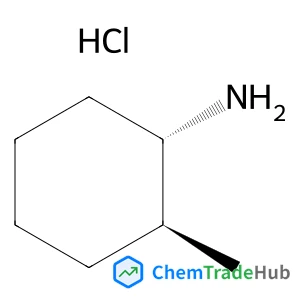
(1R,2R)-2-Methylcyclohexanamine hydrochloride (1:1)
CAS Number:
39558-31-1
Molecular Formula:
C7H16ClN
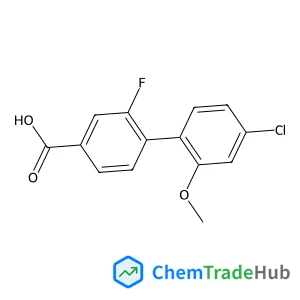
4-(4-Chloro-2-methoxyphenyl)-3-fluorobenzoic acid
CAS Number:
1261970-23-3
Molecular Formula:
C14H10ClFO3
Recommended Suppliers



Disclaimer
This page provides academic journal information for reference and research purposes only. We are not affiliated with any journal publishers and do not handle publication submissions. For publication-related inquiries, please contact the respective journal publishers directly.
If you notice any inaccuracies in the information displayed, please contact us at support@chemtradehub.com. We will promptly review and address your concerns.