



AD
(2-Oxo-1,2-dihydropyridin-3-yl)boronic acid(CAS: 951655-49-5)
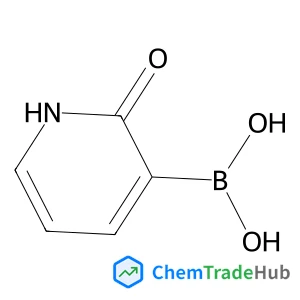
CAS Number
Related Products
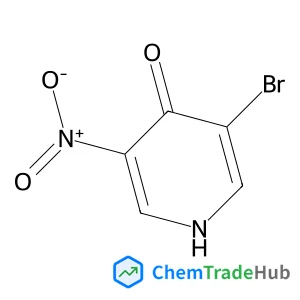
3-Bromo-5-nitro-4-pyridinol
CAS Number: 31872-65-8
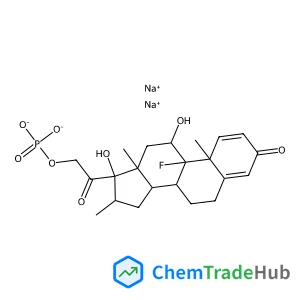
Betamethasone 21-Phosphate Disodium Salt
CAS Number: 151-73-5
![N-{[(2-Methyl-2-propanyl)oxy]carbonyl}-L-valyl-L-proline](https://static.chemtradehub.com/structs/233/23361-28-6-6270.webp)
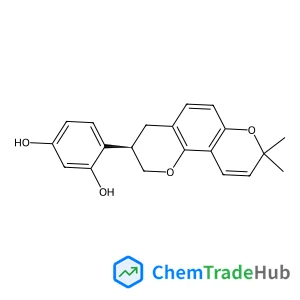
Glabridin
CAS Number: 59870-68-7

3-Piperidinol hydrochloride (1:1)
CAS Number: 64051-79-2

Other Suppliers for (2-Oxo-1,2-dihydropyridin-3-yl)boronic acid



Basic Information
Molecular Formula
C5H6BNO3
Molecular Weight
138.92 g/mol
Physical Properties
Density
1.36±0.1 g/cm3 (20 ºC 760 Torr),
Chemical Identifiers
SMILES
B(C1=CC=CNC1=O)(O)O
InChIKey
GLZIGOHMFYRHAO-UHFFFAOYSA-N
Database References
MDL Number
MFCD12964572
FAQ
(2-Oxo-1,2-dihydropyridin-3-yl)boronic acid is a white crystalline solid with a molecular weight of approximately 229.23 g/mol. It is slightly soluble in water and more soluble in organic solvents like methanol, ethanol, and DMSO. Chemically, it demonstrates moderate reactivity, particularly in boronate ester formation. Its solubility and reactivity make it useful in various synthetic and analytical applications.
(2-Oxo-1,2-dihydropyridin-3-yl)boronic acid is typically synthesized from 2-oxo-1,2-dihydropyridine-3-carbaldehyde using boronic acid or boronic ester reagents. The reaction often involves a Suzuki coupling or similar cross-coupling reactions under mild conditions using palladium catalysts. The yield and selectivity depend on the specific reaction conditions and reagents used.
(2-Oxo-1,2-dihydropyridin-3-yl)boronic acid is used in various industries, particularly in pharmaceuticals and fine chemicals. It serves as a versatile building block in medicinal chemistry for the synthesis of complex molecules. Additionally, it finds applications in polymer chemistry for preparing functional polymers, and in sensor technology for the development of chemical sensors due to its reactivity and solubility properties.
When handling (2-Oxo-1,2-dihydropyridin-3-yl)boronic acid, it is important to use appropriate personal protective equipment (PPE) such as gloves, goggles, and lab coat. Ensure the use of a fume hood for any operations involving air-sensitive or volatile compounds. Spills should be immediately cleaned up using appropriate absorbents and disposed of according to local regulations. Always refer to the Material Safety Data Sheet (MSDS) for specific safety guidelines and emergency procedures.
Safety Notice
Please verify product specifications and safety data before use. Contact the supplier for detailed safety information.
Always follow proper handling procedures
Contact Information
Contact Person
Mrs. Wang
jiningeric@163.com