AD
1-(1-{2-[(3-Chlorobenzyl)oxy]phenyl}vinyl)-1H-imidazole hydrochloride (1:1)(CAS: 77174-66-4)
![1-(1-{2-[(3-Chlorobenzyl)oxy]phenyl}vinyl)-1H-imidazole hydrochloride (1:1)](https://static.chemtradehub.com/structs/771/77174-66-4-eb4c.webp "1-(1-{2-[(3-Chlorobenzyl)oxy]phenyl}vinyl)-1H-imidazole hydrochloride (1:1)")
CAS Number
Related Products
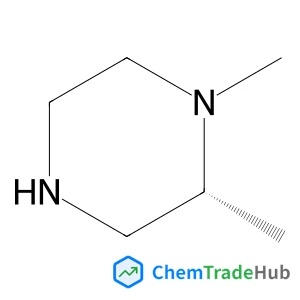
(2R)-1,2-Dimethylpiperazine
CAS Number: 623586-02-7
![(2S)-4-Hydroxy-7-(hydroxymethyl)-2-(2-hydroxy-2-propanyl)-2,3-dihydro-5H-furo[3,2-g]chromen-5-one](https://static.chemtradehub.com/structs/496/49624-66-0-7116.webp)
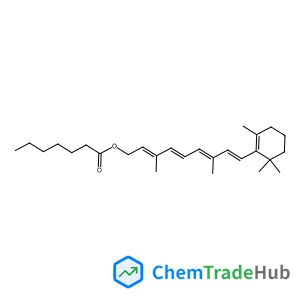
O~15~-Heptanoylretinol
CAS Number: 88641-44-5
![1-Methoxy-2-[1-(4-methoxyphenyl)propyl]benzene](https://static.chemtradehub.com/structs/334/33451-22-8-2ef2.webp)
CAS Number: 1350524-27-4
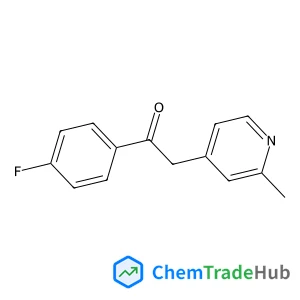
Other Suppliers for 1-(1-{2-[(3-Chlorobenzyl)oxy]phenyl}vinyl)-1H-imidazole hydrochloride (1:1)
![1-(1-{2-[(3-Chlorobenzyl)oxy]phenyl}vinyl)-1H-imidazole hydrochloride (1:1) — Shanghai Jixiang Biotechnology Co., Ltd.](https://static.chemtradehub.com/suppliers/67ce6f4d2b2de6e8e95a45bf/67ce6f4d2b2de6e8e95a45bf-logo.webp)
![1-(1-{2-[(3-Chlorobenzyl)oxy]phenyl}vinyl)-1H-imidazole hydrochloride (1:1) — Jiangsu Province Yangzhou Tend Chemical Factory](https://static.chemtradehub.com/suppliers/67cec0122b2de6e8e95a4bdc/67cec0122b2de6e8e95a4bdc-logo.webp)
Basic Information
Molecular Formula
C18H16Cl2N2O
Molecular Weight
347.25 g/mol
Physical Properties
Melting Point
142-150°C
Chemical Identifiers
SMILES
C=C(C1=CC=CC=C1OCC2=CC(=CC=C2)Cl)N3C=CN=C3.Cl
InChIKey
LWJUIYYIILPRRI-UHFFFAOYSA-N
Database References
MDL Number
MFCD00941395
FAQ
1-(1-{2-[(3-Chlorobenzyl)oxy]phenyl}vinyl)-1H-imidazole hydrochloride crystallizes as a white powder with a molecular weight of approximately 456.8 g/mol. It is slightly soluble in water and ethanol, and has poor solubility in most organic solvents. This compound exhibits moderate reactivity towards nucleophiles and can undergo substitution reactions. It is stable under usual storage conditions but should be protected from moisture and strong acids.
1-(1-{2-[(3-Chlorobenzyl)oxy]phenyl}vinyl)-1H-imidazole hydrochloride is typically synthesized via a multi-step reaction sequence involving protection, functionalization, and coupling of the intermediates. The synthesis involves the use of standard organic reaction conditions such as reflux, stirring, and the application of appropriate catalysts and solvents. The yield ranges from 50% to 70%, depending on the purity of the intermediates and the efficiency of the purification steps.
1-(1-{2-[(3-Chlorobenzyl)oxy]phenyl}vinyl)-1H-imidazole hydrochloride is primarily used in pharmaceutical research and development, particularly for the synthesis of intermediates in drug discovery. It can also be used in the chemical industry for the development of new materials and sensors. In semiconductor manufacturing, it may serve as a precursor in the fabrication of electronic materials due to its unique chemical properties.
Precautions for handling 1-(1-{2-[(3-Chlorobenzyl)oxy]phenyl}vinyl)-1H-imidazole hydrochloride include the use of personal protective equipment such as gloves, goggles, and lab coats. It should be handled in a well-ventilated area or a fume hood to minimize exposure to vapors. Spills should be cleaned up with appropriate absorbent materials, and the area should be thoroughly cleaned afterwards. The material safety data sheet (MSDS) should be consulted for detailed safety information and emergency procedures.
Safety Notice
Please verify product specifications and safety data before use. Contact the supplier for detailed safety information.
Always follow proper handling procedures