



AD
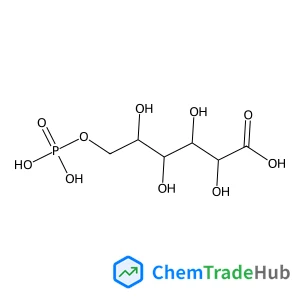
6-Phosphogluconic acid(CAS: 921-62-0)
CAS Number
Related Products
![[3-(2-Hydroxyethyl)phenyl]boronic acid](https://static.chemtradehub.com/structs/647/647853-32-5-c363.webp)
![N-(Butylsulfonyl)-O-[4-(4-piperidinyl)butyl]-L-tyrosine hydrochloride hydrate](https://static.chemtradehub.com/structs/150/150915-40-5-1679.webp)
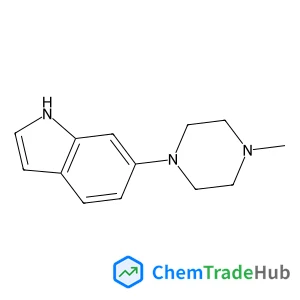
6-(4-methylpiperazin-1-yl)-1H-indole
CAS Number: 321745-04-4
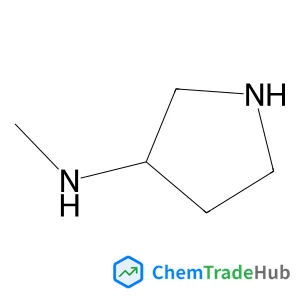
N-Methyl-3-pyrrolidinamine
CAS Number: 83030-08-4
![2-Chloro-N-[4-chloro-3-(2-pyridinyl)phenyl]-4-(methylsulfonyl)benzamide](https://static.chemtradehub.com/structs/879/879085-55-9-5abe.webp)
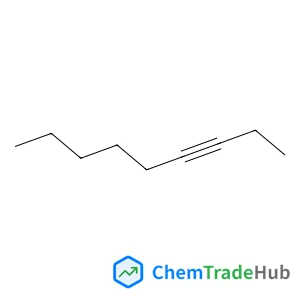
3-Nonyne
CAS Number: 20184-89-8
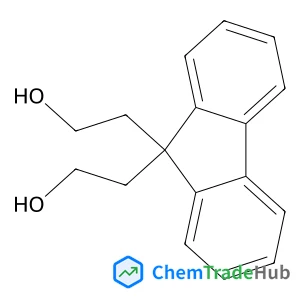
2,2'-(9H-fluorene-9,9-diyl)diethanol
CAS Number: 203070-78-4
![1,4-Dioxaspiro[4.5]dec-8-ylacetic acid](https://static.chemtradehub.com/structs/134/134136-04-2-8def.webp)
Other Suppliers for 6-Phosphogluconic acid






Basic Information
Molecular Formula
C6H13O10P
Molecular Weight
276.13 g/mol
Chemical Identifiers
SMILES
C(C(C(C(C(C(=O)O)O)O)O)O)OP(=O)(O)O
InChIKey
BIRSGZKFKXLSJQ-UHFFFAOYSA-N
Database References
MDL Number
MFCD08461677
FAQ
6-Phosphogluconic acid (CAS: 921-62-0) falls under the scope of various regulatory guidelines. It is classified under the Globally Harmonized System of Classification and Labelling of Chemicals (GHS) as a non-hazardous substance. In the European Union, it is subject to the REACH regulation, which requires manufacturers and importers to register and assess the risks associated with the chemical. In the United States, the Environmental Protection Agency (EPA) and the Food and Drug Administration (FDA) may have specific guidelines for its use in industrial and pharmaceutical applications. Compliance with these regulations ensures safe handling and disposal.
While 6-Phosphogluconic acid (CAS: 921-62-0) is a specific compound, there are alternative reagents and molecules used in its synthesis. For example, glucose-6-phosphate can be used as a precursor, and enzymes such as glucose-6-phosphate dehydrogenase can catalyze the formation of 6-Phosphogluconic acid. Other alternatives include using isomers like 6-deoxygluconic acid or other related sugars. These alternatives may offer different reactivity profiles and can be selected based on the specific requirements of the synthesis.
The market for 6-Phosphogluconic acid (CAS: 921-62-0) is driven by its applications in biotechnology, biochemistry, and pharmaceuticals. Research trends focus on its role in metabolic pathways and its use as a metabolic intermediate. Recent studies have explored its potential in cancer therapy and as a marker for oxidative stress. Market trends indicate increasing demand from academic and industrial research, driven by advancements in biocatalysis and metabolic engineering. The trend is towards more sustainable and efficient synthesis methods and the development of novel applications.
Handling waste containing 6-Phosphogluconic acid (CAS: 921-62-0) involves ensuring compliance with local environmental regulations. Generally, it can be disposed of as a non-hazardous waste. Collection should be done in appropriate containers to prevent spillage. For incineration, it is recommended to follow controlled and monitored procedures to minimize emissions. If professional waste disposal is necessary, it should be handled by accredited waste management companies. Proper labeling and documentation are crucial to ensure safe and compliant disposal. Environmental precautions include minimizing exposure during handling and disposal to protect both human health and the environment.
Safety Notice
Please verify product specifications and safety data before use. Contact the supplier for detailed safety information.
Always follow proper handling procedures

Contact Information
Contact Person
Miss Xu
1986399151@qq.com
Mobile
15221998634
Telephone
021-59178156
Visit Website
https://www.yingxinbio.com/Address
Yugang Town Yiling Road 258 Lane C Zone