



AD
2-Methyl-2-propanyl 2-[(cyclopropylamino)methyl]-1-pyrrolidinecarboxylate(CAS: 1289387-44-5)
![2-Methyl-2-propanyl 2-[(cyclopropylamino)methyl]-1-pyrrolidinecarboxylate](https://static.chemtradehub.com/structs/128/1289387-44-5-b116.webp "2-Methyl-2-propanyl 2-[(cyclopropylamino)methyl]-1-pyrrolidinecarboxylate")
CAS Number
Related Products
![4-Sulfothiacalix[4]arene sodium salt](https://static.chemtradehub.com/structs/211/211561-04-5-c419.webp)
4-Sulfothiacalix[4]arene sodium salt
CAS Number: 211561-04-5
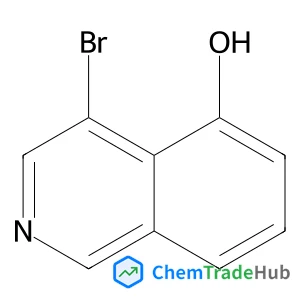
4-Bromoisoquinolin-5-ol
CAS Number: 651310-41-7
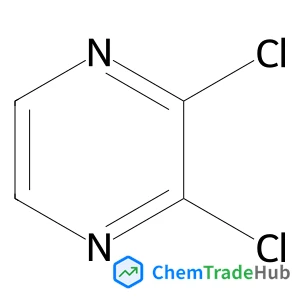
2,3-dichloropyrazine
CAS Number: 4858-85-9
![3-[4-(Aminomethyl)-1,3-thiazol-2-yl]aniline](https://static.chemtradehub.com/structs/885/885280-76-2-68fa.webp)
![Sodium 6-methyl-2-thioxo-5,6,7,8-tetrahydro-2H-pyrido[4,3-d]pyrimidin-4a-ide](https://static.chemtradehub.com/structs/125/1255717-42-0-d896.webp)
![{(2S,6R)-4-Benzyl-6-[(benzyloxy)methyl]-2-morpholinyl}methanol](https://static.chemtradehub.com/structs/158/1581750-87-9-8b86.webp)
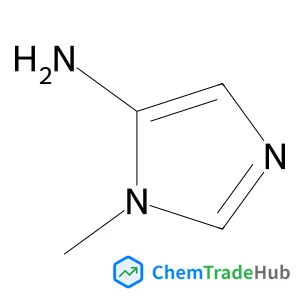
1-Methyl-1H-imidazol-5-amine
CAS Number: 66787-75-5
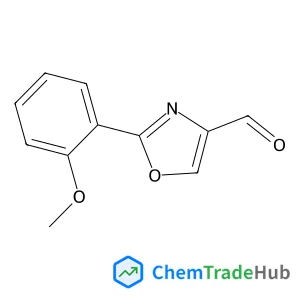
![(1R)-2-{[(2-Methyl-2-propanyl)oxy]carbonyl}-5-(methylsulfonyl)-1-isoindolinecarboxylic acid](https://static.chemtradehub.com/structs/210/2101238-70-2-41e6.webp)
Other Suppliers for 2-Methyl-2-propanyl 2-[(cyclopropylamino)methyl]-1-pyrrolidinecarboxylate
![2-Methyl-2-propanyl 2-[(cyclopropylamino)methyl]-1-pyrrolidinecarboxylate — Shanghai Yuyeh Biotechnology Co., Ltd.](https://static.chemtradehub.com/suppliers/67ce9f132b2de6e8e95a48fe/67ce9f132b2de6e8e95a48fe-logo.webp)
![2-Methyl-2-propanyl 2-[(cyclopropylamino)methyl]-1-pyrrolidinecarboxylate — ShangHaiMaiRuiErShengHua Technology Co Ltd](https://static.chemtradehub.com/suppliers/67ced3b52b2de6e8e95a6e52/67ced3b52b2de6e8e95a6e52-logo.webp)
![2-Methyl-2-propanyl 2-[(cyclopropylamino)methyl]-1-pyrrolidinecarboxylate — ShenZhenAiTaHuaXue Co Ltd](https://static.chemtradehub.com/suppliers/67ced0fb2b2de6e8e95a67fa/67ced0fb2b2de6e8e95a67fa-logo.webp)
![2-Methyl-2-propanyl 2-[(cyclopropylamino)methyl]-1-pyrrolidinecarboxylate — Jin Jinle (Hunan) Chemical Co., Ltd.](https://static.chemtradehub.com/suppliers/67ce76192b2de6e8e95a464e/67ce76192b2de6e8e95a464e-logo.webp)
Basic Information
Molecular Formula
C13H24N2O2
Molecular Weight
240.35 g/mol
Chemical Identifiers
SMILES
CC(C)(C)OC(=O)N1CCCC1CNC2CC2
InChIKey
SQRRQAVVRXZUMD-UHFFFAOYSA-N
Database References
MDL Number
MFCD18837102
FAQ
2-Methyl-2-propanyl 2-[(cyclopropylamino)methyl]-1-pyrrolidinecarboxylate is a white or off-white crystalline solid with a molecular weight of approximately 288.4 g/mol. It has a pKa of around 6.5, indicating basicity. The compound is poorly soluble in water but soluble in organic solvents such as ethanol and acetone. It exhibits moderate reactivity in nucleophilic substitution reactions and can be used as a chiral building block in organic synthesis.
2-Methyl-2-propanyl 2-[(cyclopropylamino)methyl]-1-pyrrolidinecarboxylate is typically synthesized via a multi-step reaction involving the coupling of 2-cyclopropylaminomethyl-1-pyrrolidinecarboxylic acid with 2-methyl-2-propanol. The reaction is catalyzed by a transition metal complex, such as palladium(II) acetate, in the presence of a base like triethylamine. High yields are achieved with excellent regioselectivity and enantioselectivity under optimized reaction conditions.
2-Methyl-2-proanyl 2-[(cyclopropylamino)methyl]-1-pyrrolidinecarboxylate is primarily used in the pharmaceutical and fine chemical industries as a chiral building block. It serves as an intermediate in the synthesis of various chiral compounds, which are essential for drug development. Additionally, it finds applications in the production of chiral resolving agents and in the development of new chiral ligands for asymmetric catalysis.
When handling 2-Methyl-2-proanyl 2-[(cyclopropylamino)methyl]-1-pyrrolidinecarboxylate, it is important to use appropriate personal protective equipment (PPE) such as gloves, goggles, and a lab coat. The substance should be stored in a cool, dry place, away from heat sources and direct sunlight. In case of spills, handle them with care and use appropriate spill cleanup procedures as outlined in the Material Safety Data Sheet (MSDS). Always ensure adequate ventilation, preferably in a fume hood, during handling and synthesis to avoid inhalation of vapors.
Safety Notice
Please verify product specifications and safety data before use. Contact the supplier for detailed safety information.
Always follow proper handling procedures

Contact Information
3004779232@qq.com
Mobile
18013972705
Telephone
025-66061636
Visit Website
http://www.aikonchem.com/