



AD
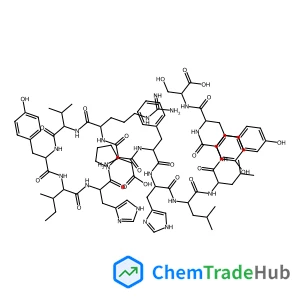
Angiotensinogen (1-14) (rat)(CAS: 110200-37-8)
CAS Number
Related Products
![N-[(9H-Fluoren-9-ylmethoxy)carbonyl]-O-trityl-L-threonine](https://static.chemtradehub.com/structs/133/133180-01-5-6c21.webp)
![N-[(Benzyloxy)carbonyl]phenylalanine](https://static.chemtradehub.com/structs/244/2448-45-5-d531.webp)
N-[(Benzyloxy)carbonyl]phenylalanine
CAS Number: 2448-45-5
![{4-[4-(4-Methoxyphenyl)-1,3-thiazol-2-yl]-1-piperazinyl}(phenyl)methanone](https://static.chemtradehub.com/structs/302/302905-01-7-bdd9.webp)
CAS Number: 110659-38-6
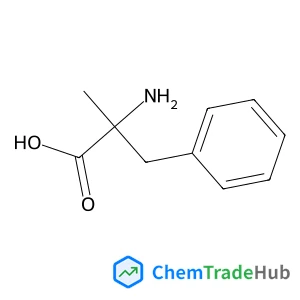
alpha-Methyl-L-phenylalanine
CAS Number: 23239-35-2
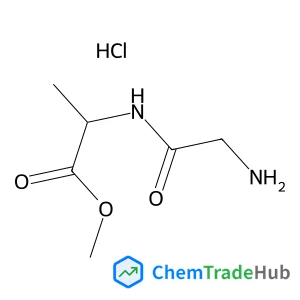
H-Gly-ala-ome hcl
CAS Number: 59095-76-0
Other Suppliers for Angiotensinogen (1-14) (rat)


Basic Information
Molecular Formula
C89H123N21O21
Molecular Weight
1823.1 g/mol
Chemical Identifiers
SMILES
CCC(C)C(C(=O)NC(CC1=CNC=N1)C(=O)N2CCCC2C(=O)NC(CC3=CC=CC=C3)C(=O)NC(CC4=CNC=N4)C(=O)NC(CC(C)C)C(=O)NC(CC(C)C)C(=O)NC(CC5=CC=C(C=C5)O)C(=O)NC(CC6=CC=C(C=C6)O)C(=O)NC(CO)C(=O)O)NC(=O)C(CC7=CC=C(C=C7)O)NC(=O)C(C(C)C)NC(=O)C(CCCNC(=N)N)NC(=O)C(CC(=O)O)N
InChIKey
FFCYBSGRCYFCNM-YXRWNMRVSA-N
Database References
MDL Number
MFCD00167485
FAQ
Angiotensinogen (1-14) (rat) is a peptide with a molecular weight of approximately 1654.4 Da. It is a white to off-white crystalline powder with good solubility in water. Physically, it is stable at room temperature but may degrade under extreme pH conditions. Chemically, it is susceptible to proteolytic degradation and is reactive with various reagents.
Angiotensinogen (1-14) (rat) is typically synthesized via solid-phase peptide synthesis. The process involves stepwise coupling of protected amino acids to a solid support, followed by cleavage from the support and purification. Commonly used protecting groups include Boc (t-butyloxycarbonyl) and Fmoc (fluorenylmethoxycarbonyl) with coupling reagents like HATU or PyBOP. The selectivity and yield are high due to the controlled environment of the synthesis reactor.
Angiotensinogen (1-14) (rat) is primarily used in the pharmaceutical industry for studying angiotensinogen-related pathways and for the development of hypertension drugs. It is also used in research applications involving signal transduction and cell biology. Additionally, it can be employed in biotechnology for protein engineering and in diagnostics for assay development.
Precautions when handling Angiotensinogen (1-14) (rat) include wearing personal protective equipment (PPE) such as gloves and protective eyewear. Work should be conducted in a fume hood to avoid inhalation of dust or vapors. Spills should be cleaned up with caution using appropriate absorbents. Always consult the Safety Data Sheet (SDS) for detailed handling instructions and emergency procedures.
Safety Notice
Please verify product specifications and safety data before use. Contact the supplier for detailed safety information.
Always follow proper handling procedures
Contact Information
Contact Person
Manager Ma
sales@apeptide.com
Mobile
17321195801
Telephone
021-60871011
Visit Website
https://www.apeptides.comAddress
No. 1369 Kangqiao East Road, Pudong High-tech Zone, C Building, Floor 2, Warehouse Thriving Industrial Park