



AD
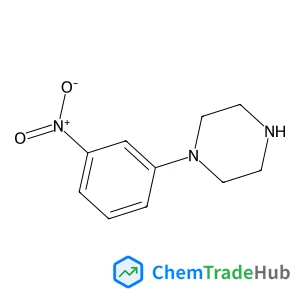
1-(3-Nitrophenyl)piperazine(CAS: 54054-85-2)
CAS Number
Related Products

(S)-Amlodipine
CAS Number: 103129-82-4

4-Pyridinylboronic acid
CAS Number: 1692-15-5
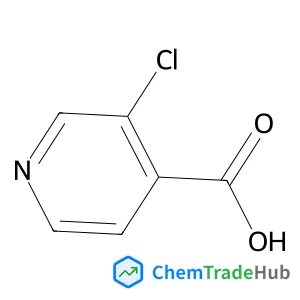
3-Chloroisonicotinic acid
CAS Number: 88912-27-0
![4-Chloro-N-[2-(4-morpholinyl)ethyl]benzamide](https://static.chemtradehub.com/structs/713/71320-77-9-a25e.webp)
![N-(4-Bromo-2-fluorophenyl)-6-methoxy-7-[(1-methyl-4-piperidinyl)methoxy]-4-quinazolinamine](https://static.chemtradehub.com/structs/443/443913-73-3-f030.webp)
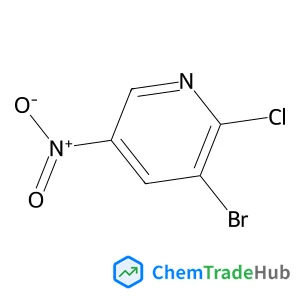
3-Bromo-2-chloro-5-nitropyridine
CAS Number: 5470-17-7
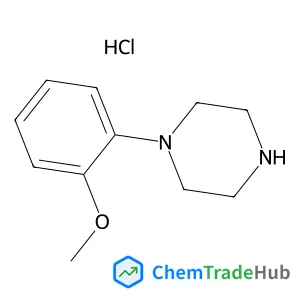
Other Suppliers for 1-(3-Nitrophenyl)piperazine





Basic Information
Molecular Formula
C10H13N3O2
Molecular Weight
207.23 g/mol
Chemical Identifiers
SMILES
C1CN(CCN1)C2=CC(=CC=C2)[N+](=O)[O-]
InChIKey
LHHZRIYUOZPKSG-UHFFFAOYSA-N
Database References
MDL Number
MFCD03444407
FAQ
1-(3-Nitrophenyl)piperazine is a white crystalline solid with a molecular weight of approximately 228.13 g/mol. It is slightly soluble in water and more soluble in organic solvents like ethanol and acetone. This compound is known for its low reactivity under normal conditions but can undergo hydrolysis in basic media. It has a melting point around 158-162°C and is stable over a wide pH range, though it is sensitive to strong oxidizing agents.
1-(3-Nitrophenyl)piperazine can be synthesized via a multistep procedure starting from piperazine and 3-nitrobenzaldehyde. The synthesis involves the formation of an intermediate Schiff base, followed by an intramolecular cyclization step. Commonly, this reaction is catalyzed by pivalic acid, leading to a high yield. The overall reaction is selective and efficient, making it a suitable method for the large-scale production of this compound.
1-(3-Nitrophenyl)piperazine is utilized in various industries, including pharmaceuticals for its potential as an agonist of serotonin receptors, sensors for detecting specific analytes, and organic synthesis as a versatile intermediate. It is also explored in the field of material science, particularly in the development of organic semiconductors and polymers.
When handling 1-(3-Nitrophenyl)piperazine, it is important to wear appropriate personal protective equipment (PPE) such as gloves, goggles, and a lab coat. This compound should be stored in a cool, dry place away from direct sunlight and heat sources. Fume hoods should be used during synthesis and manipulation to minimize inhalation risks. In case of spillage, the area should be immediately rinsed with water, and the spilled material should be collected and disposed of according to local regulations. Always refer to the Safety Data Sheet (SDS) for detailed information on handling and safety measures.
Safety Notice
Please verify product specifications and safety data before use. Contact the supplier for detailed safety information.
Always follow proper handling procedures
Contact Information
1158262190@qq.com