



AD
4-Anilino-1-benzyl-4-piperidinecarboxylic acid(CAS: 85098-64-2)
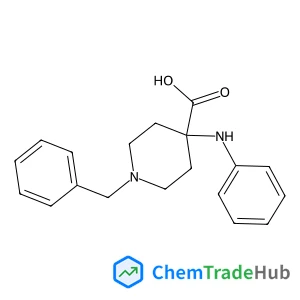
CAS Number
Related Products

methanol; trifluoro-methoxy-boron
CAS Number: 2802-68-8
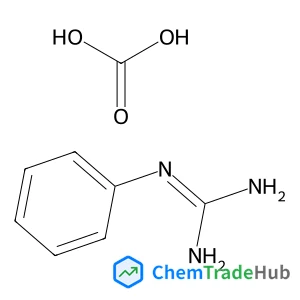
Carbonic acid - 1-phenylguanidine (1:1)
CAS Number: 6685-76-3
![1,7,7-Trimethylbicyclo[2.2.1]heptane-2,3-dione](https://static.chemtradehub.com/structs/103/10373-78-1-714c.webp)
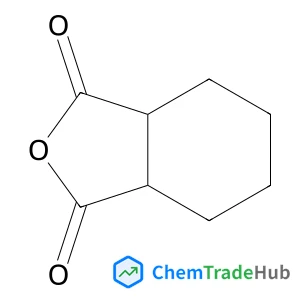
octahydro-2-benzofuran-1,3-dione
CAS Number: 85-42-7
![1-[(4xi)-beta-D-(~13~C_5_)-erythro-Pentofuranosyl]-1H-1,2,4-triazole-3-carboxamide](https://static.chemtradehub.com/structs/164/1646818-35-0-ea01.webp)

1-Propanamine hydrochloride (1:1)
CAS Number: 556-53-6
![1,1,2,2-Tetrafluoro-1-[2-(1,1,2,2-tetrafluoroethoxy)ethoxy]ethane](https://static.chemtradehub.com/structs/358/358-39-4-0089.webp)
Other Suppliers for 4-Anilino-1-benzyl-4-piperidinecarboxylic acid







Basic Information
Molecular Formula
C19H22N2O2
Molecular Weight
310.4 g/mol
Physical Properties
Melting Point
239-241°C
Chemical Identifiers
SMILES
O=C(C1(NC2=CC=CC=C2)CCN(CC3=CC=CC=C3)CC1)O
InChIKey
YFSCBWDAVTYIMM-UHFFFAOYSA-N
Database References
MDL Number
MFCD00023753
FAQ
4-Anilino-1-benzyl-4-piperidinecarboxylic acid is a white crystalline solid with a molecular weight of approximately 287.32 g/mol. It has a pKa of 4.75 in aqueous solution and is slightly soluble in water. The compound is stable under normal conditions but can react with strong bases to form salts. It is soluble in ethanol and slightly soluble in methanol, making it useful in organic synthesis and pharmaceutical applications.
4-Anilino-1-benzyl-4-piperidinecarboxylic acid can be synthesized via a multistep process involving the condensation of 4-hydroxypiperidine and benzyl anilide followed by acylation. This method yields a mixture of isomers, but the desired product can be isolated through column chromatography. The synthesis typically involves the use of catalysts and reagents like triethylamine and dichloromethane, achieving a yield of around 70-80%.
4-Anilino-1-benzyl-4-piperidinecarboxylic acid is primarily used in the pharmaceutical industry for the synthesis of drugs. It is also utilized in the production of polymers and sensors due to its unique chemical structure. Its use in semiconductors is less common but has potential applications in materials chemistry for electronic devices.
When handling 4-Anilino-1-benzyl-4-piperidinecarboxylic acid, it is essential to wear appropriate personal protective equipment (PPE) such as gloves, goggles, and a lab coat. Work should be conducted in a well-ventilated area or a fume hood to minimize exposure. Spills should be cleaned up immediately using absorbent materials, and the area should be flushed with water. Always refer to the Safety Data Sheet (SDS) for detailed safety information and emergency procedures.
Safety Notice
Please verify product specifications and safety data before use. Contact the supplier for detailed safety information.
Always follow proper handling procedures