



AD
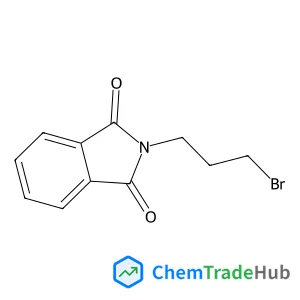
2-(3-Bromopropyl)-1H-isoindole-1,3(2H)-dione(CAS: 5460-29-7)
CAS Number
Related Products
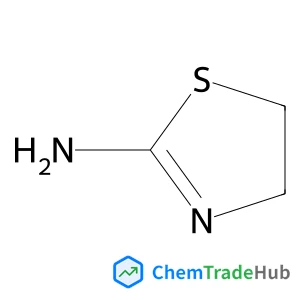
4,5-Dihydro-1,3-thiazol-2-amine
CAS Number: 1779-81-3
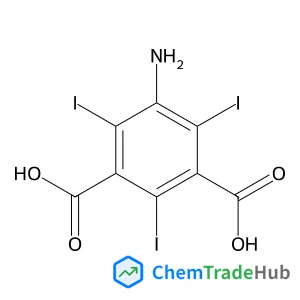
5-Amino-2,4,6-triiodoisophthalic acid
CAS Number: 35453-19-1
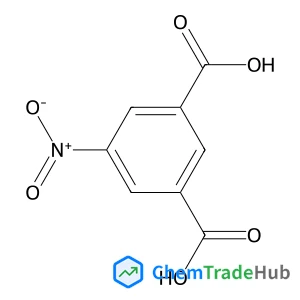
5-Nitroisophthalic acid
CAS Number: 618-88-2
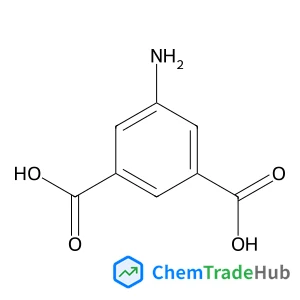
5-Aminoisophthalic acid
CAS Number: 99-31-0
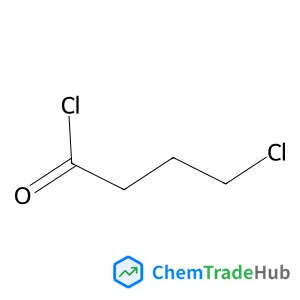
4-Chlorobutanoyl chloride
CAS Number: 4635-59-0
![2-Methyl-2-propanyl ({(E)-[1-(2-amino-1,3-thiazol-4-yl)-2-(1,3-benzothiazol-2-ylsulfanyl)-2-oxoethylidene]amino}oxy)acetate](https://static.chemtradehub.com/structs/896/89605-09-4-2ab9.webp)
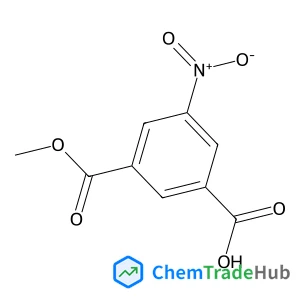
3-(Methoxycarbonyl)-5-nitrobenzoic acid
CAS Number: 1955-46-0
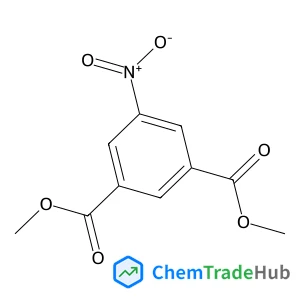
Dimethyl 5-nitroisophthalate
CAS Number: 13290-96-5
Other Suppliers for 2-(3-Bromopropyl)-1H-isoindole-1,3(2H)-dione





Basic Information
Molecular Formula
C11H10BrNO2
Molecular Weight
268.11 g/mol
Physical Properties
Melting Point
72.0 to 75.0 deg-C
Boiling Point
361.4°C at 760 mmHg
Flash Point
172 ºC
Chemical Identifiers
SMILES
C1=CC=C2C(=C1)C(=O)N(C2=O)CCCBr
InChIKey
VKJCJJYNVIYVQR-UHFFFAOYSA-N
Database References
MDL Number
MFCD00005904
Beilstein Registry Number
157547
FAQ
2-(3-Bromopropyl)-1H-isoindole-1,3(2H)-dione (CAS: 5460-29-7) is a solid with a crystalline form. The molecular weight is approximately 296.12 g/mol. It has low water solubility but good solubility in organic solvents such as dichloromethane and acetone. This compound is chemically stable but can react with strong bases to form the corresponding anion. It has limited reactivity under normal conditions but can undergo electrophilic aromatic substitution reactions.
2-(3-Bromopropyl)-1H-isoindole-1,3(2H)-dione (CAS: 5460-29-7) is typically synthesized via a multi-step process, involving the bromination of propyl isonitrile and subsequent reaction with isoindole. The synthesis often uses a Lewis acid catalyst such as aluminum chloride. The yield is around 70-80%, and the reaction is highly selective for the bromo substitution on the propyl group.
2-(3-Bromopropyl)-1H-isoindole-1,3(2H)-dione (CAS: 5460-29-7) finds application in the pharmaceutical industry for the synthesis of certain medicinal compounds. It is also used in the polymer industry for the development of functional polymers with specific properties. Additionally, it has potential use in sensors, semiconductors, and as a reagent in organic synthesis.
When handling 2-(3-Bromopropyl)-1H-isoindole-1,3(2H)-dione (CAS: 5460-29-7), it is essential to wear appropriate personal protective equipment (PPE) such as gloves, goggles, and a lab coat. Work should be conducted in a well-ventilated area or with a fume hood. Spills should be cleaned up using appropriate absorbents and disposing of them according to local regulations. Always refer to the Safety Data Sheet (SDS) for detailed safety information and handling procedures.
Safety Notice
Please verify product specifications and safety data before use. Contact the supplier for detailed safety information.
Always follow proper handling procedures