



AD
2,3-Dichloro-4-(trifluoromethyl)pyridine(CAS: 89719-93-7)
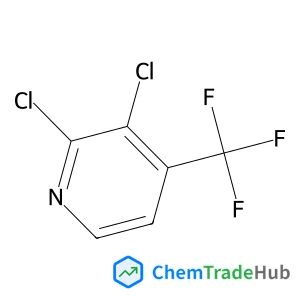
CAS Number
Related Products

6-Bromo-5-fluoroindolin-2-one
CAS Number: 893620-44-5



(2-Bromo-5-fluorophenyl)acetic acid
CAS Number: 739336-26-6

4-Fluoro-2-nitrobenzonitrile
CAS Number: 80517-21-1
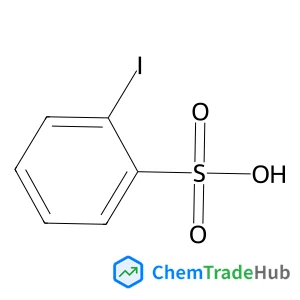
2-Iodobenzenesulfonic acid
CAS Number: 63059-25-6

3,6-Dichloro-4-pyridazinamine
CAS Number: 823-58-5

4-Bromo-2-(trifluoromethyl)pyridine
CAS Number: 887583-90-6
Other Suppliers for 2,3-Dichloro-4-(trifluoromethyl)pyridine

Basic Information
Molecular Formula
C6H2Cl2F3N
Molecular Weight
215.99 g/mol
Chemical Identifiers
SMILES
C1=CN=C(C(=C1C(F)(F)F)Cl)Cl
InChIKey
ZFCZNQZILNNPBH-UHFFFAOYSA-N
Database References
MDL Number
MFCD14525481
FAQ
2,3-Dichloro-4-(trifluoromethyl)pyridine (CAS: 89719-93-7) is a crystalline solid with a molecular weight of approximately 244.02 g/mol. It is slightly soluble in water but has high solubility in organic solvents such as ethanol and acetone. Chemically, it is highly reactive and can undergo nucleophilic substitution and electrophilic aromatic substitution. It is also known for its stability under basic conditions but can react with strong acids.
2,3-Dichloro-4-(trifluoromethyl)pyridine (CAS: 89719-93-7) is commonly synthesized via a multistep process involving the reaction of 4-chloropyridine with chlorine gas, followed by trifluoromethylation using triflic anhydride. This synthesis typically yields a product with good selectivity and high yield. The reaction conditions and catalysts used can vary, but the overall process is well-documented in the literature.
2,3-Dichloro-4-(trifluoromethyl)pyridine (CAS: 89719-93-7) is primarily used in the pharmaceutical industry for the synthesis of certain drugs. It also finds applications in the polymer industry for modifying the properties of polymers, in sensor technology for developing selective gas sensors, and in the semiconductor industry for its use in etching processes. Its unique chemical properties make it a valuable reagent in these fields.
When handling 2,3-Dichloro-4-(trifluoromethyl)pyridine (CAS: 89719-93-7), it is essential to use proper personal protective equipment (PPE), including gloves, goggles, and a lab coat. This compound should be handled in a fume hood due to its volatility and potential to form toxic fumes. In case of a spill, it should be cleaned up according to the Material Safety Data Sheet (MSDS) guidelines. Always refer to the latest SDS for detailed safety information.
Safety Notice
Please verify product specifications and safety data before use. Contact the supplier for detailed safety information.
Always follow proper handling procedures
Contact Information
info@huanlingchem.com