



AD
2-Chloro-3,4-dimethoxybenzaldehyde(CAS: 5417-17-4)
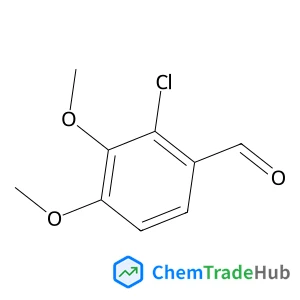
CAS Number
Related Products

2-methyl-2-propylpropane-1,3-diol
CAS Number: 78-26-2
![Ethyl 3-(2-(((4-carbamimidoylphenyl)amino)methyl)-1-methyl-N-(pyridin-2-yl)-1H-benzo[d]imidazole-5-carboxamido)propanoate hydrochloride](https://static.chemtradehub.com/structs/211/211914-50-0-81b1.webp)

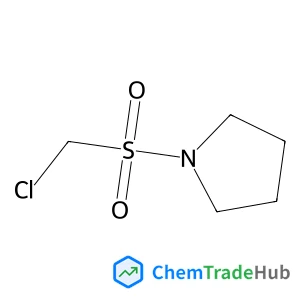
1-chloromethanesulfonylpyrrolidine
CAS Number: 98069-37-5

2,3,5-Tribromopyridine
CAS Number: 75806-85-8
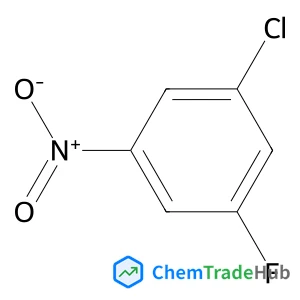
1-Chloro-3-fluoro-5-nitrobenzene
CAS Number: 4815-64-9

Bis(2-ethylhexyl) phthalate
CAS Number: 117-81-7

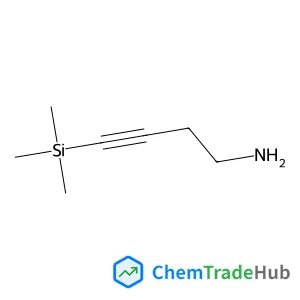
4-(Trimethylsilyl)-3-butyn-1-amine
CAS Number: 183208-71-1
Other Suppliers for 2-Chloro-3,4-dimethoxybenzaldehyde






Basic Information
Molecular Formula
C9H9ClO3
Molecular Weight
200.62 g/mol
Physical Properties
Melting Point
69.0 to 73.0 deg-C
Boiling Point
300.9℃ at 760 mmHg
Density
1.245
Flash Point
130.8 °C
Chemical Identifiers
SMILES
COC1=C(C(=C(C=C1)C=O)Cl)OC
InChIKey
SAWHDJTZESXNMM-UHFFFAOYSA-N
Database References
MDL Number
MFCD00084942
Beilstein Registry Number
2109344
FAQ
2-Chloro-3,4-dimethoxybenzaldehyde (CAS: 5417-17-4) is a white crystalline solid with a molecular weight of 234.03 g/mol. It has a slight aromatic odor. The compound is moderately soluble in water and soluble in organic solvents like ethanol and acetone. It is an electrophile and can undergo reactions such as nucleophilic substitution and condensation. It is stable under normal conditions but should be protected from strong bases and reducing agents.
2-Chloro-3,4-dimethoxybenzaldehyde (CAS: 5417-17-4) can be synthesized via the reduction of 2-chloro-3,4-dimethoxybenzaldehyde with sodium borohydride in an aqueous solution. Alternatively, it can be synthesized by treating 2-chloro-3,4-dimethoxybenzoyl chloride with methanol in the presence of a catalyst like triethylamine. The yield is typically around 75-80%, and the reaction is carried out under mild conditions to ensure selectivity.
2-Chloro-3,4-dimethoxybenzaldehyde (CAS: 5417-17-4) is used in the pharmaceutical industry for the synthesis of certain drugs, particularly those requiring aromatic compounds as intermediates. It is also utilized in the production of dyes and pigments, as a precursor in organic synthesis, and in the development of sensors and semiconductors due to its functional groups and reactivity.
When handling 2-Chloro-3,4-dimethoxybenzaldehyde (CAS: 5417-17-4), it is important to use personal protective equipment (PPE) such as gloves, goggles, and a lab coat. Ensure that the work is conducted in a well-ventilated area or a fume hood to avoid inhalation of vapors. Spills should be cleaned up using appropriate spill kits, and the area should be well-ventilated. Always refer to the Safety Data Sheet (SDS) for detailed handling and disposal instructions.
Safety Notice
Please verify product specifications and safety data before use. Contact the supplier for detailed safety information.
Always follow proper handling procedures

Contact Information
Contact Person
Mr. Zhai
xiangyang.zhai@jk-sci.com
Mobile
18210857532
Visit Website
https://www.jkchemical.comAddress
Beijing Chaoyang District, Building A, 5th Floor, Junfeng Huating, No. 69 Beichen West Road