



AD
2,6-Difluoro-3,5-dimethoxyaniline(CAS: 651734-54-2)
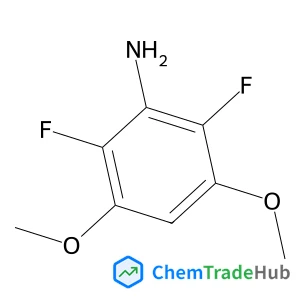
CAS Number
Related Products
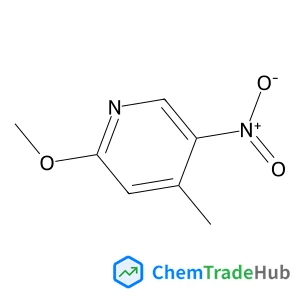
2-Methoxy-4-methyl-5-nitropyridine
CAS Number: 6635-90-1
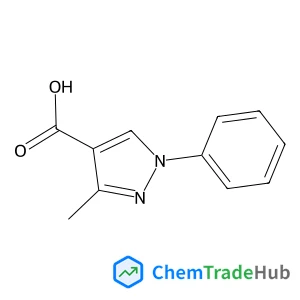
![N-[4-(4-Fluorophenyl)-5-(hydroxymethyl)-6-isopropyl-2-pyrimidinyl]-N-methylmethanesulfonamide](https://static.chemtradehub.com/structs/147/147118-36-3-8396.webp)
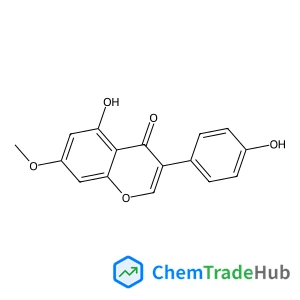
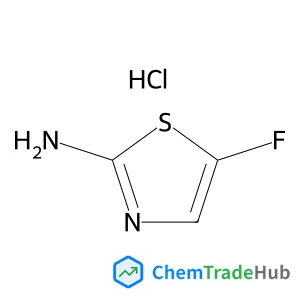
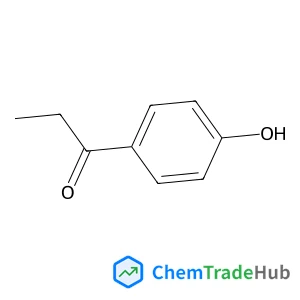
1-(4-Hydroxyphenyl)-1-propanone
CAS Number: 70-70-2
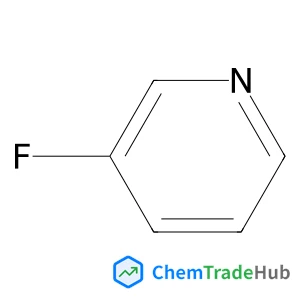
3-Fluoropyridine
CAS Number: 372-47-4
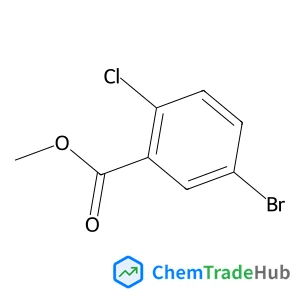
Methyl 5-bromo-2-chlorobenzoate
CAS Number: 251085-87-7
![5-Chloro-3-nitropyrazolo[1,5-a]pyrimidine](https://static.chemtradehub.com/structs/136/1363380-51-1-6292.webp)
Other Suppliers for 2,6-Difluoro-3,5-dimethoxyaniline



Basic Information
Molecular Formula
C8H9F2NO2
Molecular Weight
189.16 g/mol
Physical Properties
Boiling Point
301.0±37.0℃ at 760 mmHg
Chemical Identifiers
SMILES
COC1=CC(=C(C(=C1F)N)F)OC
InChIKey
SUXITUVUFUOAGT-UHFFFAOYSA-N
Database References
MDL Number
MFCD12973804
FAQ
2,6-Difluoro-3,5-dimethoxyaniline is a white crystalline solid with a molecular weight of approximately 242.11 g/mol. It has a solubility of about 0.3 g/L in water. This compound is known for its low reactivity in aqueous solutions but shows moderate reactivity with electrophiles. It has a melting point of 125-127°C and a boiling point of 320-322°C. It is slightly soluble in ethanol and acetone.
2,6-Difluoro-3,5-dimethoxyaniline is typically synthesized via the reaction of 4-dimethoxyaniline with hydrogen fluoride (HF) in the presence of a Lewis acid catalyst such as aluminum chloride. The synthesis involves the substitution of two hydrogen atoms with fluorine atoms, yielding a product with high purity and selectivity. The yield is usually around 80-85%. The use of a fume hood is recommended to handle the volatile starting materials and intermediates.
2,6-Difluoro-3,5-dimethoxyaniline finds applications in various industries, including pharmaceuticals, where it serves as a precursor for the synthesis of certain drugs. It is also used in the production of dyes and pigments, as well as in the development of materials for electronic devices, such as organic light-emitting diodes (OLEDs). Its use in sensors and as a component in certain polymers is also reported.
What precautions should be taken when handling 2,6-Difluoro-3,5-dimethoxyaniline (CAS: 651734-54-2)?
Proper handling of 2,6-Difluoro-3,5-dimethoxyaniline requires the use of personal protective equipment (PPE), including gloves, goggles, and lab coats. It should be stored in a cool, dry place away from direct sunlight and heat sources. Spills should be handled using appropriate absorbents, and the area should be ventilated. Emergency showers and eyewash stations should be readily available. Always refer to the Safety Data Sheet (SDS) for detailed handling and disposal information.
Safety Notice
Please verify product specifications and safety data before use. Contact the supplier for detailed safety information.
Always follow proper handling procedures
Contact Information
Contact Person
Manager Zhang
supplychain@witofly.com