



AD
Maytansinoid DM4(CAS: 799840-96-3)
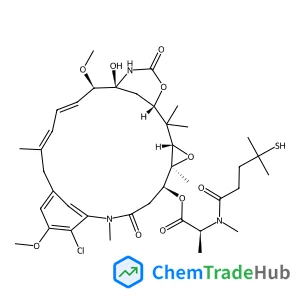
CAS Number
Related Products
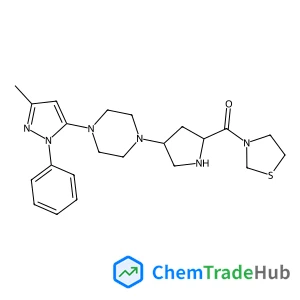
Teneligliptin
CAS Number: 760937-92-6
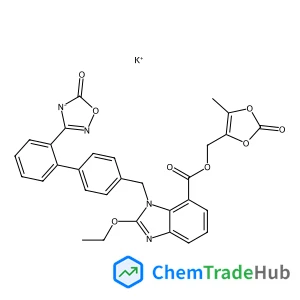
Azilsartan Kamedoxomil
CAS Number: 863031-24-7
![5-({4-[(2,3-Dimethyl-2H-indazol-6-yl)(methyl)amino]-2-pyrimidinyl}amino)-2-methylbenzenesulfonamide hydrochloride (1:1)](https://static.chemtradehub.com/structs/635/635702-64-6-8f57.webp)
![4-[4-({[4-Chloro-3-(trifluoromethyl)phenyl]carbamoyl}amino)-3-fluorophenoxy]-N-methyl-2-pyridinecarboxamide](https://static.chemtradehub.com/structs/755/755037-03-7-d9bc.webp)
![Methyl (5R)-5-[(1S,2S)-2-chloro-1-({[(2S,4R)-4-ethyl-2-piperidinyl]carbonyl}amino)propyl]-1-thio-beta-L-arabinopyranoside hydrochloride hydrate](https://static.chemtradehub.com/structs/788/78822-40-9-db71.webp)
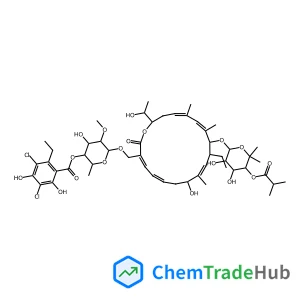
Fidaxomicin
CAS Number: 873857-62-6
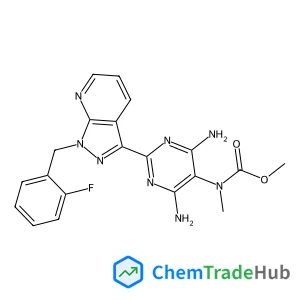
Riociguat
CAS Number: 625115-55-1
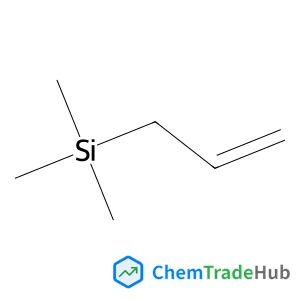
Allyl(trimethyl)silane
CAS Number: 762-72-1
![(R)-8-chloro-1-methyl-2,3,4,5-tetrahydro-1H-benzo[d]azepine hydrochloride](https://static.chemtradehub.com/structs/846/846589-98-8-cb1a.webp)
Other Suppliers for Maytansinoid DM4

Basic Information
Molecular Formula
C39H56ClN3O10S
Molecular Weight
794.41 g/mol
Chemical Identifiers
SMILES
C[C@]12[C@@H](OC([C@@H](N(C(CCC(S)(C)C)=O)C)C)=O)CC(N(C)C3=C(Cl)C(OC)=CC(C/C(C)=C/C=C/[C@@H](OC)[C@@](N4)(O)C[C@@](OC4=O)([H])C(C)(C)[C@@]1(O2)[H])=C3)=O
InChIKey
SVVGCFZPFZGWRG-OTKBOCOUSA-N
Database References
MDL Number
MFCD28144633
FAQ
Maytansinoid DM4 (CAS: 799840-96-3) is subject to various regulatory guidelines, including GHS classification, REACH regulations, and FDA/EPA requirements. It is important to comply with these regulations to ensure safe handling and use. GHS classification helps in understanding its hazards, while REACH requires registration and assessment of its environmental and health impacts. FDA and EPA regulations control its use in pharmaceuticals and environmental releases.
There are several alternatives to Maytansinoid DM4 (CAS: 799840-96-3) in its synthesis, including analogs like maytansinol and isomers like DM1 and DM2. Common alternative reagents include other cytotoxic agents such as auristatin, maytansinol, and their derivatives. These alternatives can be considered based on the specific requirements and conditions of the synthesis process.
The market for Maytansinoid DM4 (CAS: 799840-96-3) is driven by its application in targeted cancer therapy. Research trends are focusing on its use in combination therapies and the development of more potent derivatives. Market demand is increasing due to its efficacy in treating various types of cancer. The trend is also towards more sustainable and cost-effective production methods.
Waste containing Maytansinoid DM4 (CAS: 799840-96-3) should be handled according to regulatory guidelines. Collect it in appropriate containers, ensuring it is labeled with the correct hazard information. Incineration is a common method, but professional waste disposal services should be used for safe disposal. Environmental protection precautions include minimizing the release of the compound into the environment and following all local and national waste management regulations.
Safety Notice
Please verify product specifications and safety data before use. Contact the supplier for detailed safety information.
Always follow proper handling procedures
Contact Information
info@nutri-chem.com