



AD
3,5,7-Trihydroxy-2-(4-hydroxyphenyl)chromenium chloride(CAS: 134-04-3)
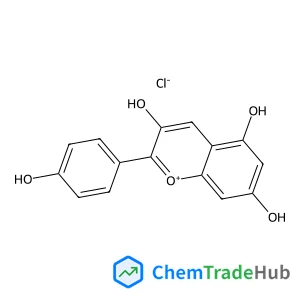
CAS Number
Related Products
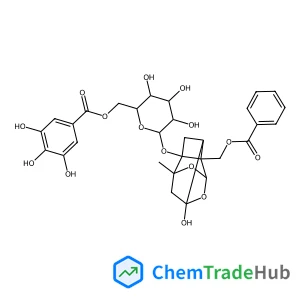
Galloylpaeoniflorin
CAS Number: 122965-41-7
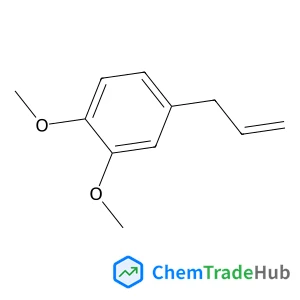
4-Allyl-1,2-dimethoxybenzene
CAS Number: 93-15-2
![(2S,4S,5R,6S,7S,8S,9S,12R)-4,5-Diacetoxy-2,12-dihydroxy-8-(isobutyryloxy)-6-[(isobutyryloxy)methyl]-2,10,10-trimethyl-11-oxatricyclo[7.2.1.0~1,6~]dodec-7-yl benzoate](https://static.chemtradehub.com/structs/139/139979-81-0-fafa.webp)
![(2-Nonanoyloxy-3-octadeca-9,12-dienoyloxypropoxy)-[2-(trimethylazaniumyl)ethyl]phosphinate](https://static.chemtradehub.com/structs/936/93685-90-6-cd4c.webp)
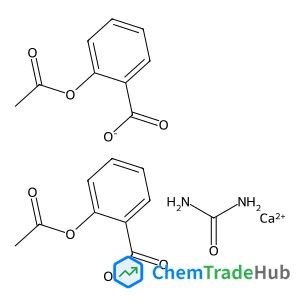
Calcium 2-acetoxybenzoate urea (1:2:1)
CAS Number: 5749-67-7
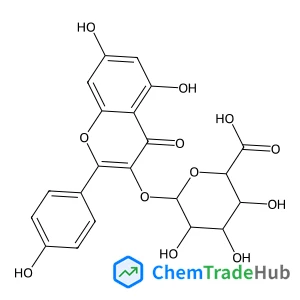
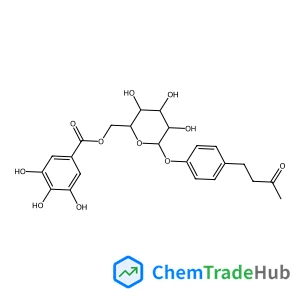
Lindleyin
CAS Number: 59282-56-3
![2,7-Dihydroxy-3,8-dimethoxychromeno[5,4,3-cde]chromene-5,10-dione](https://static.chemtradehub.com/structs/223/2239-88-5-ca12.webp)
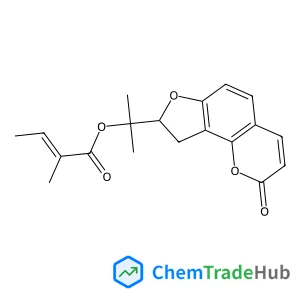
Columbianadin
CAS Number: 5058-13-9
Other Suppliers for 3,5,7-Trihydroxy-2-(4-hydroxyphenyl)chromenium chloride






Basic Information
Molecular Formula
C15H11ClO5
Molecular Weight
306.7 g/mol
Physical State
Powder
Physical Properties
Melting Point
>350 ºC
Boiling Point
421.26°C (rough estimate)
Chemical Identifiers
SMILES
C1=CC(=CC=C1C2=[O+]C3=CC(=CC(=C3C=C2O)O)O)O.[Cl-]
InChIKey
YPVZJXMTXCOTJN-UHFFFAOYSA-N
Database References
MDL Number
MFCD00017589
FAQ
3,5,7-Trihydroxy-2-(4-hydroxyphenyl)chromenium chloride (CAS: 134-04-3) is a crystalline compound with a molecular weight of approximately 344.26 g/mol. It has a low solubility in water but is soluble in organic solvents like ethanol and acetone. The compound exhibits limited reactivity, showing stability under neutral conditions. It can undergo photodegradation under UV light, making appropriate storage conditions necessary.
3,5,7-Trihydroxy-2-(4-hydroxyphenyl)chromenium chloride (CAS: 134-04-3) is typically synthesized via the reaction of 2-(4-hydroxyphenyl)-3,5,7-trihydroxychromenium bromide with potassium chloride in a polar aprotic solvent. The reaction is carried out under an inert atmosphere to prevent oxidation and side reactions, with a yield of up to 75%. The use of appropriate catalysts can enhance selectivity and yield.
3,5,7-Trihydroxy-2-(4-hydroxyphenyl)chromenium chloride (CAS: 134-04-3) is used in various industries, including pharmaceuticals for developing new drug candidates, sensors for environmental monitoring, and semiconductors for organic electronics. Its unique chemical structure makes it suitable for applications in polymer synthesis and as a photostable chromophore.
When handling 3,5,7-Trihydroxy-2-(4-hydroxyphenyl)chromenium chloride (CAS: 134-04-3), it is essential to wear personal protective equipment (PPE) such as gloves, safety goggles, and a lab coat. The compound should be stored in a cool, dry place away from direct sunlight. Handling should be conducted in a fume hood due to its potential to undergo photodegradation. In case of a spill, immediately clean up with appropriate absorbent materials and consult the Safety Data Sheet (SDS) for further instructions.
Safety Notice
Please verify product specifications and safety data before use. Contact the supplier for detailed safety information.
Always follow proper handling procedures

Contact Information
Contact Person
Li Dan
lid@nature-standard.com
Mobile
18502101153
Visit Website
http://www.sddstore.com/Address
No. 15, Gudan Road, Pudong New Area, Shanghai, China, Shenjiang Science and Innovation Park, Building 25