



AD
2,3,4,6-Tetra-O-acetyl-D-glucopyranose(CAS: 10343-06-3)
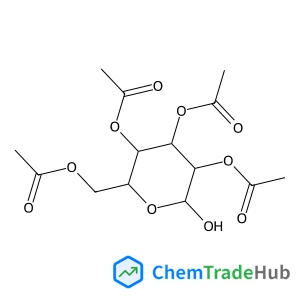
CAS Number
Related Products
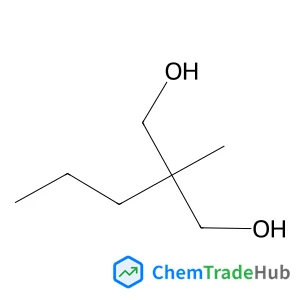
2-methyl-2-propylpropane-1,3-diol
CAS Number: 78-26-2
![Ethyl 3-(2-(((4-carbamimidoylphenyl)amino)methyl)-1-methyl-N-(pyridin-2-yl)-1H-benzo[d]imidazole-5-carboxamido)propanoate hydrochloride](https://static.chemtradehub.com/structs/211/211914-50-0-81b1.webp)

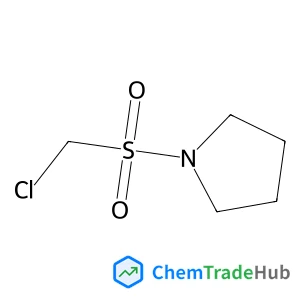
1-chloromethanesulfonylpyrrolidine
CAS Number: 98069-37-5
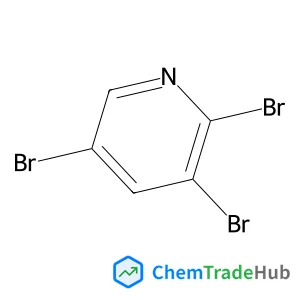
2,3,5-Tribromopyridine
CAS Number: 75806-85-8
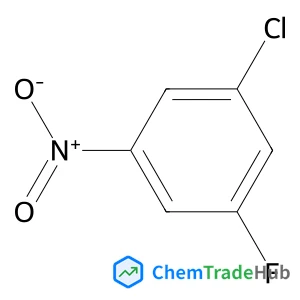
1-Chloro-3-fluoro-5-nitrobenzene
CAS Number: 4815-64-9

Bis(2-ethylhexyl) phthalate
CAS Number: 117-81-7
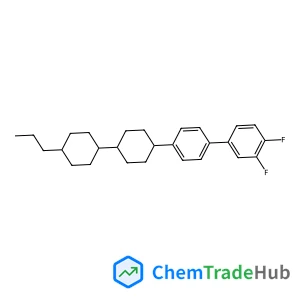
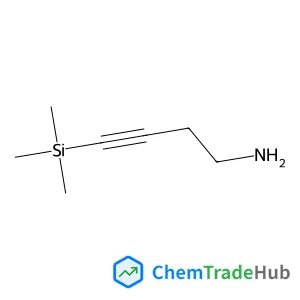
4-(Trimethylsilyl)-3-butyn-1-amine
CAS Number: 183208-71-1
Other Suppliers for 2,3,4,6-Tetra-O-acetyl-D-glucopyranose







Basic Information
Molecular Formula
C14H20O10
Molecular Weight
348.3 g/mol
Physical Properties
Melting Point
118-120°C
Chemical Identifiers
SMILES
CC(=O)OCC1C(C(C(C(O1)O)OC(=O)C)OC(=O)C)OC(=O)C
InChIKey
IEOLRPPTIGNUNP-RQICVUQASA-N
Database References
MDL Number
MFCD00061634
FAQ
2,3,4,6-Tetra-O-acetyl-D-glucopyranose (CAS: 10343-06-3) falls under various regulatory guidelines. It should be classified and labeled according to GHS (Globally Harmonized System of Classification and Labeling of Chemicals) for hazardous properties. In Europe, it may be subject to REACH regulations. FDA and EPA guidelines may apply for its use in food and environmental contexts. Proper storage and handling are crucial to avoid any potential health or environmental hazards.
Alternative reagents for synthesizing similar functionalities include 2,3,4,6-tetra-O-acetyl-D-mannopyranose and 2,3,4,6-tetra-O-acetyl-D-galactopyranose. These can serve as isomers or structural analogs in chemical synthesis. Commonly, researchers may explore using glycosyl transferases or other enzymatic methods to achieve similar outcomes, providing more environmentally friendly alternatives to traditional chemical synthesis methods.
The market for 2,3,4,6-Tetra-O-acetyl-D-glucopyranose (CAS: 10343-06-3) is primarily driven by its applications in pharmaceuticals, food additives, and research. Recent trends show increasing interest in its use as a sugar analog in drug development and glycobiology research. Market demand is expected to grow as more applications are discovered, particularly in the areas of synthetic biology and personalized medicine.
Waste containing 2,3,4,6-Tetra-O-acetyl-D-glucopyranose (CAS: 10343-06-3) should be collected in appropriate containers and stored separately to prevent contamination. Incineration is a common method for disposal, but professional waste disposal services should be considered for large quantities or hazardous waste. Ensure to follow local regulations for waste management and environmental protection to minimize any potential impact on the environment.
Safety Notice
Please verify product specifications and safety data before use. Contact the supplier for detailed safety information.
Always follow proper handling procedures

Contact Information
Contact Person
Mr. Zhai
xiangyang.zhai@jk-sci.com
Mobile
18210857532
Visit Website
https://www.jkchemical.comAddress
Beijing Chaoyang District, Building A, 5th Floor, Junfeng Huating, No. 69 Beichen West Road