



AD
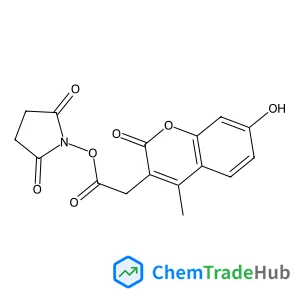
2,5-dioxopyrrolidin-1-yl 2-(7-hydroxy-4-methyl-2-oxo-2H-chromen-3-yl)acetate(CAS: 96735-88-5)
CAS Number
Related Products
![3-Cyclopropyl-1-(2-fluoro-4-iodophenyl)-5-hydroxy-6,8-dimethylpyrido[2,3-d]pyrimidine-2,4,7(1H,3H,8H)-trione](https://static.chemtradehub.com/structs/871/871700-24-2-c5dd.webp)
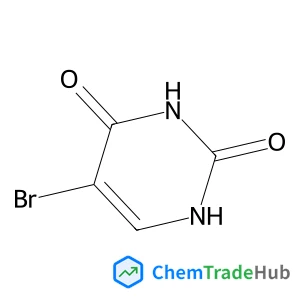
5-Bromo-2,4(1H,3H)-pyrimidinedione
CAS Number: 51-20-7
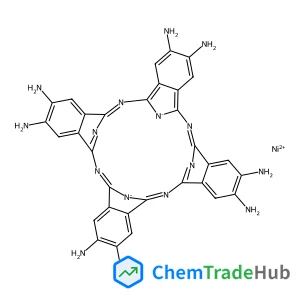
![3-Iodo-1H-pyrrolo[2,3-b]pyridine-4-carbonitrile](https://static.chemtradehub.com/structs/956/956485-59-9-1f04.webp)
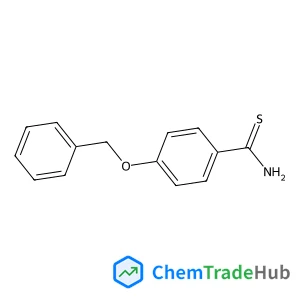
4-Benzyloxy-thiobenzamide
CAS Number: 161975-22-0
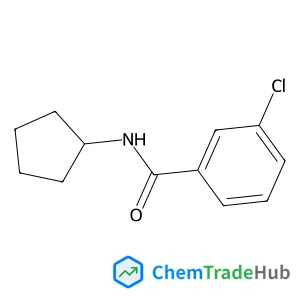
3-Chloro-N-cyclopentylbenzamide
CAS Number: 349128-33-2
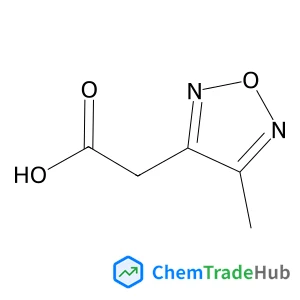
Other Suppliers for 2,5-dioxopyrrolidin-1-yl 2-(7-hydroxy-4-methyl-2-oxo-2H-chromen-3-yl)acetate






Basic Information
Molecular Formula
C16H13NO7
Molecular Weight
331.28 g/mol
Physical Properties
Melting Point
No data available
Boiling Point
558.4±60.0 °C at 760 mmHg
Density
1.6±0.1 g/cm3
Flash Point
291.5±32.9 °C
Chemical Identifiers
SMILES
CC1=C(C(=O)OC2=C1C=CC(=C2)O)CC(=O)ON3C(=O)CCC3=O
InChIKey
VODLZKHEKKGCBG-UHFFFAOYSA-N
Database References
MDL Number
MFCD00467590
FAQ
2,5-dioxopyrrolidin-1-yl 2-(7-hydroxy-4-methyl-2-oxo-2H-chromen-3-yl)acetate is a white crystalline solid with a molecular weight of approximately 407.4 g/mol. It has low solubility in water but good solubility in organic solvents like methanol and acetonitrile. The compound exhibits good stability under normal conditions but can react with strong acids and bases. It is also prone to hydrolysis under basic conditions.
2,5-dioxopyrrolidin-1-yl 2-(7-hydroxy-4-methyl-2-oxo-2H-chromen-3-yl)acetate is typically synthesized via a multistep process involving condensation of a chromone derivative with a dioxopyrrolidine followed by acetylation. Common catalysts include Lewis acids like aluminum chloride. The yield is generally around 80%, and the reaction is conducted under anhydrous conditions to avoid unwanted side reactions.
2,5-dioxopyrrolidin-1-yl 2-(7-hydroxy-4-methyl-2-oxo-2H-chromen-3-yl)acetate is used in the pharmaceutical industry for its potential as a precursor in drug synthesis. It also finds applications in the polymer industry for developing new materials, and in the sensor industry for its ability to detect specific chemical compounds. Additionally, it is used in the semiconductor industry as a component in certain manufacturing processes.
When handling 2,5-dioxopyrrolidin-1-yl 2-(7-hydroxy-4-methyl-2-oxo-2H-chromen-3-yl)acetate, it is important to wear appropriate personal protective equipment (PPE), including gloves, goggles, and a lab coat. Work should be conducted in a well-ventilated area or a fume hood to minimize exposure to fumes. Spills should be cleaned up immediately and properly disposed of according to safety guidelines. Always consult the Safety Data Sheet (SDS) for specific handling and disposal instructions.
Safety Notice
Please verify product specifications and safety data before use. Contact the supplier for detailed safety information.
Always follow proper handling procedures
Contact Information
Contact Person
Fang Rui
wangkang@jskchem.com
Mobile
15221441005
Telephone
15221441005
Visit Website
https://www.jskchem.comAddress
No chemical compound information was provided to translate. Please provide the relevant chemical information for translation.