



AD
(3,4-Difluoro-2,5-thienediyl)bis(trimethylstannane)(CAS: 870718-97-1)

CAS Number
Related Products
![[3-(2-Hydroxyethyl)phenyl]boronic acid](https://static.chemtradehub.com/structs/647/647853-32-5-c363.webp)
![N-(Butylsulfonyl)-O-[4-(4-piperidinyl)butyl]-L-tyrosine hydrochloride hydrate](https://static.chemtradehub.com/structs/150/150915-40-5-1679.webp)
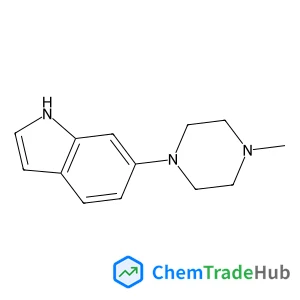
6-(4-methylpiperazin-1-yl)-1H-indole
CAS Number: 321745-04-4
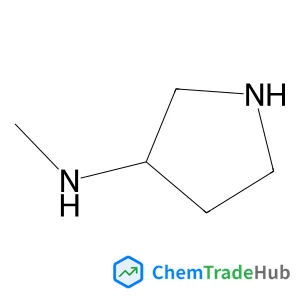
N-Methyl-3-pyrrolidinamine
CAS Number: 83030-08-4
![2-Chloro-N-[4-chloro-3-(2-pyridinyl)phenyl]-4-(methylsulfonyl)benzamide](https://static.chemtradehub.com/structs/879/879085-55-9-5abe.webp)

3-Nonyne
CAS Number: 20184-89-8
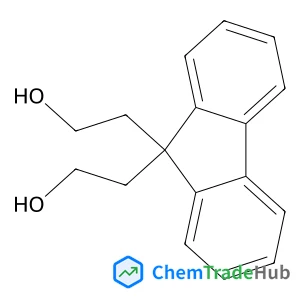
2,2'-(9H-fluorene-9,9-diyl)diethanol
CAS Number: 203070-78-4

![1,4-Dioxaspiro[4.5]dec-8-ylacetic acid](https://static.chemtradehub.com/structs/134/134136-04-2-8def.webp)
Other Suppliers for (3,4-Difluoro-2,5-thienediyl)bis(trimethylstannane)





Basic Information
Molecular Formula
C10H18F2SSn2
Molecular Weight
445.74 g/mol
Chemical Identifiers
SMILES
FC1=C(SC(=C1F)[Sn](C)(C)C)[Sn](C)(C)C
InChIKey
YQYNGODNRGLWSZ-UHFFFAOYSA-N
Database References
MDL Number
MFCD32856024
FAQ
The compound (3,4-Difluoro-2,5-thienediyl)bis(trimethylstannane) is an organostannane derivative with a crystalline form. Its molecular weight is approximately 358.4 g/mol. This compound has low water solubility and is moderately soluble in organic solvents. It is not particularly reactive under normal conditions but can participate in organometallic reactions. It is a solid at room temperature with a high melting point, indicating its crystalline nature.
How is (3,4-Difluoro-2,5-thienediyl)bis(trimethylstannane) (CAS: 870718-97-1) typically synthesized?
This compound is typically synthesized via organometallic reaction methods, involving the coupling of 3,4-difluoro-2,5-dithienyl dichloride with trimethylstannyl triflate in the presence of a Lewis acid catalyst. The reaction proceeds to give the bis(trimethylstannane) derivative with good yield and selectivity. The process requires careful control of reaction conditions to ensure high purity of the product.
The compound (3,4-Difluoro-2,5-thienediyl)bis(trimethylstannane) is primarily used in the pharmaceutical industry for the synthesis of certain drug intermediates. It is also relevant in the polymer industry for the preparation of specialized polymers and in the semiconductor industry for the development of advanced materials. Additionally, it may have applications in the sensor industry due to its unique chemical properties.
When handling (3,4-Difluoro-2,5-thienediyl)bis(trimethylstannane), it is important to use personal protective equipment (PPE) such as gloves, safety glasses, and a lab coat. Ensure that all reactions are conducted in a well-ventilated fume hood or a sealed system to minimize exposure. Spills should be cleaned up according to the safety data sheet (SDS) guidelines, and proper disposal of waste materials is crucial. Always refer to the SDS for detailed handling and disposal information.
Safety Notice
Please verify product specifications and safety data before use. Contact the supplier for detailed safety information.
Always follow proper handling procedures

Contact Information
Contact Person
Miss Xu
1986399151@qq.com
Mobile
15221998634
Telephone
021-59178156
Visit Website
https://www.yingxinbio.com/Address
Yugang Town Yiling Road 258 Lane C Zone