



AD
6-Fluoro-4-(trifluoromethyl)quinolin-2-ol(CAS: 328956-08-7)
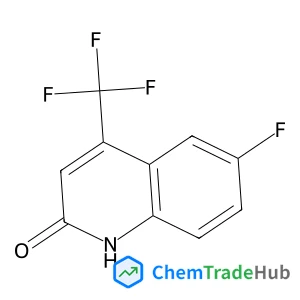
CAS Number
Related Products
![2-Methyl-2-propanyl [(2R)-1-hydroxy-2-propanyl]carbamate](https://static.chemtradehub.com/structs/106/106391-86-0-8397.webp)

3-Bromo-2,2-bis(bromomethyl)-1-propanol
CAS Number: 1522-92-5
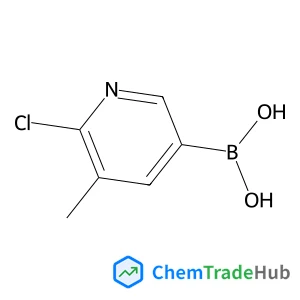

Cytisine hydrochloride
CAS Number: 6047-01-4
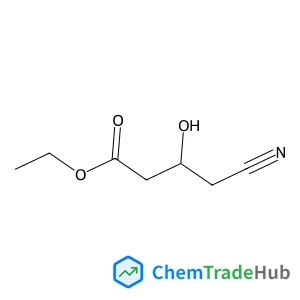
Atorvastatin Impurity 55
CAS Number: 141942-85-0
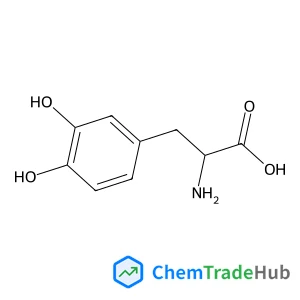
3-Hydroxy-D-tyrosine
CAS Number: 5796-17-8
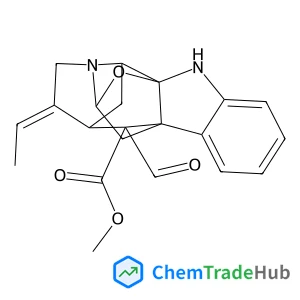
Picralinal
CAS Number: 20045-06-1

D-Arabinose
CAS Number: 9032-75-1
![(3aS,9R,9aS,9bS)-9-Hydroxy-6,9-dimethyl-3-methylene-3a,4,5,7,8,9,9a,9b-octahydroazuleno[4,5-b]furan-2(3H)-one](https://static.chemtradehub.com/structs/683/68370-47-8-daf4.webp)
Other Suppliers for 6-Fluoro-4-(trifluoromethyl)quinolin-2-ol







Basic Information
Molecular Formula
C10H5F4NO
Molecular Weight
231.15 g/mol
Physical Properties
Boiling Point
282 ºC
Flash Point
124 ºC
Chemical Identifiers
SMILES
C1=CC2=C(C=C1F)C(=CC(=O)N2)C(F)(F)F
InChIKey
WAKQDICHDSFACE-UHFFFAOYSA-N
Database References
MDL Number
MFCD17015723
FAQ
6-Fluoro-4-(trifluoromethyl)quinolin-2-ol is a solid with a crystalline form. Its molecular weight is approximately 328.03 g/mol. It has poor water solubility but is soluble in organic solvents like DMSO and dichloromethane. The compound shows limited reactivity under normal conditions, but it is susceptible to hydrolysis in basic media. It is not flammable and has a low boiling point, typically decomposing above 200°C.
6-Fluoro-4-(trifluoromethyl)quinolin-2-ol is commonly synthesized through the reactions of 4-(trifluoromethyl)quinoline with a suitable fluoride source in the presence of a Lewis acid catalyst, such as aluminum chloride. The reaction typically occurs at room temperature, and the yield is around 70-80%. The selectivity towards the desired product is high, with minimal formation of side products.
6-Fluoro-4-(trifluoromethyl)quinolin-2-ol is primarily used in the pharmaceutical industry as a precursor for drug synthesis. It is also utilized in the polymer industry for the development of new materials with enhanced properties. Additionally, it has applications in sensor technology and semiconductor manufacturing, where its chemical and thermal stability make it suitable for various processing steps.
When handling 6-Fluoro-4-(trifluoromethyl)quinolin-2-ol, it is crucial to wear appropriate personal protective equipment (PPE), including gloves, goggles, and a lab coat. The compound should be used in a well-ventilated area or a fume hood to minimize inhalation of vapors. Spills should be cleaned up using appropriate absorbent materials, followed by disposal according to local regulations. Always consult the Safety Data Sheet (SDS) for detailed handling and disposal instructions.
Safety Notice
Please verify product specifications and safety data before use. Contact the supplier for detailed safety information.
Always follow proper handling procedures
Contact Information
2423903095@qq.com