



AD
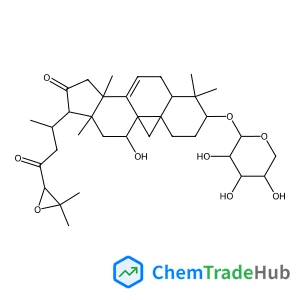
(3beta,9beta,11beta,24R)-11-Hydroxy-16,23-dioxo-24,25-epoxy-9,19-cyclolanost-7-en-3-yl beta-D-xylopyranoside(CAS: 163046-73-9)
CAS Number
Related Products
![7-oxabicyclo[2.2.1]heptane-2,3-dicarboxylic acid](https://static.chemtradehub.com/structs/145/145-73-3-773f.webp)
![(4aR,6aR,6aS,6bR,8aR,9R,10S,12aR,14bS)-10-[(2S,4S,5S)-3-[(2S,3R,4R,5S,6S)-3,5-dihydroxy-6-methyl-4-[(2S,3R,4S,5S,6R)-3,4,5-trihydroxy-6-(hydroxymethyl)oxan-2-yl]oxyoxan-2-yl]oxy-4,5-dihydroxyoxan-2-yl]oxy-9-(hydroxymethyl)-2,2,6a,6b,9,12a-hexamethyl-1,3,4,5,6,6a,7,8,8a,10,11,12,13,14b-tetradecahydropicene-4a-carboxylic acid](https://static.chemtradehub.com/structs/128/128730-82-5-4e0e.webp)
(4aR,6aR,6aS,6bR,8aR,9R,10S,12aR,14bS)-10-[(2S,4S,5S)-3-[(2S,3R,4R,5S,6S)-3,5-dihydroxy-6-methyl-4-[(2S,3R,4S,5S,6R)-3,4,5-trihydroxy-6-(hydroxymethyl)oxan-2-yl]oxyoxan-2-yl]oxy-4,5-dihydroxyoxan-2-yl]oxy-9-(hydroxymethyl)-2,2,6a,6b,9,12a-hexamethyl-1,3,4,5,6,6a,7,8,8a,10,11,12,13,14b-tetradecahydropicene-4a-carboxylic acid
CAS Number: 128730-82-5
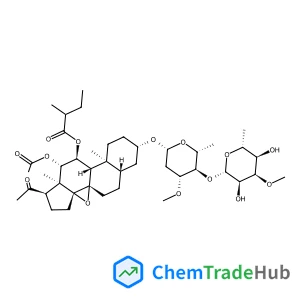
Tenacissoside H
CAS Number: 191729-45-0
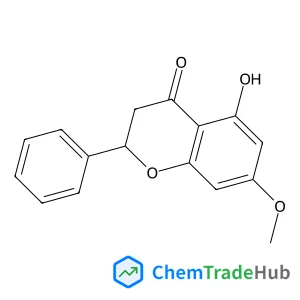
![13-Methyl[1,3]benzodioxolo[5,6-c][1,3]dioxolo[4,5-i]phenanthridin-13-ium](https://static.chemtradehub.com/structs/244/2447-54-3-c63e.webp)
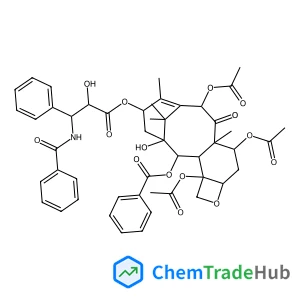
7-Acetyltaxol
CAS Number: 92950-39-5
Other Suppliers for (3beta,9beta,11beta,24R)-11-Hydroxy-16,23-dioxo-24,25-epoxy-9,19-cyclolanost-7-en-3-yl beta-D-xylopyranoside




Basic Information
Molecular Formula
C35H52O9
Molecular Weight
616.79 g/mol
Physical State
Powder
Physical Properties
Melting Point
260-262 ºC
Chemical Identifiers
SMILES
CC(CC(=O)C1C(O1)(C)C)C2C(=O)CC3(C2(CC(C45C3=CCC6C4(C5)CCC(C6(C)C)OC7C(C(C(CO7)O)O)O)O)C)C
InChIKey
PYBFXJMIKJNNAJ-GLWILYKISA-N
Database References
MDL Number
MFCD31726197
FAQ
The compound is a solid crystalline material with a molecular weight of approximately 610.56 g/mol. It has low solubility in water but is soluble in organic solvents like ethanol and acetone. Chemically, it is moderately reactive, particularly towards hydrolysis and oxidizing agents. It exhibits low reactivity towards bases and acids. This compound is often used in synthetic organic chemistry due to its structural complexity.
This compound is typically synthesized via a multi-step process involving protection and deprotection of lactone rings, followed by ring opening and glycosylation reactions. Commonly used catalysts include transition metal complexes, and the reaction conditions are optimized for high yield and selectivity. The synthesis often requires the use of protected intermediates to control the reactivity and ensure the desired stereoisomer is formed.
This compound is used in pharmaceuticals for its potential medicinal properties, particularly in the development of anti-inflammatory and anti-cancer drugs. It may also be applied in the polymer industry for the synthesis of biodegradable polymers and in the chemical sensor field for developing highly sensitive detection devices.
When handling this compound, appropriate personal protective equipment (PPE) such as gloves, goggles, and a lab coat should be worn. Handling should be performed in a well-ventilated area or under a fume hood due to its reactivity. Spills should be cleaned up using absorbent materials and appropriate waste disposal procedures. Always consult the Safety Data Sheet (SDS) for detailed handling and disposal information.
Safety Notice
Please verify product specifications and safety data before use. Contact the supplier for detailed safety information.
Always follow proper handling procedures
Contact Information
522593521@qq.com
Mobile
18362932668
Telephone
025-69790911
Visit Website
http://www.njbcyk.com