



AD
5-(Trifluoromethyl)-2(1H)-pyridinethione(CAS: 76041-72-0)
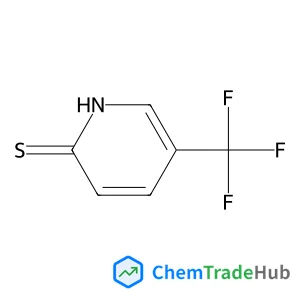
CAS Number
Related Products
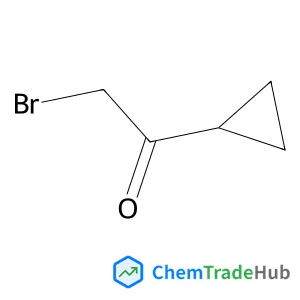
2-Bromo-1-cyclopropylethanone
CAS Number: 69267-75-0

1-cyclohexenylboronic Acid
CAS Number: 89490-05-1
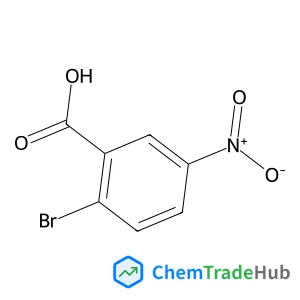
2-Bromo-5-nitrobenzoic acid
CAS Number: 943-14-6

4-Hydroxy-2,5-dimethylbenzaldehyde
CAS Number: 85231-15-8

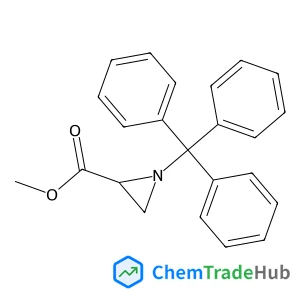
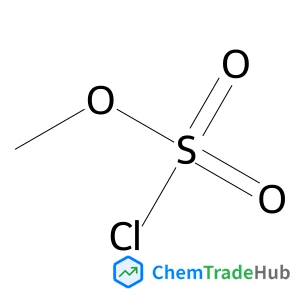
Methyl sulfurochloridate
CAS Number: 812-01-1

cis-4-Aminocyclohexanol HCl
CAS Number: 56239-26-0
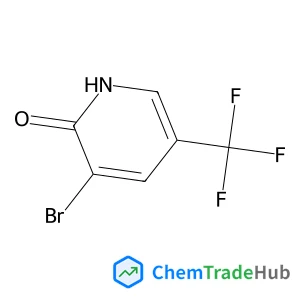
Other Suppliers for 5-(Trifluoromethyl)-2(1H)-pyridinethione




Basic Information
Molecular Formula
C6H4F3NS
Molecular Weight
179.17 g/mol
Physical Properties
Melting Point
150°C(lit.)
Boiling Point
252.7°C at 760 mmHg
Density
1.876
Flash Point
106.6°C
Chemical Identifiers
SMILES
C1=CC(=S)NC=C1C(F)(F)F
InChIKey
YFSCXLSUZZXNHW-UHFFFAOYSA-N
Database References
MDL Number
MFCD00128893
FAQ
5-(Trifluoromethyl)-2(1H)-pyridinethione is a crystalline solid with a molecular weight of approximately 225.06 g/mol. It has a low solubility in water but is soluble in organic solvents like dichloromethane and methanol. The compound is highly reactive due to the presence of the trifluoromethyl group, making it prone to nucleophilic substitution reactions. It can react with amines and thiols under appropriate conditions.
5-(Trifluoromethyl)-2(1H)-pyridinethione can be synthesized by the reaction of 2-(trifluoromethyl)pyridine with hydrogen sulfide at elevated temperatures. The reaction is typically carried out in the presence of a base such as potassium carbonate to enhance the nucleophilicity of the sulfur donor. The yield is generally good, and the product can be isolated by recrystallization from appropriate solvents.
5-(Trifluoromethyl)-2(1H)-pyridinethione is used in the pharmaceutical industry for the synthesis of certain drug intermediates. It also finds applications in the production of sensors and semiconductors due to its unique electronic properties. Additionally, it is utilized in the synthesis of polymers and other materials with specific chemical functionalities.
When handling 5-(Trifluoromethyl)-2(1H)-pyridinethione, it is important to use personal protective equipment (PPE) such as gloves, goggles, and a lab coat. It should be conducted in a well-ventilated fume hood to minimize inhalation risks. Spills should be managed carefully, and the area should be cleaned with appropriate solvents. It is crucial to consult the Safety Data Sheet (SDS) for detailed handling and emergency procedures.
Safety Notice
Please verify product specifications and safety data before use. Contact the supplier for detailed safety information.
Always follow proper handling procedures
Contact Information
Contact Person
Mr. Wang
3321478047@qq.com