



AD
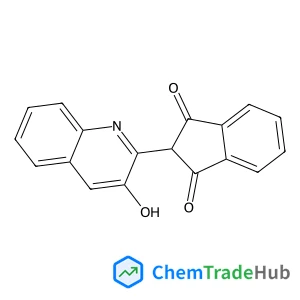
2-(3-Hydroxy-2-quinolinyl)-1H-indene-1,3(2H)-dione(CAS: 75216-45-4)
CAS Number
Related Products
methanone](https://static.chemtradehub.com/structs/184/1843-05-6-2af5.webp)
![3H-Pyrazol-3-one, 4-[(1,5-dihydro-3-methyl-5-oxo-1-phenyl-4H-pyrazol-4-ylidene)methyl]-2,4-dihydro-5-methyl-2-phenyl-](https://static.chemtradehub.com/structs/470/4702-90-3-72da.webp)
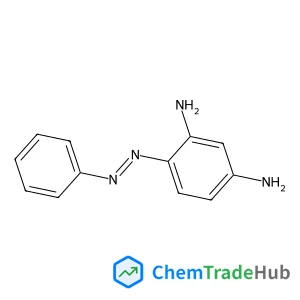
C.I.Solvent Orange 3
CAS Number: 495-54-5

lambda~2~-Stannane - copper (1:1)
CAS Number: 12597-70-5
![2,2'-(2,5-Thienediyl)bis[5-(2-methyl-2-propanyl)-1,3-benzoxazole]](https://static.chemtradehub.com/structs/712/7128-64-5-b004.webp)
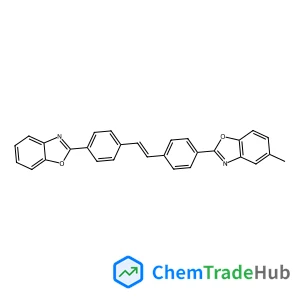
Fluorescent Brightener KSN
CAS Number: 5242-49-9
Other Suppliers for 2-(3-Hydroxy-2-quinolinyl)-1H-indene-1,3(2H)-dione


Basic Information
Molecular Formula
C18H11NO3
Molecular Weight
289.29 g/mol
Chemical Identifiers
SMILES
c1ccc2c(c1)cc(c(n2)C3C(=O)c4ccccc4C3=O)O
InChIKey
FDTLQXNAPKJJAM-UHFFFAOYSA-N
Database References
FAQ
2-(3-Hydroxy-2-quinolinyl)-1H-indene-1,3(2H)-dione (CAS: 75216-45-4) is a solid with a crystalline form. Its molecular weight is approximately 334.34 g/mol. This compound has limited water solubility and is soluble in organic solvents like dichloromethane and ethanol. It is moderately reactive, particularly towards nucleophilic substitution reactions. It is stable under normal ambient conditions but should be stored in a dry environment to prevent hydrolysis.
2-(3-Hydroxy-2-quinolinyl)-1H-indene-1,3(2H)-dione (CAS: 75216-45-4) is typically synthesized via a multistep process starting from 2-quinolinylindene. Key steps include the formation of the quinoline ring, followed by the introduction of the hydroxy group and the indene ring closure. Commonly used catalysts in the synthesis include palladium complexes. The overall yield is moderate, around 50-60%, and selectivity is high for the desired product.
2-(3-Hydroxy-2-quinolinyl)-1H-indene-1,3(2H)-dione (CAS: 75216-45-4) is primarily used in the pharmaceutical industry for the development of novel drug candidates. It also finds applications in the polymer industry for the synthesis of advanced polymers and in the sensor industry for the fabrication of gas sensors. Additionally, it is used in semiconductor manufacturing for the production of organic semiconductors.
When handling 2-(3-Hydroxy-2-quinolinyl)-1H-indene-1,3(2H)-dione (CAS: 75216-45-4), it is essential to wear appropriate personal protective equipment (PPE) including safety goggles, gloves, and a lab coat. Work should be conducted in a well-ventilated area or a fume hood to minimize inhalation risks. Spills should be cleaned up using appropriate absorbents and disposed of according to local regulations. Always refer to the safety data sheet (SDS) for detailed handling procedures and emergency response instructions.
Safety Notice
Please verify product specifications and safety data before use. Contact the supplier for detailed safety information.
Always follow proper handling procedures
Contact Information
Contact Person
Merlin