AD
Ethyl 2-(6-quinolinyl)propanoate(CAS: 1193317-61-1)
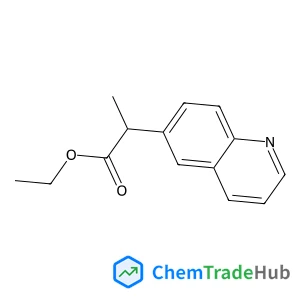
CAS Number
Related Products
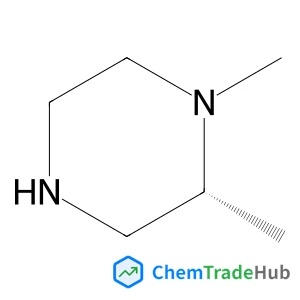
(2R)-1,2-Dimethylpiperazine
CAS Number: 623586-02-7
![(2S)-4-Hydroxy-7-(hydroxymethyl)-2-(2-hydroxy-2-propanyl)-2,3-dihydro-5H-furo[3,2-g]chromen-5-one](https://static.chemtradehub.com/structs/496/49624-66-0-7116.webp)
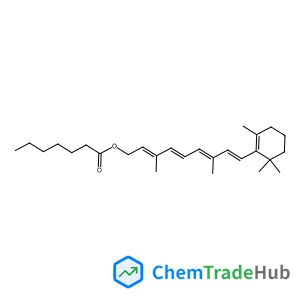
O~15~-Heptanoylretinol
CAS Number: 88641-44-5
![1-Methoxy-2-[1-(4-methoxyphenyl)propyl]benzene](https://static.chemtradehub.com/structs/334/33451-22-8-2ef2.webp)
CAS Number: 1350524-27-4
Other Suppliers for Ethyl 2-(6-quinolinyl)propanoate


Basic Information
Molecular Formula
C14H15NO2
Molecular Weight
229.28 g/mol
Physical Properties
Boiling Point
343 ºC
Flash Point
161 ºC
Chemical Identifiers
SMILES
CCOC(=O)C(C)c1ccc2c(c1)cccn2
InChIKey
WEXDXTGMVWYWLX-UHFFFAOYSA-N
Database References
MDL Number
MFCD17215804
FAQ
Ethyl 2-(6-quinolinyl)propanoate (CAS: 1193317-61-1) is a colorless to light yellow liquid with a molecular weight of approximately 232.29 g/mol. It has a high solubility in organic solvents like ethanol and acetone but is practically insoluble in water. The compound is moderately reactive towards nucleophiles and can undergo ester hydrolysis under acidic or basic conditions. It is stable under normal storage conditions but should be protected from moisture and light.
Ethyl 2-(6-quinolinyl)propanoate (CAS: 1193317-61-1) is typically synthesized by the reaction of 2-bromopropanol with 6-quinolinecarboxylic acid in the presence of a base like potassium carbonate. The reaction is carried out in an organic solvent such as dimethylformamide (DMF) at elevated temperatures, typically around 80°C. Stoichiometric amounts of the reagents and appropriate catalysts are used to achieve high yields and good selectivity.
Ethyl 2-(6-quinolinyl)propanoate (CAS: 1193317-61-1) is used in the pharmaceutical industry as a precursor for the synthesis of certain quinoline-based drugs. It is also utilized in the production of functional materials such as sensors and semiconductors due to its electronic properties. Additionally, it is employed in the polymer industry for the modification of polymer properties and in the development of new polymer-based materials.
What precautions should be taken when handling Ethyl 2-(6-quinolinyl)propanoate (CAS: 1193317-61-1)?
When handling Ethyl 2-(6-quinolinyl)propanoate (CAS: 1193317-61-1), appropriate personal protective equipment (PPE) should be worn, including gloves, safety glasses, and a lab coat. The compound should be handled in a well-ventilated area or under a fume hood due to its volatility and potential for inhalation. Spills should be cleaned up with appropriate absorbents and disposed of according to local regulations. It is important to refer to the Safety Data Sheet (SDS) for detailed handling and emergency procedures.
Safety Notice
Please verify product specifications and safety data before use. Contact the supplier for detailed safety information.
Always follow proper handling procedures