



AD
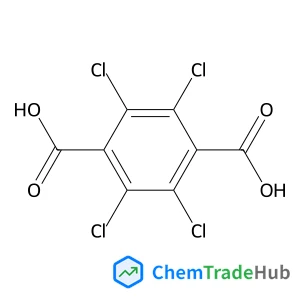
2,3,5,6-Tetrachloroterephthalic acid(CAS: 2136-79-0)
CAS Number
Related Products
![3-Cyclopropyl-1-(2-fluoro-4-iodophenyl)-5-hydroxy-6,8-dimethylpyrido[2,3-d]pyrimidine-2,4,7(1H,3H,8H)-trione](https://static.chemtradehub.com/structs/871/871700-24-2-c5dd.webp)
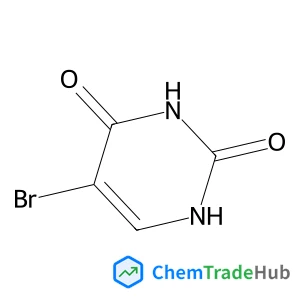
5-Bromo-2,4(1H,3H)-pyrimidinedione
CAS Number: 51-20-7
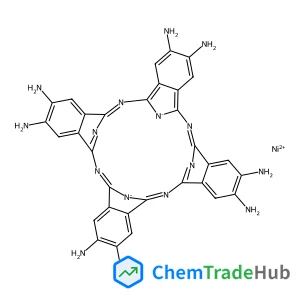
![3-Iodo-1H-pyrrolo[2,3-b]pyridine-4-carbonitrile](https://static.chemtradehub.com/structs/956/956485-59-9-1f04.webp)
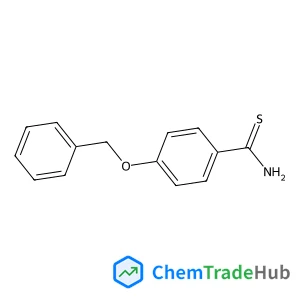
4-Benzyloxy-thiobenzamide
CAS Number: 161975-22-0
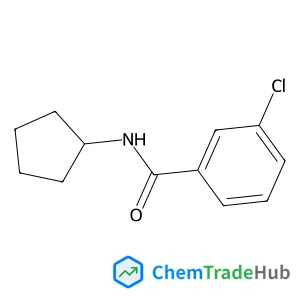
3-Chloro-N-cyclopentylbenzamide
CAS Number: 349128-33-2
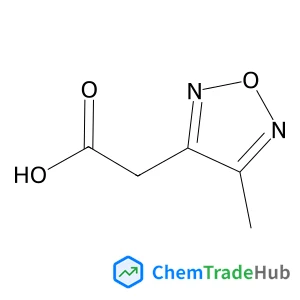
Other Suppliers for 2,3,5,6-Tetrachloroterephthalic acid






Basic Information
Molecular Formula
C8H2Cl4O4
Molecular Weight
303.91 g/mol
Physical Properties
Boiling Point
425.2℃ at 760 mmHg
Density
1.872
Flash Point
210.9 °C
Chemical Identifiers
SMILES
c1(c(c(c(c(c1Cl)Cl)C(=O)O)Cl)Cl)C(=O)O
InChIKey
KZCBXHSWMMIEQU-UHFFFAOYSA-N
Database References
MDL Number
MFCD00013974
Beilstein Registry Number
1887098
FAQ
2,3,5,6-Tetrachloroterephthalic acid (CAS: 2136-79-0) is regulated under various international and national guidelines. It is classified under the GHS as an environmental and health hazard. In the EU, it is subject to REACH regulations, and the FDA may have specific requirements for its use in certain applications. Proper labeling, storage, and handling are required to comply with these regulations.
Alternatives to 2,3,5,6-Tetrachloroterephthalic acid (CAS: 2136-79-0) in synthesis include other terephthalic acid derivatives or isomers, such as 2,3,6-trichloroterephthalic acid. Other common reagents might include phthalic acid or its derivatives, which can serve similar functions depending on the specific application. Careful selection of alternatives should consider their chemical properties, availability, and regulatory compliance.
The market for 2,3,5,6-Tetrachloroterephthalic acid (CAS: 2136-79-0) is limited due to its toxic nature and environmental concerns. However, ongoing research is focusing on developing safer alternatives. Trends indicate a shift towards more environmentally friendly compounds in various industries such as plastics and organic synthesis, driven by stricter environmental regulations and consumer demand for sustainable products.
Waste containing 2,3,5,6-Tetrachloroterephthalic acid (CAS: 2136-79-0) should be collected and disposed of according to local regulations. Incineration is a common method, but care must be taken to ensure complete combustion and minimal emissions. Professional waste disposal services should be used, and environmental protection measures should be followed to prevent soil and water contamination. Proper documentation of the disposal process is also essential.
Safety Notice
Please verify product specifications and safety data before use. Contact the supplier for detailed safety information.
Always follow proper handling procedures
Contact Information
Contact Person
Fang Rui
wangkang@jskchem.com
Mobile
15221441005
Telephone
15221441005
Visit Website
https://www.jskchem.comAddress
No chemical compound information was provided to translate. Please provide the relevant chemical information for translation.