



AD
1,8-Dibromonaphthalene(CAS: 17135-74-9)
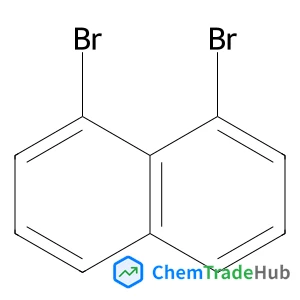
CAS Number
Related Products
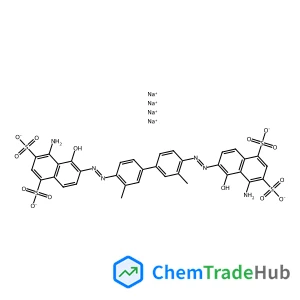
Evans blue
CAS Number: 314-13-6
![Sodium;2-[3,5-bis(2-hydroxyethyl)-1,3,5-triazinan-1-yl]ethanolate](https://static.chemtradehub.com/structs/904/9041-08-1-f8b0.webp)
![acetoxy-[[2-(bis-o-tolylphosphanyl)phenyl]methyl]palladium](https://static.chemtradehub.com/structs/172/172418-32-5-5ae9.webp)
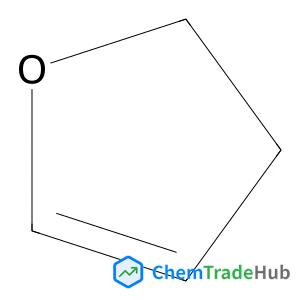
2,3-Dihydrofuran
CAS Number: 1191-99-7
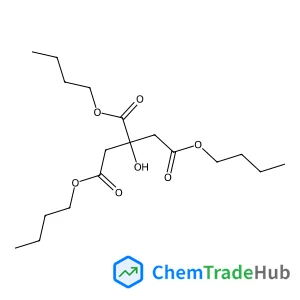
Tributyl citrate
CAS Number: 77-94-1
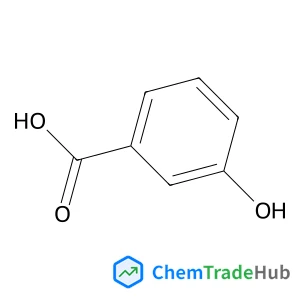
3-Hydroxybenzoic acid
CAS Number: 99-06-9
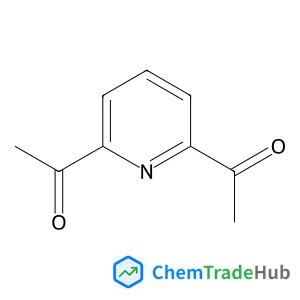
1,1'-(2,6-Pyridinediyl)diethanone
CAS Number: 1129-30-2
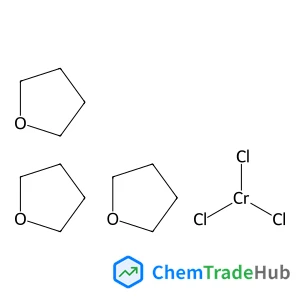
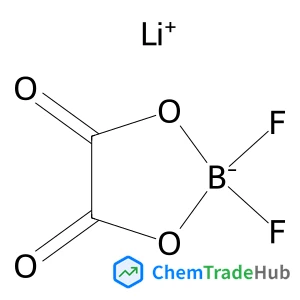
Lithium difluoro(oxalato)borate
CAS Number: 409071-16-5
Other Suppliers for 1,8-Dibromonaphthalene




Basic Information
Molecular Formula
C10H6Br2
Molecular Weight
285.97 g/mol
Physical Properties
Melting Point
108.0 to 112.0 deg-C
Boiling Point
140°C/0.1mmHg(lit.)
Density
1.834
Flash Point
184.7°C
Chemical Identifiers
SMILES
C1=CC2=C(C(=C1)Br)C(=CC=C2)Br
InChIKey
DLXBGTIGAIESIG-UHFFFAOYSA-N
Database References
MDL Number
MFCD00183574
FAQ
1,8-Dibromonaphthalene (CAS: 17135-74-9) is a crystalline solid with a molecular weight of approximately 270.07 g/mol. It has a high melting point of 222–224 °C and is slightly soluble in water but soluble in organic solvents like ethanol and acetone. Chemically, it is less reactive than naphthalene but can undergo electrophilic substitution reactions. It is commonly used as a starting material in organic synthesis and as a halogenated aromatic compound in various applications.
1,8-Dibromonaphthalene (CAS: 17135-74-9) can be synthesized by brominating naphthalene in the presence of a Lewis acid catalyst such as aluminum bromide. The reaction involves the selective bromination of the naphthalene ring, followed by workup and purification. The yield is typically around 80-85%, and the method is commonly used in academic and industrial settings for the production of brominated derivatives.
1,8-Dibromonaphthalene (CAS: 17135-74-9) is used in various industries, including pharmaceuticals, where it serves as a precursor for the synthesis of drugs, and in polymers, where it can be used as a comonomer. It is also utilized in the production of sensors and semiconductors due to its unique chemical properties and reactive nature.
When handling 1,8-Dibromonaphthalene (CAS: 17135-74-9), appropriate personal protective equipment (PPE) such as gloves, goggles, and a lab coat should be worn. The compound should be stored in a sealed container in a cool, dry place away from sources of ignition. Fume hoods should be used during handling to minimize exposure. In case of spill, the area should be cleaned up immediately using appropriate absorbents, and the material safety data sheet (MSDS) should be consulted for specific instructions. Proper disposal methods should also be followed, and it is advisable to work in a well-ventilated area to ensure safety.
Safety Notice
Please verify product specifications and safety data before use. Contact the supplier for detailed safety information.
Always follow proper handling procedures

Contact Information
Contact Person
Li Shuang
lishuang@hwrkchemical.com
Mobile
13269663372
Telephone
010-89508211
Visit Website
http://www.hwrkchemical.comAddress
No. 10 Building, 5th Floor, Unit 501-044, Liuxiang Road, Fengtai District, Beijing