



AD
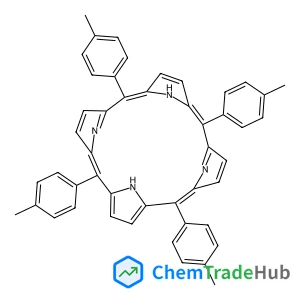
5,10,15,20-Tetrakis(4-methylphenyl)porphyrin(CAS: 14527-51-6)
CAS Number
Related Products
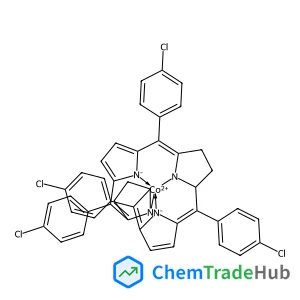
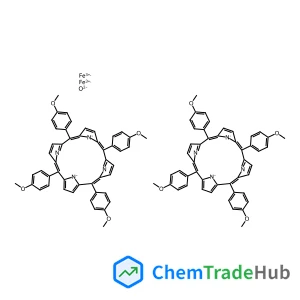
CID 168006154
CAS Number: 37191-17-6
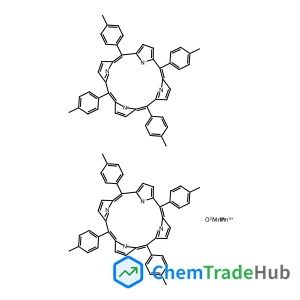
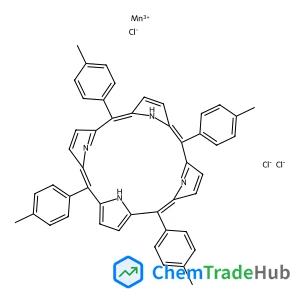
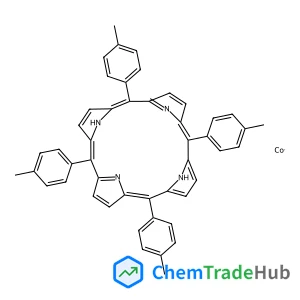
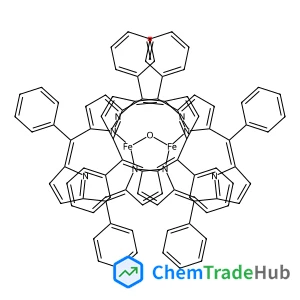
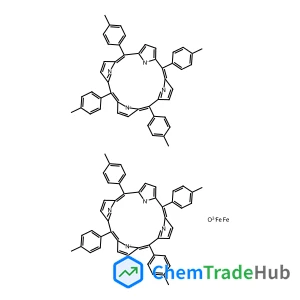
Other Suppliers for 5,10,15,20-Tetrakis(4-methylphenyl)porphyrin






Basic Information
Molecular Formula
C48H38N4
Molecular Weight
670.86 g/mol
Physical Properties
Melting Point
300°C(lit.)
Boiling Point
No data available
Density
1.2±0.1 g/cm3
Flash Point
No data available
Chemical Identifiers
SMILES
CC1=CC=C(C=C1)C2=C3C=CC(=C(C4=NC(=C(C5=CC=C(N5)C(=C6C=CC2=N6)C7=CC=C(C=C7)C)C8=CC=C(C=C8)C)C=C4)C9=CC=C(C=C9)C)N3
InChIKey
SFQNUQLWBBZIOZ-PJEPRTEXSA-N
Database References
MDL Number
MFCD00239499
FAQ
5,10,15,20-Tetrakis(4-methylphenyl)porphyrin (CAS: 14527-51-6) is a solid with a crystalline form. It has a high molecular weight and poor solubility in common organic solvents. This compound shows moderate reactivity towards electrophiles and can undergo substitution reactions. It has potential applications in photodynamic therapy and sensing due to its unique optical properties.
5,10,15,20-Tetrakis(4-methylphenyl)porphyrin (CAS: 14527-51-6) is synthesized through a complex multistep process involving the condensation of 4-methylphenyl glycine with metal-free porphyrin framework. The synthesis typically requires careful control of reaction conditions to achieve high yields and selectivity. Commonly used catalysts include transition metals like iron or cobalt.
5,10,15,20-Tetrakis(4-methylphenyl)porphyrin (CAS: 14527-51-6) finds applications in the pharmaceutical industry for its use in photodynamic therapy. It also has relevance in the polymer industry for its thermal stability and potential as a colorant. Additionally, it is used in sensor technology and semiconductor research for its optical and electronic properties.
When handling 5,10,15,20-Tetrakis(4-methylphenyl)porphyrin (CAS: 14527-51-6), it is essential to wear appropriate personal protective equipment (PPE) such as gloves, safety goggles, and a lab coat. Work should be conducted in a fume hood to minimize inhalation risks. Spills should be cleaned up using appropriate absorbents, and the area should be well-ventilated. Always refer to the Safety Data Sheet (SDS) for specific handling instructions and emergency procedures.
Safety Notice
Please verify product specifications and safety data before use. Contact the supplier for detailed safety information.
Always follow proper handling procedures
Contact Information
hdccguo@163.com