



AD
5-(4-Nitrophenyl)-1,2-oxazole-3-carboxylic acid(CAS: 33282-25-6)
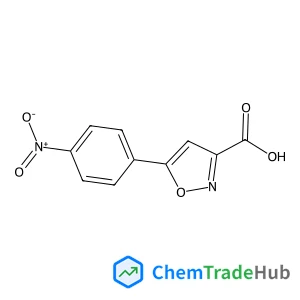
CAS Number
Related Products
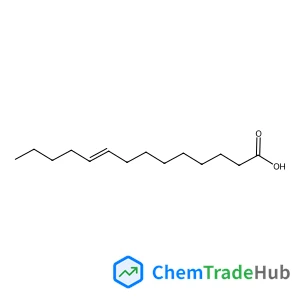
(9Z)-9-Tetradecenoic acid
CAS Number: 544-64-9
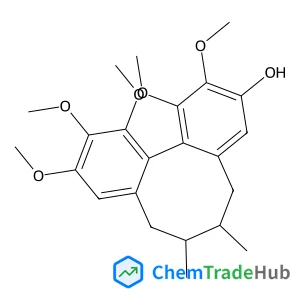
Gomisin K1
CAS Number: 75629-20-8
![2-Methyl-2-propanyl (1R,5R)-5-hydroxy-3-azabicyclo[4.1.0]heptane-3-carboxylate](https://static.chemtradehub.com/structs/230/2305079-71-2-b0dc.webp)
![2-Oxa-7-azaspiro[3.5]nonane acetate (1:1)](https://static.chemtradehub.com/structs/131/1313369-52-6-2eb1.webp)
![4-Nitrophenyl N-[(benzyloxy)carbonyl]-D-phenylalaninate](https://static.chemtradehub.com/structs/257/2578-85-0-6c76.webp)
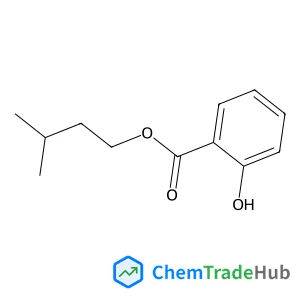
3-Methylbutyl salicylate
CAS Number: 87-20-7
![4-{[4-(4-Chlorophenyl)-1,3-thiazol-2-yl]amino}phenol hydrochloride (1:1)](https://static.chemtradehub.com/structs/117/1177741-83-1-b09e.webp)
![2-[4-(5-Amino-2-pyridinyl)-1-piperazinyl]-1-ethanol](https://static.chemtradehub.com/structs/101/1017221-34-9-ca8d.webp)
Other Suppliers for 5-(4-Nitrophenyl)-1,2-oxazole-3-carboxylic acid






Basic Information
Molecular Formula
C10H6N2O5
Molecular Weight
234.16 g/mol
Physical Properties
Boiling Point
520.0±40.0℃ at 760 mmHg
Chemical Identifiers
SMILES
C1=CC(=CC=C1C2=CC(=NO2)C(=O)O)[N+](=O)[O-]
InChIKey
GBRSPKXOFRTAHS-UHFFFAOYSA-N
Database References
MDL Number
MFCD06199331
FAQ
5-(4-Nitrophenyl)-1,2-oxazole-3-carboxylic acid is a crystalline solid with a molecular weight of approximately 259.16 g/mol. It has a pKₐ of around 2.8 in water, indicating it is a weak acid. The compound is poorly soluble in water but has good solubility in organic solvents such as methanol and acetone. It is reactive towards nucleophiles due to the presence of the carboxylic acid group and the nitrophenyl substituent, which can participate in electrophilic aromatic substitution reactions.
5-(4-Nitrophenyl)-1,2-oxazole-3-carboxylic acid is typically synthesized via a multi-step process starting from 4-nitrobenzaldehyde and oxazole. The key steps involve the formation of an oxazoline intermediate, followed by the addition of a nucleophile to form the final product. Commonly, this involves the reaction of 4-nitrobenzaldehyde with oxazole in the presence of a base, followed by acidification to obtain the carboxylic acid.
5-(4-Nitrophenyl)-1,2-oxazole-3-carboxylic acid is primarily used in the pharmaceutical industry for the development of new drugs. It also finds applications in the synthesis of functional materials, such as sensors and semiconductors, due to its unique electronic properties. Additionally, it is used in the polymer industry for the modification of polymer properties and in the preparation of advanced composites.
When handling 5-(4-Nitrophenyl)-1,2-oxazole-3-carboxylic acid, it is important to use personal protective equipment (PPE) such as gloves, goggles, and a lab coat. Work should be conducted in a well-ventilated area or a fume hood to minimize exposure to vapors. Spills should be handled with caution using appropriate absorbents and collected for disposal. Always refer to the Safety Data Sheet (SDS) for specific handling and disposal procedures. This compound should not be ingested or inhaled, and proper training in chemical safety is essential.
Safety Notice
Please verify product specifications and safety data before use. Contact the supplier for detailed safety information.
Always follow proper handling procedures
Contact Information
chenling@zzstandard.com