



AD
1-Nitro-9,10-anthraquinone(CAS: 82-34-8)
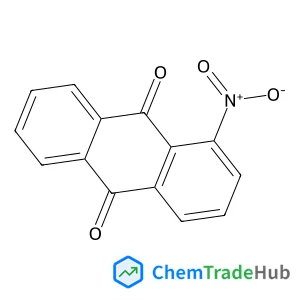
CAS Number
Related Products
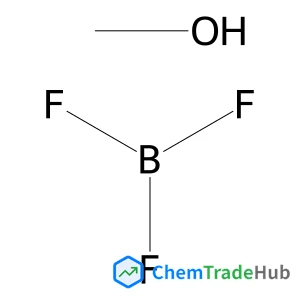
methanol; trifluoro-methoxy-boron
CAS Number: 2802-68-8
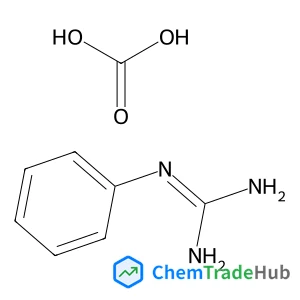
Carbonic acid - 1-phenylguanidine (1:1)
CAS Number: 6685-76-3
![1,7,7-Trimethylbicyclo[2.2.1]heptane-2,3-dione](https://static.chemtradehub.com/structs/103/10373-78-1-714c.webp)
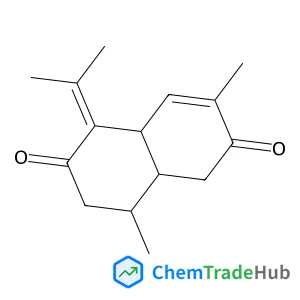
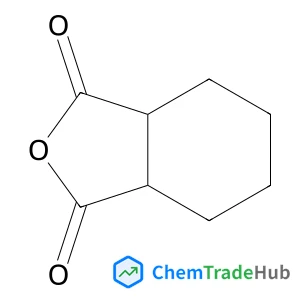
octahydro-2-benzofuran-1,3-dione
CAS Number: 85-42-7
![1-[(4xi)-beta-D-(~13~C_5_)-erythro-Pentofuranosyl]-1H-1,2,4-triazole-3-carboxamide](https://static.chemtradehub.com/structs/164/1646818-35-0-ea01.webp)
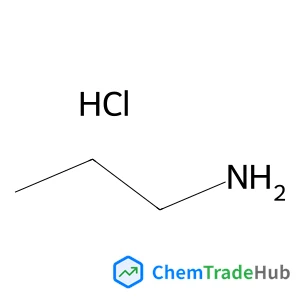
1-Propanamine hydrochloride (1:1)
CAS Number: 556-53-6
![1,1,2,2-Tetrafluoro-1-[2-(1,1,2,2-tetrafluoroethoxy)ethoxy]ethane](https://static.chemtradehub.com/structs/358/358-39-4-0089.webp)
Other Suppliers for 1-Nitro-9,10-anthraquinone




Basic Information
Molecular Formula
C14H7NO4
Molecular Weight
253.21 g/mol
Physical Properties
Melting Point
230.0 to 234.0 deg-C
Boiling Point
270~271℃(933Pa)
Density
1.3146 (rough estimate)
Flash Point
243.3 °C
Chemical Identifiers
SMILES
C1=CC=C2C(=C1)C(=O)C3=C(C2=O)C(=CC=C3)[N+](=O)[O-]
InChIKey
YCANAXVBJKNANM-UHFFFAOYSA-N
Database References
MDL Number
MFCD00019140
FAQ
1-Nitro-9,10-anthraquinone is a crystalline solid with a molecular weight of approximately 254.08 g/mol. It has a low solubility in water but is soluble in organic solvents like ethanol and acetone. Chemically, it is highly reactive towards nucleophiles and can undergo reduction and nitro group substitution reactions. Its physical properties include a melting point of 212-214°C and a density of approximately 1.5 g/cm³.
1-Nitro-9,10-anthraquinone is typically synthesized through the nitration of 9,10-anthraquinone using fuming nitric acid and sulfuric acid as the nitrating agent. The reaction is carried out under reflux with careful temperature control to achieve high yield and selectivity. Other methods include the oxidation of anthraquinol derivatives using nitric acid or other oxidizing agents.
1-Nitro-9,10-anthraquinone is used in various industries, particularly in the production of dyes and pigments. It is also employed in the pharmaceutical industry as an intermediate for the synthesis of certain drugs. Additionally, it finds applications in the polymer industry for the preparation of colorant masterbatches and in the manufacturing of sensors and semiconductors.
When handling 1-Nitro-9,10-anthraquinone, it is essential to wear appropriate personal protective equipment (PPE), including safety goggles, gloves, and lab coats, to prevent skin contact and inhalation of dust. The compound should be stored in a cool, dry place away from direct sunlight and heat sources. Spills should be cleaned up using appropriate absorbent materials, and the area should be well-ventilated. Always refer to the safety data sheet (SDS) for detailed handling and disposal information.
Safety Notice
Please verify product specifications and safety data before use. Contact the supplier for detailed safety information.
Always follow proper handling procedures