



AD
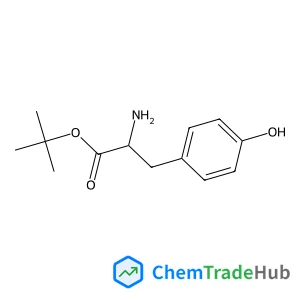
2-Methyl-2-propanyl L-tyrosinate(CAS: 16874-12-7)
CAS Number
Related Products
![2-Methylbenzo[cd]indole](https://static.chemtradehub.com/structs/404/40484-49-9-b68f.webp)
2-Methylbenzo[cd]indole
CAS Number: 40484-49-9
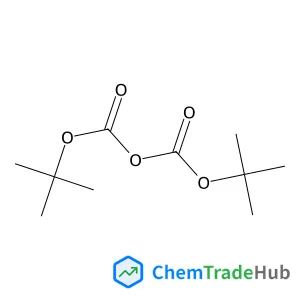
di-tert-butyl dicarbonate
CAS Number: 24424-99-5
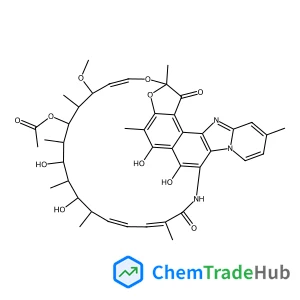
Rifaximin
CAS Number: 80621-81-4
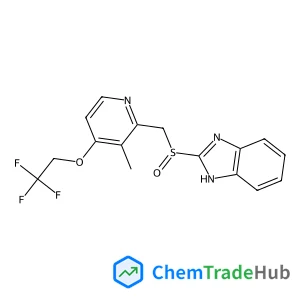
Lansoprazole
CAS Number: 103577-45-3
![3-[3-(Trifluoromethyl)phenyl]acrylic acid](https://static.chemtradehub.com/structs/779/779-89-5-a54b.webp)
![(S)-5-[(Biphenyl-4-yl)methyl]-1-(2,2-dimethylpropionyl)pyrrolidin-2-one](https://static.chemtradehub.com/structs/103/1038924-65-0-992c.webp)
Other Suppliers for 2-Methyl-2-propanyl L-tyrosinate




Basic Information
Molecular Formula
C13H19NO3
Molecular Weight
237.3 g/mol
Physical Properties
Melting Point
140.0 to 145.0 deg-C
Boiling Point
358.1°C at 760 mmHg
Density
1.1250
Flash Point
No data available
Chemical Identifiers
SMILES
CC(C)(C)OC(=O)C(CC1=CC=C(C=C1)O)N
InChIKey
DIGHFXIWRPMGSA-NSHDSACASA-N
Database References
MDL Number
MFCD00042644
Beilstein Registry Number
2696011
FAQ
What are the physical and chemical properties of 2-Methyl-2-propanyl L-tyrosinate (CAS: 16874-12-7)?
2-Methyl-2-propanyl L-tyrosinate is a crystalline compound with a molecular weight of approximately 242.31 g/mol. It has a melting point of around 70-72°C and is slightly soluble in water. Reactivity is moderate, typically requiring acidic or basic conditions for hydrolysis. It is stable under normal laboratory conditions but should be stored in a cool, dry place to prevent degradation.
2-Methyl-2-propanyl L-tyrosinate is synthesized via a condensation reaction between 2-methyl-2-propanol and L-tyrosine. Commonly, this involves the use of acetic anhydride as a condensing agent under reflux conditions. The reaction is typically carried out in the presence of a Lewis acid catalyst like aluminum chloride to improve yield and selectivity. The overall yield is around 70-80%, with the product being isolated by recrystallization.
2-Methyl-2-propanyl L-tyrosinate finds application in the pharmaceutical industry for the synthesis of certain drug intermediates. It is also used in the production of certain polymers and as a component in sensors and semiconductors. Its unique properties make it suitable for various organic synthesis reactions and as a functional group in complex molecules.
When handling 2-Methyl-2-propanyl L-tyrosinate, it is essential to wear appropriate personal protective equipment (PPE), including gloves, goggles, and a lab coat. Work should be conducted in a well-ventilated area or a fume hood to minimize exposure. Spills should be immediately cleaned up with appropriate absorbent materials, and the area should be thoroughly rinsed. Always consult the safety data sheet (SDS) for detailed information on handling and storage procedures.
Safety Notice
Please verify product specifications and safety data before use. Contact the supplier for detailed safety information.
Always follow proper handling procedures
Contact Information
Contact Person
Manager Hong
markting@neostarunited.com