



AD
2-(Trifluoromethoxy)benzenesulfonamide(CAS: 37526-59-3)
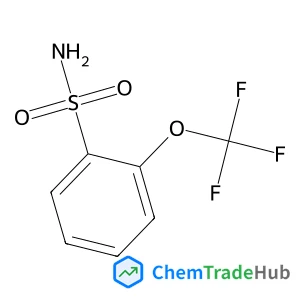
CAS Number
Related Products
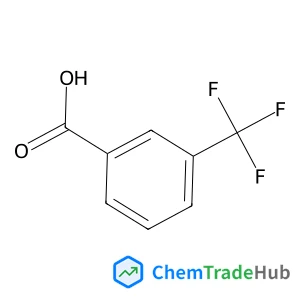
3-(Trifluoromethyl)benzoic acid
CAS Number: 454-92-2
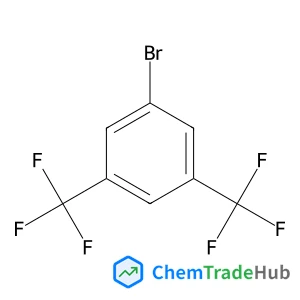
1-Bromo-3,5-bis(trifluoromethyl)benzene
CAS Number: 328-70-1
![1-[4-(Trifluoromethyl)phenyl]ethanone](https://static.chemtradehub.com/structs/709/709-63-7-0e86.webp)
1-[4-(Trifluoromethyl)phenyl]ethanone
CAS Number: 709-63-7
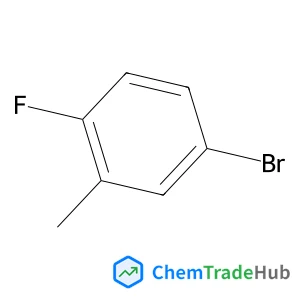
4-Bromo-1-fluoro-2-methylbenzene
CAS Number: 51437-00-4
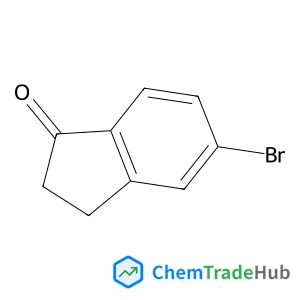
5-Bromo-1-indanone
CAS Number: 34598-49-7

1,4-Bis(trifluoromethyl)benzene
CAS Number: 433-19-2
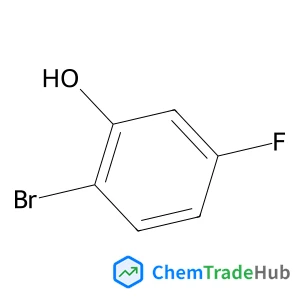
2-Bromo-5-fluorophenol
CAS Number: 147460-41-1
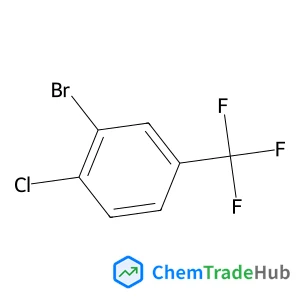
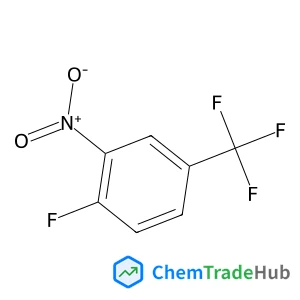
Other Suppliers for 2-(Trifluoromethoxy)benzenesulfonamide





Basic Information
Molecular Formula
C7H6F3NO3S
Molecular Weight
241.19 g/mol
Physical Properties
Melting Point
185.0 to 190.0 deg-C
Boiling Point
312.4°C at 760 mmHg
Flash Point
142.7℃
Chemical Identifiers
SMILES
C1=CC=C(C(=C1)OC(F)(F)F)S(=O)(=O)N
InChIKey
HIFGQHGWMTZMOH-UHFFFAOYSA-N
Database References
MDL Number
MFCD01320751
FAQ
2-(Trifluoromethoxy)benzenesulfonamide (CAS: 37526-59-3) falls under the scope of the GHS (Globally Harmonized System of Classification and Labelling of Chemicals) which categorizes it as a hazardous substance. For chemical manufacturers and importers in the European Union, it is also subject to the REACH regulations. In the USA, it is regulated by the FDA and the EPA concerning environmental and health safety. It is essential to comply with all local and international regulations when handling this compound.
Several alternatives can be used in the synthesis of 2-(Trifluoromethoxy)benzenesulfonamide (CAS: 37526-59-3). For instance, trifluoromethoxybenzenesulfonamides with different substituents or other functional groups can serve as viable alternatives. Additionally, related compounds such as benzenesulfonamides or trifluoromethoxybenzenesulfonamides with variations in the aromatic ring can also be explored as alternatives.
The market for 2-(Trifluoromethoxy)benzenesulfonamide (CAS: 37526-59-3) is growing as it is increasingly used in pharmaceutical applications, particularly in the synthesis of new drug candidates. Research trends indicate a focus on its use as a key intermediate in drug discovery and development. Additionally, there is a rising interest in its application in materials science, where its unique chemical properties are being explored.
Waste containing 2-(Trifluoromethoxy)benzenesulfonamide (CAS: 37526-59-3) should be collected in appropriate containers and stored in a well-ventilated area until disposal. Incineration is a common method of disposal, but it should be conducted in an enclosed incinerator to minimize the release of harmful gases. Alternatively, professional waste disposal services can be utilized to ensure compliance with environmental regulations. Proper personal protective equipment and safety measures should be followed to protect the environment and human health.
Safety Notice
Please verify product specifications and safety data before use. Contact the supplier for detailed safety information.
Always follow proper handling procedures
Contact Information
Mobile
15995021858
Telephone
0519-159989892883
Fax
051985227531
Visit Website
http://www.fluoridechem.com