



AD
1,3-Dithiane(CAS: 505-23-7)
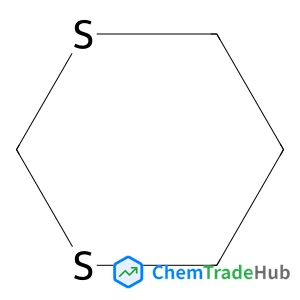
CAS Number
Related Products
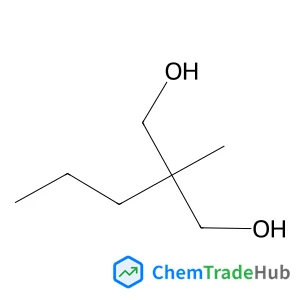
2-methyl-2-propylpropane-1,3-diol
CAS Number: 78-26-2
![Ethyl 3-(2-(((4-carbamimidoylphenyl)amino)methyl)-1-methyl-N-(pyridin-2-yl)-1H-benzo[d]imidazole-5-carboxamido)propanoate hydrochloride](https://static.chemtradehub.com/structs/211/211914-50-0-81b1.webp)
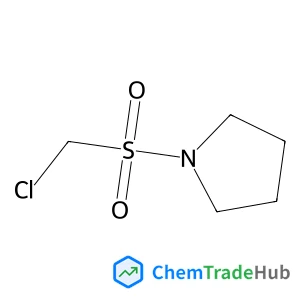
1-chloromethanesulfonylpyrrolidine
CAS Number: 98069-37-5
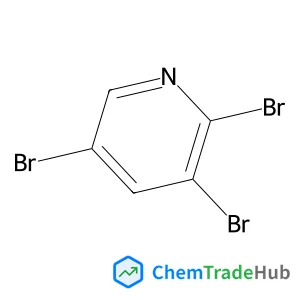
2,3,5-Tribromopyridine
CAS Number: 75806-85-8
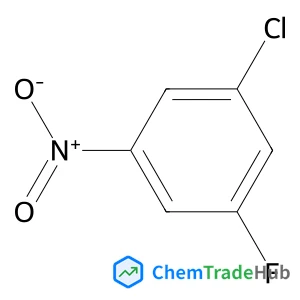
1-Chloro-3-fluoro-5-nitrobenzene
CAS Number: 4815-64-9
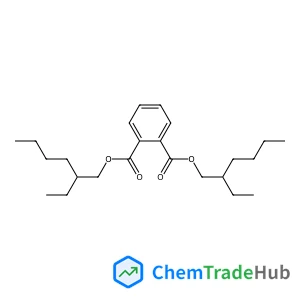
Bis(2-ethylhexyl) phthalate
CAS Number: 117-81-7
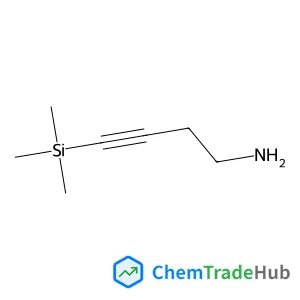
4-(Trimethylsilyl)-3-butyn-1-amine
CAS Number: 183208-71-1
Other Suppliers for 1,3-Dithiane





Basic Information
Molecular Formula
C4H8S2
Molecular Weight
120.24 g/mol
Physical Properties
Melting Point
52.0 to 55.0 deg-C
Boiling Point
208°C(lit.)
Water Solubility
Soluble in benzene, ether, chloroform and terahydrofuran. Slightly soluble in water.
Chemical Identifiers
SMILES
C1CSCSC1
InChIKey
WQADWIOXOXRPLN-UHFFFAOYSA-N
Database References
MDL Number
MFCD00006654
Beilstein Registry Number
102534
FAQ
1,3-Dithiane (CAS: 505-23-7) falls under the scope of various regulatory guidelines such as the Globally Harmonized System of Classification and Labeling of Chemicals (GHS), which requires hazard communication including label warnings and safety data sheets. In Europe, it must comply with REACH regulations for chemical registration, evaluation, and authorization. Additionally, the United States Environmental Protection Agency (EPA) and the Food and Drug Administration (FDA) may require specific handling, storage, and disposal procedures to ensure safety and environmental protection.
There are alternative reagents that can be used in synthesis to achieve similar results to 1,3-Dithiane (CAS: 505-23-7), such as 1,3-dithianes derivatives and other sulfur-containing compounds. Common alternatives include 1,3-dithianes analogs and isomers, which may offer similar functional groups for different synthetic pathways. These alternatives can be chosen based on specific reaction conditions and desired product properties.
The market for 1,3-Dithiane (CAS: 505-23-7) is steadily growing, driven by its applications in pharmaceuticals, agrochemicals, and as a precursor in the synthesis of various organic compounds. Research trends are focusing on the development of more efficient synthesis methods and the exploration of its use in novel materials and drug discovery. The increasing demand for high-performance materials and personalized medicines is expected to further boost the market demand for 1,3-Dithiane.
Waste containing 1,3-Dithiane (CAS: 505-23-7) should be collected in appropriate containers and labeled with the correct hazard information. It should be handled according to local regulations and safety guidelines. For disposal, incineration is a common method, but professional waste disposal services may be necessary to ensure compliance with environmental protection requirements. Proper environmental precautions, such as minimizing emissions and using protective equipment, are essential during handling and disposal to prevent environmental contamination.
Safety Notice
Please verify product specifications and safety data before use. Contact the supplier for detailed safety information.
Always follow proper handling procedures

Contact Information
Contact Person
Mr. Zhai
xiangyang.zhai@jk-sci.com
Mobile
18210857532
Visit Website
https://www.jkchemical.comAddress
Beijing Chaoyang District, Building A, 5th Floor, Junfeng Huating, No. 69 Beichen West Road