



AD
3-Cyclopentylpropanoic acid(CAS: 140-77-2)
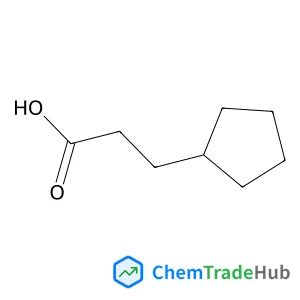
CAS Number
Related Products
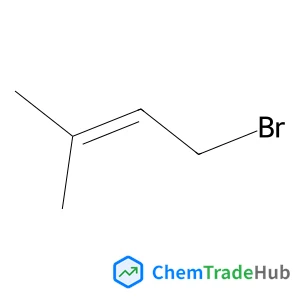
1-Bromo-3-methyl-2-butene
CAS Number: 870-63-3
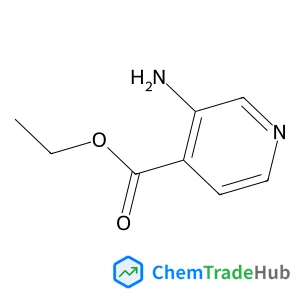
Ethyl 3-aminoisonicotinate
CAS Number: 14208-83-4
![2,2'-[(2-Nitro-1,4-phenylene)diimino]diethanol](https://static.chemtradehub.com/structs/840/84041-77-0-88e5.webp)
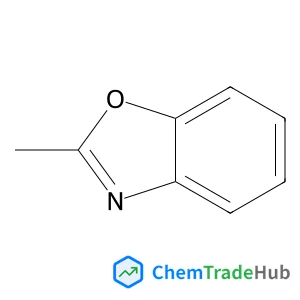
2-Methyl-1,3-benzoxazole
CAS Number: 95-21-6
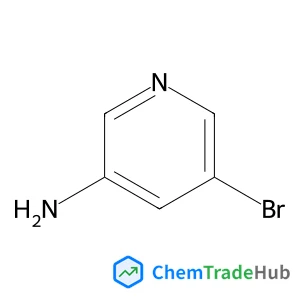
5-Bromo-3-pyridinamine
CAS Number: 13535-01-8
![1-[2-(2,4-Dichlorophenyl)pentyl]-1H-1,2,4-triazole](https://static.chemtradehub.com/structs/662/66246-88-6-b175.webp)
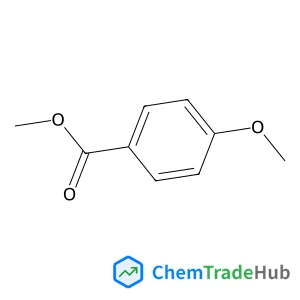
Methyl 4-methoxybenzoate
CAS Number: 121-98-2
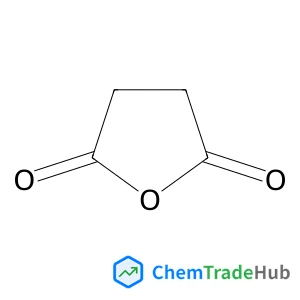
Agomelatine Impurity 9
CAS Number: 108-30-5
Other Suppliers for 3-Cyclopentylpropanoic acid





Basic Information
Molecular Formula
C8H14O2
Molecular Weight
142.2 g/mol
Physical Properties
Boiling Point
123°C/6mmHg(lit.)
Chemical Identifiers
SMILES
C1CCC(C1)CCC(=O)O
InChIKey
ZRPLANDPDWYOMZ-UHFFFAOYSA-N
Database References
MDL Number
MFCD00001392
FAQ
3-Cyclopentylpropanoic acid is a colorless crystalline solid with a molecular weight of approximately 154.26 g/mol. It has a pKa of around 4.9 and is slightly soluble in water. The compound is reactive towards esterification and can undergo acid-catalyzed reactions. It has a melting point of 67-68°C and a boiling point of about 255°C. It is soluble in organic solvents like ethanol and acetone.
3-Cyclopentylpropanoic acid is typically synthesized by the esterification of cyclopentyl propyl alcohol with acetic acid using an acid catalyst such as concentrated sulfuric acid. The reaction is usually conducted at room temperature, and the product can be isolated by recrystallization. The yield is generally around 80-90%. The selectivity and yield can be improved by optimizing reaction conditions and using more sophisticated catalysts.
3-Cyclopentylpropanoic acid finds applications in the pharmaceutical industry as an intermediate in the synthesis of various drugs. It is also used in the polymer industry for the production of certain types of plastics and coatings. Additionally, it is utilized in the sensor industry for the development of chemical sensors and in semiconductor manufacturing for specific applications.
When handling 3-Cyclopentylpropanoic acid, it is important to use appropriate personal protective equipment (PPE) such as gloves, safety glasses, and a lab coat. Work should be done in a well-ventilated area or fume hood to avoid inhalation. Spills should be cleaned up immediately using appropriate absorbent materials. Always refer to the Safety Data Sheet (SDS) for detailed information on handling and storage. Proper storage should be in a cool, dry place away from incompatible materials.
Safety Notice
Please verify product specifications and safety data before use. Contact the supplier for detailed safety information.
Always follow proper handling procedures