



AD
6-(Trifluoromethyl)-2-pyridinecarboxylic acid(CAS: 131747-42-7)
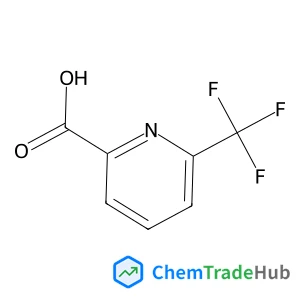
CAS Number
Related Products
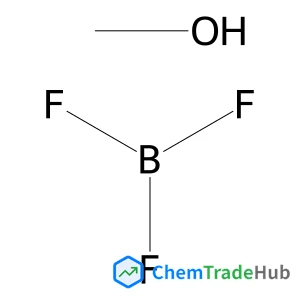
methanol; trifluoro-methoxy-boron
CAS Number: 2802-68-8
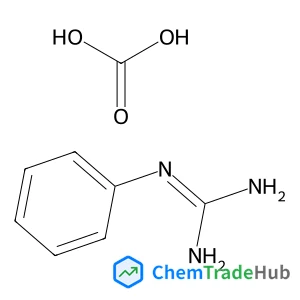
Carbonic acid - 1-phenylguanidine (1:1)
CAS Number: 6685-76-3
![1,7,7-Trimethylbicyclo[2.2.1]heptane-2,3-dione](https://static.chemtradehub.com/structs/103/10373-78-1-714c.webp)
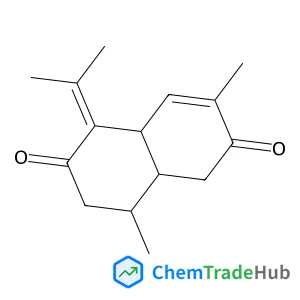
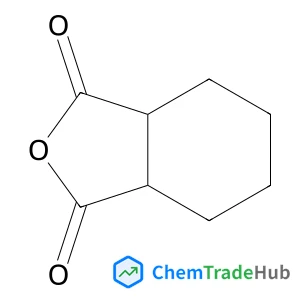
octahydro-2-benzofuran-1,3-dione
CAS Number: 85-42-7
![1-[(4xi)-beta-D-(~13~C_5_)-erythro-Pentofuranosyl]-1H-1,2,4-triazole-3-carboxamide](https://static.chemtradehub.com/structs/164/1646818-35-0-ea01.webp)
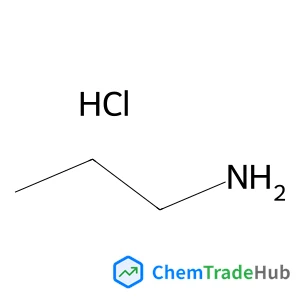
1-Propanamine hydrochloride (1:1)
CAS Number: 556-53-6
![1,1,2,2-Tetrafluoro-1-[2-(1,1,2,2-tetrafluoroethoxy)ethoxy]ethane](https://static.chemtradehub.com/structs/358/358-39-4-0089.webp)
Other Suppliers for 6-(Trifluoromethyl)-2-pyridinecarboxylic acid





Basic Information
Molecular Formula
C7H4F3NO2
Molecular Weight
191.11 g/mol
Physical State
No data available
Physical Properties
Melting Point
155.0 to 159.0 deg-C
Boiling Point
263°C at 760 mmHg
Density
1.484
Flash Point
112.8±27.3 °C
Chemical Identifiers
SMILES
C1=CC(=NC(=C1)C(F)(F)F)C(=O)O
InChIKey
OKBHXGBLXDNJJD-UHFFFAOYSA-N
Database References
MDL Number
MFCD02180819
FAQ
6-(Trifluoromethyl)-2-pyridinecarboxylic acid is a white crystalline solid with a molecular weight of 248.08 g/mol. It has a pKa of 2.9 and is slightly soluble in water. This compound exhibits good stability in neutral and acidic solutions but is reactive in basic conditions. It is commonly used as a precursor in organic synthesis due to its high reactivity and unique electronic properties.
6-(Trifluoromethyl)-2-pyridinecarboxylic acid is typically synthesized via the oxidation of 6-(trifluoromethyl)-2-pyridinecarbaldehyde. The reaction is catalyzed by osmium tetroxide and proceeds under anhydrous conditions. The yield is around 80% and the product is isolated by recrystallization from an appropriate solvent.
6-(Trifluoromethyl)-2-pyridinecarboxylic acid finds applications in multiple industries including pharmaceuticals, where it serves as a precursor for drug synthesis; polymers, where it is used in the development of advanced materials; and semiconductor manufacturing, where it plays a role in etching processes. Its unique chemical properties make it valuable in these sectors.
When handling 6-(Trifluoromethyl)-2-pyridinecarboxylic acid, it is essential to wear appropriate personal protective equipment (PPE) such as gloves, safety goggles, and a lab coat. The substance should be used in a well-ventilated area or fume hood due to its volatility. In case of a spill, it is recommended to clean up with appropriate absorbent materials and consult the Safety Data Sheet (SDS) for further instructions. Ensure proper storage in a cool, dry place away from oxidizing agents.
Safety Notice
Please verify product specifications and safety data before use. Contact the supplier for detailed safety information.
Always follow proper handling procedures